Saturday, June 25, 2016

Various Australian Artists - Rocka (1976)

(Australian 1968-1975)
.
Albert Productions is an Australian record label founded in 1964 by Ted Albert, whom along with Harry Vanda & George Young, were the either producers or executive producers of all Albert Production's stable of in-house artists. It has been consistently owned by the company J. Albert & Son Pty. Ltd. (also known as "Alberts"), a company that dates back to the early 1900s. However, Albert Productions was established as an independent music production arm of J. Albert & Son, and very soon after establishment had signed 'Billy Thorpe and the Aztecs' and the 'Easybeats', later adding fledgling bands such as 'Ted Mulry Gang', 'AC/DC' (arguably becoming the most famous), 'The Angels', Stevie Wright,  and 'Rose Tattoo' to name but a few.

In 1976, Ted Albert decided to celebrate 10+ years of being in the music industry by releasing one of the best 'All Australian Artists' compilation albums in my opinion. It features seven of Albert's most successful artists / bands at that time and showcases some of the greatest #1 hits of the mid seventies.

However, there's a ring-in here! Can you pick it? If you said Track 12 - Little River Band, you'd be right! Well spotted! Little River Band were in fact on the EMI label, then later on Capitol. They were never on the Albert Productions label, which makes this inclusion a bit of a mystery - perhaps it was wishful thinking on the part of Albert Productions at a time when Little River Band were on the verge of becoming mega stars in America.
.
Marcus Hook Roll Band
The Marcus Hook Rock and Roll Band, an obscure but significant persona of the legendary partnership of Harry Vanda & George Young (The Easybeats/Flash and the Pan) only ever existed in the studio, releasing three singles and their album Tales of Old Grand-Daddy in the early ’70s. These rare songs, composed and performed by Vanda and Young, fetch great amounts on internet auctions, not only for the musical brilliance, but band members include 4 members of the Young family; brothers George, Angus, Malcolm and Alex.

Following The Easybeats split in 1969, Harry and George remained in London where they released a string of very good singles under a number of odd pseudonyms: Eddie Avana, Moondance, Paintbox, Tramp, Grapefruit, and Haffey’s Whiskey Sour. In 1972 Alan ‘Wally’ Waller (aka Wally Allen) who was working as a house producer for EMI Records heard a Harry and George demo and brought them into Abbey Road studios to record.Even though the the song ‘Natural Man’ was not a great seller it caught the attention of the right people. A second single, ‘Louisiana Lady’, was recorded in November. When considering what to call the project they somehow settled on Marcus Hook Roll Band.

In a rare interview for Bomp magazine in 1978, George Young explained the philosophy behind the Marcus Hook Rock and Roll Band, “We thought it was hilarious, it had just been a joke to us… We had Harry, myself and my kid brothers, Malcolm and Angus. We all got rotten, except for Angus, who was too young, and we spent a month in there boozing it up every night. That was the first thing Malcolm and Angus did before AC/DC. We didn’t take it very seriously so we thought we’d include them to give them an idea of what recording was all about.” [extract from http://albertmusic.com/]

Marcus Hook Roll Band members
Vocal: Harry Vanda, George Young
Backing vocals: Harry Vanda, George Young, Wally Waller
Guitar: Harry Vanda, George Young, Malcolm Young, Angus Young
Bass Guitar: George Young, Ian Campbell, Wally Waller
Piano: George Young, Wally Waller
Drums: John Proud, Freddie Smith
Saxophone: Alex Young, Howie Casey

The Easybeats
The Easybeats, are one of Australia's greatest pop bands of the 60's. Formed in Sydney in 1964, they were the first Australian rock n roll act to have an international hit with 'Friday on my mind'. With the formation of the Easybeats, Australia's music landscape was changed forever.

In a tiny Sydney radio theatre Ted Albert gave a hearing to a fairly ragged but unmistakably determined beat band that had formed in the austere Villawood Migrant Hostel earlier in the year, comprising, Englishmen Stevie Wright and Gordon 'Snowy' Fleet, Scotsman George Young and Dutchmen Harry Vanda and Dick Diamonde. By the beginning of 1965 The Easybeats would have a manager, regular work in Sydney beat clubs and a publishing and recording contact with the venerable J. Albert & Son.

They became amazingly prolific writers, Stevie having a knack for succinct rock lyrics and George with his exceptional capacity for ingenious melodies and intense musical structures.

The Easybeats stormed to number one in May 1965 with She's So Fine and the ferocious phenomenon of 'Easyfever' spiralled.  Airports, TV stations, theatres and hire cars were reduced to rubble, fans were hospitalised and general mayhem reigned. With their vital, urgent sound The Easybeats gave Australian music a new identity and confidence. They were not only refreshingly original; they radiated an aura of raw, rebellious excitement that proved irresistible to an isolated generation intoxicated by its own youth.

The hits came in ceaseless cascade: Wedding Ring, Sad and Lonely and Blue, then three number ones in a row – Women (Make You Feel Alright), Come And See Her, and I'll Make You Happy - and then a top five with the musically intriguing Sorry.  Overnight, Australian pop and rock shifted from imitation to innovation. The stakes had been raised and Oz Rock would never look back. [extract from Albert's Website]

In June 1968, a new Easybeats album was released by United Artists. Entitled 'Vigil', it was an acknowledgement of the long wait, nearly eighteen months since their 1967 LP Good Friday. Only two songs from their intermediate 'lost album' were rescued: "Good Times" and "Land of Make Believe". The latter was one of Stevie Wright's favourite Easybeats songs, even though it was not his composition, nor his lead vocal. But it was another example of a great Easybeats song that did not take off as a single. It was covered by American teen heart-throb Bobby Sherman. Vaughan later admitted that he had made a mistake in putting it out as a single before 'Good Times'.
'Good Times' was finally released as a single twelve months after it was recorded. If it had been released mid-1967, as planned, it could well have been the song to take over where 'Friday on My Mind' had left off. The song was another instance of Vanda and Young going back to their rock'n'roll roots.

Harry explains:
'That's what we wanted, just to have a good time for a change instead of all this "oh my art!" ... Don't forget, dope was a big thing at the time, so after a few joints everybody was very complicated.'15 lain Mclntyre gives the song high praise:
'Good Times' deserves special mention and is without doubt one of the greatest rock singles ever recorded. Why this track was not a smash hit at the time is hard to explain. 'Good Times' is gutsy, hard-driving, no-bullshit rock & roll, highlighted by tasty piano by Nicky Hopkins, a terrific guitar solo by Harry, and a knockout chorus, with blistering backing vocals courtesy of the band's new friend Steve Marriott [of the Small Faces].

Paul McCartney heard the song on the car radio while travelling down the Ml. He was so impressed that he immediately found a payphone and rang the BBC to find out who the band were and to request they play it again. Tony Cahill later ran into McCartney at Abbey Road and Paul confirmed that the record 'blew him away'. Unfortunately, few at the time shared McCartney's enthusiasm and the single failed to chart in England. In Australia, it was not even released as an A-side.
Although not a great commercial success at the time, the song has certainly paid its way in royalties over the years with over forty artists recording it, including the Tremeloes, Mott the Hoople, Shocking Blue, Hindu Love Gods (featuring Warren Zevon) and Paul Revere and the Raiders. Jimmy Barnes with INXS finally took it into the charts where it belonged in 1982, and it reached No. 2 in Australia in January of that year. [extract from Vanda & Young: Inside Australia's Hit Factory by John Tait, 2010. p103-104]

Little River Band
Original line-up: Graham Gobles (guitar/vocals) Beeb Birtles (guitar/vocals) Glenn Shorrock (lead vocals) Rick Formosa (guitar) Roger McLachlan (bass) Derek Pellici (drums).
The band was formed in 1975 as a direct descendant of sophisticated pop group Mississippi (which included Graham, Beeb and Derek). They added Rick and Roger (who toured with Godspell) and then last, but not least, Glenn (ex-Twilights and Axiom). Apparently the name was derived from a sign bearing the name Little River which they spotted while driving to one of their early gigs in Geelong.

Their aim was to establish a sound based on tight, intricate harmonies backed up by expert musicianship. Glenn Wheatley (ex-bass player with the Masters Apprentices) took over their management and they wasted no time in starting work on their first album. In September, 1975 the band's debut single 'Curiosity (Killed The Cat)' was released. The song was written by Beeb and was taken from their then recently completed Little River Band album. Both releases became immediate best sellers and the LP had gone gold by February, 1976.

In January '76 the band's second single, 'Emma' made the charts and by now they were being recognized as Australia's most sophisticated rock group. Meanwhile the boys were already working on their second album, After Hours, which reportedly cost $40,000 to put together. Coinciding with its release, the band embarked on a national Australian tour which spanned four months.

After the tour had been completed, Rick announced that he was leaving to indulge in his love of orchestral arranging. He was replaced by David Briggs (ex-Avengers and Cycle). At the same time, Roger parted company with the band. His place was taken by George McArdle. The group hurriedly rehearsed the two new members before leaving for London on September 14, 1976. In London they played a concert with Queen at Hyde Park and they spent a short time in Europe. Meanwhile, two more singles had notched up sales in Australia — 'Everyday Of My Life' and 'It's A Long Way There.'

In November their travels took them on to the US where they toured the east coast with the Average White Band. Towards the end of the month the single, 'It's A Long Way There' (which had been released worldwide and made a particularly strong impression on the Dutch charts) edged its way into the three big American singles charts - Billboard, Cashbox and Record World. Their self-titled US album released on Capitol was also beginning to make an impression, and in fact by the end of January 77 it had sold nearly 200,000 copies there.

They returned to Australia just prior to Christmas, 1976 proud, and justifiably so, of their achievements in the US. [extract from Noel McGrath's Australian Encyclopedia of Rock, Outback Press, 1978. p183-184]

AC/DC
Original line-up - Malcolm Young (guitar); Angus Young (guitar); Peter Clark (drums); Rob Bailey (bass); Dave Evans (vocals).
Malcolm and Angus were younger brothers of ex-Easybeat George Young who played an important role in advising and directing the band. The boys began playing with a variety of musicians in 1973, consolidating with the above line-up in April 1974.

The band began working to develop the AC/DC sound, but their progress was temporarily delayed with Rob and Peter leaving to be replaced by Phillip Rudd (drums) and Mark Evans (bass).
This change was followed by the departure of vocalist Dave Evans to join Rabbit, and led to the new notorious line-up including singer Bon Scott. Bon was an experienced rock performer, having worked in top bands Fraternity and the Valentines and seemed to be the spark AC/DC needed to set the rock scene on fire.
Their single, "Can I Sit Next To You Girl?", sold only moderately. However, the follow-up, 'Baby, Please Don't Go' (which was a hit for British blues group 'Them'), entered the charts in March 1975 and became a national hit.
The band's first album, 'High Voltage', which was also released in March 1975, became the second biggest Australian album of the year and stayed on the charts for a mammoth twenty-five weeks. The track "She's Got Balls" was lifted from their debut album for this compilation, and has become a crowd favourite when played live at gigs.

As well as establishing themselves on the charts, the band began to develop a strong punk rock (or at least hard rock) image with their aggressive stage act portraying Angus as a schoolboy, and publicity detailing their hard drinking, hard living lifestyles.
Meanwhile, their follow-up singles, "High Voltage" and "It's A Long Way To The Top", charted well and their second album, TNT, which was released at Christmas in 1975, was declared gold within two months.


Their success in Australia was now unqualified and with the attainment of a contract for overseas release on Atlantic, it was time for the boys to move on to greater heights, so in April 1976 they left for England. Their acceptance in the UK was almost immediate. They seemed to be the right band at the right time, having a punk image but displaying good musicianship. By July, they were selling records there, playing to enthusiastic crowds and getting publicity in music papers like Sounds and New Musical Express. Much of their publicity centred around Angus' outrageous stage antics which included a gradual strip climaxing in a full nude rear view. Although the routine was a sensation with audiences, it caused some close brushes with the police. However, Angus managed to escape any prosecution.


The band's third album, Dirty Deeds Done Dirt Cheap, was released in October 1976 and produced the hit single "Jailbreak", also featured on this compilation alblum. They returned to Australia in December, having paved the way for future success in England and of course the rest is history [extract from Noel McGrath's Australian Encyclopedia of Rock, Outback Press, 1978. p6-7]

Stevie Wright
Stevie was born in the UK on December 20, 1948 and he migrated to Australia with his parents at the age of sixteen. On their arrival they stayed at the Villawood Hostel in Sydney and it was here that Stevie met with four other migrants who shared his interest in rock music and formed the Easybeats.
The band went on to become Australia's most successful group of the sixties and even achieved some international recognition..
The Easybeats finally disbanded early in 1970 and Stevie formed a group called Rachette which was only short-lived. He also did some songwriting with ex-Easybeat George Young and for a brief period he left the music business. Stevie worked as a process worker and a clothing salesman, but entertainment was in his blood and in 1972 he auditioned for the production of Jesus Christ Superstar. He was awarded the part of Simon Zealotes and spent two years in the show.
Also in 1972, he formed a production company with Rory O'Donoghue and he spent a few months with a band called Black Tank.


At the end of his stint with Superstar he embarked on a solo career and formed his own eight piece backing group called the Stevie Wright Band. Coinciding with the band's formation he recorded an album entitled Hard Road, which was co-written and produced with former Easybeats, George Young and Harry Vanda. A single, "Evie", was lifted from it and it entered the charts in June, 1974, as did the album. A second track off the LP, 'Guitar Band', was released later in the year and it also became a top ten hit.

Stevie continued to tour and record throughout 1975 and in July he released his second album, Black Eyed Bruiser, which also produced a hit single from the album's title track.  Unfortunately he was admitted to hospital in August, 1976 suffering from a drug overdose and sadly spent the remainder of his life battling drug addiction and the side affects of substance abuse. [extract from Noel McGrath's Australian Encyclopedia of Rock, Outback Press, 1978. p342]


John Paul Young
John was born in Glasgow, Scotland on June 21, 1950 and he migrated to Australia with his parents in 1966. His early musical experience involved learning to play the piano accordion.

When he left school he took on an apprenticeship as a sheet metal worker and he began singing with a band called 'Elm Tree'. The group's one and only single was 'Rainbow'/'Lonely Nights', which was released late in 1970 and was basically a flop. Following the band's break up John joined the cast of Jesus Christ Superstar, playing the part of Annas. Around the same time he was spotted by producer Simon Napier-Bell, who was looking for a singer to record Vanda and Young's "Pasadena". John recorded the number and it became his first hit in April, 1972.

He stayed with Superstar for a period of .two years and in the meantime two more singles were released -  "You Drive Me Crazy"/ "Better Go Back To Bed" and "Bad Trip"/"It's Only Love". Both were unsuccessful and it wasn't until April, 1975 (when Molly Meldrum entered the picture) that John Paul Young re-entered the charts with another Vanda and Young composition, "Yesterday's Hero". The record made the national charts and soared to number one, with the help of Countdown.  In addition, it sold well in the US and apparently reached the number forty-two position on the Cashbox top one hundred, which is quite an achievement.
John was a regular on Countdown for its lifespan and was affectionately nicknamed 'Squeak' by Molly and occasionally filled in as compere when Molly was unavailable.

John Paul Young (Squeak) with Molly Meldrum On Countdown
In fact, critics claimed at the time that John should have gone to the States and promoted the record, which perhaps would have caused it to be an even bigger hit there. However, he felt it was too early in his career to leave Australia and decided to stay here and consolidate himself. In the interim, "Yesterday's Hero" was covered by the Bay City Rollers. In October 75, he released his debut album, 'Hero', which was dominated by Vanda and Young compositions, including the featured track "St.Louis"

At this point John adopted his full name of John Paul Young in order to avoid confusion with established pop star Johnny Young. He also formed his own band, the All Stars, which included Warren Morgan, Johnny Dick, lan Winter, Ronnie Peel and Ray Goodwin. John's next single, "The Love Game", was released in August, 1975 and during the year he completed two national tours (one with Sherbet).

Another single, "I Hate The Music", was issued in March, 1976 and it was also released in the US. The record became his first gold disc and later in the year he released his second album, JPY, which like Hero achieved platinum status. Also in 1976 John -was voted the Most Popular Male Performer in the National Music Industry Awards. [extract from Noel McGrath's Australian Encyclopedia of Rock, Outback Press, 1978. p344-345]

The Angels
Line-up: Doc Neeson (Vocals); Buzz Throckman (drums); Chris Bailey (bass); John Brewster (guitar); Rick Brewster (guitar)
The band's early involvement with pure fifties rock, sixties pop and rhythm and blues finally established it in 1978 as a hard rock connoisseur's delight.
The embryo of the Angel's sound developed in 1971 when the nucleus of the group was playing in Adelaide coffee shops and universities as the Moonshine Jug and String Band.
Adopting a more electric sound, they evolved some three years later into the Keystone Angels, a four piece vintage rock band. The Keystone Angels toured with fifties rock king, Chuck Berry, and released a single 'Keep on Dancing'/'Good Day Rock 'n' Roll' (both originals), featuring drummer Peter Chris-Topoulos, with John doing lead vocals and Doc on the guitar.

As the band began developing their now-famous blues-based brand of seventies rock, they shortened their name to simply 'The Angels'. They released their first single as Angels, "Am I Ever Gonna See Your Face Again", on the Albert label early in 1976, and this iconic track is featured here.
The boys had developed a strong following on the pub circuit and early in 1977 their fans were treated to the band's first album, The Angels (produced by Vanda and Young). The group was now five piece with the acquisition of Chris Bailey, and Doc out front. Of course from here, the Angels released one hit single after another and have become one of the most popular names in Australian Music History. [extract from Noel McGrath's Australian Encyclopedia of Rock, 1978-79 Yearbook, Outback Press, p1-2]

Ted Mulry Gang
Line-up (October, 1974): Ted Mulry (vocals, bass guitar); Gary Dixon (guitar); Les Hall (guitar); Herman Kovacs (drums).
The band originated as a trio (Ted, Les and Herman) in September, 1972. Of course Ted had started as a soloist and apparently his role of bass player came about one night quite by accident when his backing group's original bass guitarist stormed off the stage. He simply picked up the instrument and took over. Ted began practising and became the group's permanent bass player. Herman and Les had both previously worked with Velvet Underground.

Although the band was originally formed as a backing group (due to the inconsistency of bands providing Ted's accompaniment at his solo gigs), they quickly built up a following as a complete unit.
In December, 1973 the boys set off on a two month trip around the US and Canada. Back in Australia they completed their first album, Here We Are (which they had started just prior to going overseas), and it was issued in November '74. Just prior to its release they added Gary to the line-up in an attempt to increase their versatility.

Les Hall & Ted Mulry
In March, 1975 they released their first single, 'Sunday Evenings', which did nothing, basically because of lack of airplay. Then, midway through the year, radio personality Barry Chapman (from 2SM in Sydney) suggested that a track from the Here We Are album, 'Jump In My Car', should be released as a single. Eventually the record company agreed and the result was a number one hit and total sales of over 80,000 copies.

The success of "Jump In My Car" stimulated new interest in the album and by May 76 it had gone gold. Early in the piece though one track on the LP, 'Dyna', had caused some problems. It was a popular song on stage and one verse included a four letter word which had to be blanked out on the album.
The band's next single, "Darktown Strutter's Ball"/"She's For Me", made the top five in charts all around Australia and at the end of May, 1976 they released their second album entitled 'Struttin'. A track from it called "Crazy" was lifted from the LP and it became their third hit, and is also featured here.

To promote the album's release the group set off on their first national tour ('Struttin' Across Australia') and in the meantime a contract for world-wide release of their records was signed with Phonogram. Then in June they teamed up with Sherbet for their 80 day Australian tour.
Ted and the boys wasted no time in coming up with their third album Steppin' Out, which was the first record by the band to carry their new abbreviated name of TMG. It was released in October '76 and displayed a greater emphasis on melody and harmony than their first two albums. It sold rapidly, going double gold after only two weeks in the shops. [extract from Noel McGrath's Australian Encyclopedia of Rock, Outback Press, 1978. p211-212]
.
This post consists of FLACs and MP3's (320kps) ripped from my highly treasured vinyl copy. In fact, I don't think this album has been released on CD, although Alberts has recently released their 50th year anniversary CD set entitled 'Good Times'  which features most of these tracks.
This compilation is one of my favourite collection of Aussie bands and artists and I particularly like the way the tracks run into one another or joined by a Rocka promo jingle.
Although not a rare album for record collectors (they printed lots of them I think), it is a must have in anyone's record collection I believe.  Full album artwork and scans of a promo insert and record labels are included.
Now, what I do believe would be rare is the 'Souvenir Song Booklet' that was advertised for sale in the insert, as I suspect not many people would have noticed it or considered ordering.  If you have a copy of this booklet, I would love to hear from you !

So here it is folks, in all its glory -  ROCKA, Rocka, Givin' You The Rock n Roll,  Rocka.....
.
Tracklisting
01 - High Voltage (AC/DC)
02 - I Hate The Music (John Paul Young)
03 - Guitar Band (Stevie Wright)
04 - Am I Ever Gonna See Your Face Again (The Angels)
05 - Jump In My Car
06 - Black Eyed Bruiser (Stevie Wright)
07 - Can't Stand The Heat (Marcus Hook Roll Band)
08 - It's A Long Way To The Top (AC/DC)
09 - St. Louis (John Paul Young)
10 - Jailbreak (AC/DC)
11 - Crazy (Ted Mulry Gang)
12 - Everyday Of My Life (Little River Band) *
13 - She's Got Balls (AC/DC)
14 - Evie - Part 1 (Stevie Wright)
15 - Quick Reaction (Marcus Hook Roll Band)
16 - Good Times (Easybeats)

* Released by EMI Records
.

ROCKA  FLAC Link (370Mb)
.
.

Tuesday, June 21, 2016

The Moody Blues - Caught Live + 5 (1977)

(U.K 1965 - Present)
.
The Moody Blues released this live concert recording (augmented by some previously unissued studio cuts) after they'd decided to re-form at the end of the 1970s, in order to get some product out and test the waters for their reunion the following year. As their first new release in five years, it sold extremely well on both sides of the Atlantic and fueled the anticipation attending the release of the Octave album a year later. 

In point of fact, however, the group supposedly never liked the concert much as a document, which is one reason why they didn't authorize its release on CD until 1996 -- the unofficial word among fans is that several of the group members were under the influence of controlled substances during the show and were, thus, less sharp than they might otherwise have been, though you'd never know it from the results here. 

The 1969 Royal Albert Hall show sounds a lot better on this CD than it did on the LP version, with a closeness that was never evident before -- Justin Hayward's guitar and Mike Pinder's various Mellotrons, in particular, sound really crisp, and all of the singing comes out with more detail as well. 

Their repertory at this time came primarily from Days of Future Passed, In Search of the Lost Chord, and On the Threshold of a Dream, plus "Gypsy," the one number from To Our Children's Children's Children -- their then new album -- that they actually performed live; the latter is also the opening number, and Hayward's guitar work is most impressive, whether he's playing the melody in the opening, or crunching out chords on the break. 

"The Sunset," from Days of Future Passed, is a showcase for Pinder's Mellotrons, the keyboard player slowly weaving lush Arabesques and misteriosos while Hayward strums out muted chords, Graeme Edge's drums impersonate the sound of a tabla, and Ray Thomas' flute hovers above it all with its lilting phrases. "Dr. Livingston, I Presume" lightens the tone with a more witty, whimsical side of psychedelia that still allows Pinder a chance to show off the Mellotron's range and Hayward a surprisingly hard-rocking solo -- one audience member, in particular, seems taken with it all, punctuating the crescendos with shrieks of appreciation that don't detract a bit from the listening. 

Edge's nimble playing is most impressive on "Peak Hour," a frenetically paced number off of Days of Future Passed, and the other highlights of the set include the hits "Tuesday Afternoon" and "Nights in White Satin," and the closing suite from On the Threshold of a Dream, which works well despite Pinder's being limited to just two keyboards -- one scarcely misses the grand piano, and the opening sequence, "Are You Sitting Comfortably," gives Thomas' flute its best showcase. 


The group is tight throughout, both in their playing and singing, and the show ends on a hard-rocking note with "Legend of a Mind" and "Ride My See-Saw" -- and the former is a great vehicle for John Lodge's bass work. 

The CD release (now out of print) reveals details in the playing (particularly on the guitar parts) that were obscured on the original LP, and while there are still occasional balance problems, as a representative set for the band from their psychedelic period, the concert portion of this CD holds up extremely well -- one only wishes that the band had seen fit to record a show or two from the following tour, where they rocked out on numbers like "Tortoise and the Hair," or their 1972-1973 tour behind the Seventh Sojourn album, representing their peak from this era in their history. 


As for the studio cuts, they're salvaged from failed album sessions in 1967 and 1968, and they're not bad songs --- in fact they're pretty damn good-- "Gimme a Little Something" has a great opening verse, guitar part, and chorus, even if it doesn't quite hold together perfectly as a song, and "King and Queen" and "What Am I Doing Here" both have hauntingly beautiful melodies. But they're also not quite up to the standard of what the group released during that period, and work best in a historical, archival context, which is how they were issued. 

The "Plus 5" is my favorite part of this double album.
"Long Summer Days" being a favorite "summer" song... And, when I did listen to the live part -- the countdown intro to "Ride My See-Saw"   (L. O. V. E) is one of the best parts of the "live" part of the album.
The studio out-takes are fantastic. Especially the last three. "What Am I Doin' Here" is a powerful anti-Vietnam war song. I wonder if they had a fight on their hands with the label on this one?
Definitely a must for a collector, just for the 4th side of unreleased studio tracks.
(Review by Bruce Eder, All Music Guide)
.
This post consists of MP3's (320kps) ripped from my pristine vinyl copy and features full album artwork and label scans. Although this live album doesn't really give justice to the Moody's brilliance when recording in the studio, it does give us a glimpse of what they were like on stage in the early part of their career.  As Bruce Eder indicates, the fourth side (all new studio tracks) is the highlight of this release and should not be overlooked.  DECCA certainly had their marketing hat on when they decided to release this double album (and fits nicely on a single CD for good measure)
.
Tracklist
A1 Gypsy
A2 The Sun Set
A3 Dr. Livingstone, I Presume
A4 Never Comes The Day
B1 Peak Hour
B2 Tuesday Afternoon
B3 Are You Sitting Comfortably
B4 The Dream
B5 Have You Heard (Part 1)
B6 The Voyage
B7 Have You Heard (Part 2)
C1 Nights In White Satin
C2 Legend Of A Mind
C3 Ride My See-Saw
D1 Gimme A Little Somethin'
D2 Please Think About It
D3 Long Summer Days
D4 King And Queen
D5 What Am I Doing Here


Sides A, B, C recorded live at the Royal Albert Hall 12th December 1969. 
+5 (Side D) previously unreleased studio recordings. 
.

The Moody Blues were:
Justin Hayward (Guitar, Vocals)
John Lodge (Bass, Vocals)
Graeme Edge (Drums)
Ray Thomas (Flute)
Mike Pinder (Keyboard, Vocals)
.

The Moody Blues Live Link (174Mb) New Link 03/01/2024
.

Thursday, June 16, 2016

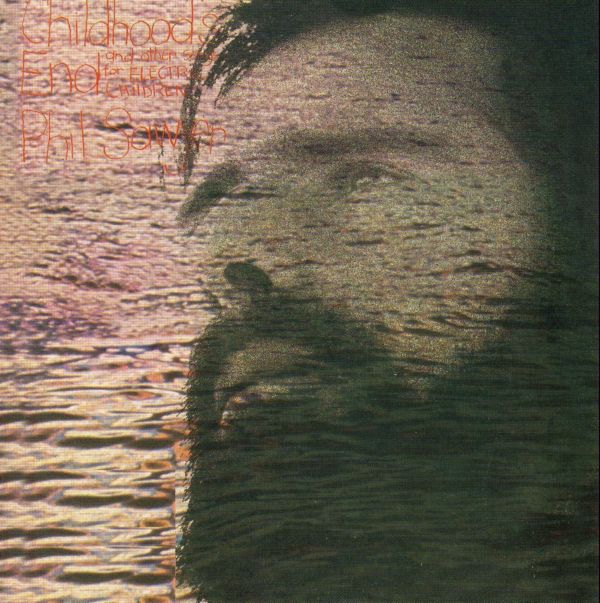
Phil Sawyer - Childhood's End And Other Songs For Electric Children (1971)

(Australian 1971)
.
A magical discovery from the down-under '70s psychedelic scene, Phil Sawyer's 1971 album 'Childhood's End', originally released in Australia on the Sweet Peach label, remains pretty unknown to most collectors. This is a wonderful album that will please anyone into psychedelia, rock and folk. Totally electric, great production, great songwriting and the warm, uneducated voice of Phil himself gives a slightly looser feel to it at times. The album contains some fantastic mid-tempo psychedelic folk-rock ballads, and the title track is an incredible slice of pure psychedelia, with lots of tasty psychedelic sound effects. The original is a very rare and collectable item (Hans Pokora gives it a 5-disc rating). This first-ever reissue on CD is licensed from the original label and the sound is taken from the master tapes.
.
Review 1
What immediately attracts the listener are the first three songs ("September Woman", "Nightbirds", and "The Other Side of Silence"), sung with a soft romantic voice, played with moody organ or flute and some soft layers of guitars. The songs reveal deep feelings related with certain relationships. The fourth track, “Childhood's End” has more electric guitar arrangements. “Where did everybody go?” is something completely different in style, recorded with live voices in studio, a making fun song, perhaps recorded completely stoned. Also “Electric Children” is more rocking, and could have come from the same session.

Also this is in a more mainstream style, compensated by an overload of crazy reverb effects on guitars. Both these tracks are from a different character and recording quality, but being in the middle of the album, just show something like a different aspect, a compensated insecure moment perhaps. “The Chase” holds the middle between this sphere and the earliest quieter moment, with some electric guitars working as the connecting wire. After “Stranger in the Street”, it is by “Letters to Seraphina” that we’re back to where the album started. It is one of the moodiest tracks, with additional tabla. Here we can easily associate the kind of seashore endless haze seen on the album cover. [extract from psychedelicfolk.com]
.
Review 2
As a fan of and a writer about music, I'm always having to fight the temptation to lean too heavily on genres as simple and complete descriptions. Don't get me wrong: genres are very useful tools to describe and classify music. But when you come across a record or a song that defies categorisation, or is just too different to fit neatly under a section in the record store, things can get tricky. If you asked me to describe the genre of this album, I'd probably say acid-folk, as many on-line references to the record attest. But it doesn't do the music justice, and it's no help in accurately conveying what Phil Sawyer's only album sounds like.

Phil is meek and melancholy throughout this recording for the most part. He sings wistfully about lost dreams, forgotten romance and other stuff like that. What's most obvious about the album as a whole to me is how much the best cut Electric Children stands out as completely different to the rest of the record (all the acid and none of the folk is concentrated here!). The blaring drums and organ introduce the song, a world away from the folky guitar, soft singing and flute on the first side of the record. Sawyer sings with uncharacteristic earnestness on this song, adding drums, guitar, swirling organ and just about every electronic effect it seems that he can get his hands on. Americans I know who've heard this record find the singing and the over-experimentation a little irritating, but I love it. 

The looseness of the vibe on this song makes me think this guy had a lot of fun recording this. The other cool thing about this tune is that it ends with this moody bridge that conveys a pensive mood. Perhaps he was attempting to bridge the craziness of this song with the more sombre mood of the rest of the record? Whatever the case, if you like experimental folk-rock - dare I say acid-folk - or just great funky weirdness, you should check this record out. [Review by DJ Kenetic at aussiefunk.blogspot]
.
This post consists of  FLACs ripped from a re-released CD and comes with full album artwork for LP and CD.  If you like Doug Ashdown's music, then ya gonna love this album (Oh, and by the way, Doug plays guitar on this album which is a real bonus). 
By far the most valuable Sweet Peach album, this ultra-rare 1970 LP 'Childhood's End' by Adelaide singer-songwriter Phil Sawyer, was listed for sale on Ebay in 2007 for a staggering US$700. I believe the single "Childhood's End" / "Where Did Everybody Go" has also sold for a small fortune in the past. 
.
Tracklist
01 September Woman
02 Nightbirds
03 The Other Side Of Silence
04 Childhood's End
05 Where Did Everybody Go?
01 Electric Children
02 The Chase
03 Stranger In The Street
04 Letters To Serephina
.

Tuesday, June 7, 2016

Carlos Santana - Blues For Salvador (1987)

(U.S  1965 - Present)
.
Blues For Salvador was released in 1987. Dedicated to his wife, Deborah Santana, the record was released as a solo project, without the Santana band. It won the 1987 Grammy Award for Best Rock Instrumental Performance, his first Grammy ever.

On previous solo albums, Carlos Santana had made noticeable stylistic changes and worked with Jazz, Pop, and even Country musicians. On this, his fourth Carlos Santana release, the line between a "solo" and a "group" project is blurred; this record is really a collection of the Santana Band out takes and stray tracks.

Included are an instrumental version of "Deeper, Dig Deeper" from Freedom, and an alternate take of "Hannibal" from Zebop!, as well as "Now That You Know" from the group's 1985 tour. Interesting to note that "Trane" features jazz drummer Tony Williams on drums.

Carlos explores a somewhat softer more R&B flavour sound. There is a lesser Latin influence here but none the less these delightful sounds do creep up from time to time. This effort is almost exclusively an instrumental, as whatever vocals do exist are used more to emphasize the use of the human voice as a supporting instrument rather than as a dominant force.

The songs themselves are not as catchy as on Supernatural, Abraxas, or Santana 3 but certainly have their captivating moments. The opening number, "Bailando/Aquatic Park" is a definite highlight as is the energetic "Trane". "Bella" has some touching instrumentation as Carlos and Chester Thompson blend quite nicely together. Some of the other pieces lack a strong central melody, however, just the presence of Carlos's guitar makes this release one that can be appreciated.
.
Admittedly there are at least three tracks on Blues For Salvador that have a really outdated 80's pop rock commercial feel for the time. But the rest of the set is purely heaven sent and timeless !

Finishing off the set is the experimental quality with "Blues For Salvador" that was not really felt or expressed with Santana's other pop sounding projects or efforts from the 80's. At times there is a slight underlying new age or ambient feel to some of the instrumentals such as "Mingus".

Nonetheless, the Latin, rock, jazz fusion sound is still there and unmistakably Santana's trademark sound.
.
Interview
"Carlos Santana Opens Up About Blues, Jazz and More in 1988 Guitar World Interview

Here's an interview with Carlos Santana from the June 1988 issue of Guitar World. The original story, which started on page 18, ran with the headline, "Another Kind of Blue: Carlos Santana has embarked on yet another musical adventure, one that has a lot to do with theory, and everything to do with the guitar."

“I know I'm not the kind of person who’s gonna wind up a walking jukebox, like many rock ‘n’ roll artists,” says Carlos Santana. “They just play their hits and that’s it. That doesn’t appeal to me. I don’t wanna just go out and play "Black Magic Woman" and "Oye Como Va" all night because that was part of the seventies, and my watch says it’s 1988. So I wanna get into ’88 and not look back.”

A little over a year ago, I chided Carlos in a Guitar World record review of Freedom. "Scrap the sappy, safe, predictable, slick pop arrangements and get back to playing the guitar, man," is what I said, or words to that effect.

I don't know if he ever saw that review, but he must've been thinking along the same lines himself when he recorded his recent Blues For Salvador, his 22nd LP for Columbia. This album kicks my ass around the block every time I give a listen.

Carlos Santana 1987
Killer guitar on every cut. Eight of the album's nine cuts are instrumental, featuring Carlos' signature singing, stinging guitar lines. For guitar fans, it's a dream come true; easily his most exciting, most scintillating, most inspired display of ax magic in over a decade. Ah, welcome home, Carlos!

And he's not playing the hits, either. No lame pop structures or hook-laden wimp fare like the highly saleable radio hit "Winning" from a few years back. No cheesy vocals anywhere in sight. Sure, sure, it 's good to go gold and bring home the bacon. But I just couldn't deal with that limp radio-play pap with the sounds of Abraxas or Caravanserai still fresh in my ears and the sight of Santana burning up the Woodstock stage on "Soul Sacrifice" still imbedded in my memory banks. That's like munching on Yodels and Ring-Dings after feasting on fine French cuisine.

You drop the needle anywhere on Blues For Salvador and you get the real deal. The man redeems himself for any past lapses. "Bailando/Aquatic Park" revives the memory of "Soul Sacrifice." The lyrical ballad "Bella" is played with a soulful Wes Montgomery tone that allows the nuance of Carlos' expression to shine through beautifully. His adventurous guitar synth work on the mood piece "Mingus" is highly ambitious, if not monumental -- or even characteristic. And the sheer conviction that Carlos displays on the title cut, a duologue with keyboardist Chester Thompson, is positively Herculean.


There's more. He stretches like in days of old on the live jamming vehicle, "Now That You Know," recorded during his band's '85 World Tour. He burns red-hot on the Latin percussion workout of "Hannibal," which segues to a loose, bluesy swing feel at the tag. He cranks out some vicious wah-wah licks, reminiscent of Jimi in all his glory, on the funky "Deeper, Dig Deeper." And he unleashes with a vengeance on "Trane," which is powered by old-time runnin' buddy drummer Tony Williams.

There may not be any displays of two-handed tapping, wang-bar theatrics or scalar pyrotechnics on Blues For Salvador, but nevertheless, it gets my vote for Top Guitar Album Of The Year. It's a strong statement from a national treasure. And it seems that this powerful, expressive album is now serving as the bridge to a leap in a new direction for Carlos Santana, as well.


''I'm planning to do more of this from now on," the once and future guitar hero explained recently. "I have come to the conclusion -- and I don't know why it took me so long, but nevertheless, I'm here now -- that a lot of people tell me they don't get enough guitar on my albums. So I decided to do an album where the guitar would be the singer, playing the melody. And it feels really, really good. I have come to a point where I'm not afraid to be the main vocal in there. I mean, if cats like Herbie Hancock and Wayne Shorter and Joe Zawinul can see that I can cut it, I guess I can cut it. It gives me a certain kind of confidence to be able to play with musicians of that caliber. So it 's easier for me now to embrace this vision of the guitar being the main, primary vocal."

He's referring to recent collaborations with jazz heavyweights Hancock (Monster, Columbia), Zawinul (This Is This, Columbia) and Shorter, whom he's been jamming with a lot lately. Those artists tapped Carlos for his unique quality, his Signature sound, not for his knowledge of scales and chord inversions.

They were after the feeling he projects in his playing, the conviction behind his notes. Yet Carlos admits he's at a point now in his career where he would like to learn a thing or two about theory so that he can make the leap to the next level.

"I have been accused of being a very simplistic, very lyrical player, and that's okay. That just comes from the blues, which is my background. But every day you wake up and transcend. You can't ever rest on your laurels. Every day you wake up is an opportunity to go beyond, and that's why I let my band go right now. For the first time in my life I'm just roaming around, vagabonding.

"I'm just jamming a lot these days with guys like Wayne Shorter and Tony Williams. And it feels good because now I don't have the responsibility of maintaining a group... being a baby-sitter, psychologist and all the things that you have to be to be the leader of a band.

"So it 's a good time for me. I can afford to go out there and really learn ... take some time and just learn some theory or learn how to sing or learn more about harmony and voicings. That's what I need to do right now because I want my vision to be more expanded. I need to know the architectural order of someone like Wayne Shorter. For me, listening to his music makes me feel like a two-year-old, like
I don't know anything about music. And I need to crawl out of the crib and find how that order relates. I can understand the blues, but I need to learn more cycles. So I'm trying to stretch out a bit on the guitar now, make that leap to a new level. I don't know if I'm gonna succeed or fail, but I'm definitely hungry for it..
This post consists of MP3's (320kps) ripped from my CD copy of this album. Full album artwork and select photos are included. Although this is not his best solo release (see 'The Swing Of Delight' or 'Havana Moon') it is still worth a listen. The album grows on you over time. Interesting to see an old buddy of his returns to play on this one - Buddy Miles.
.
Track Listing
1. Bailando/ Aquatic Park (5:47)
2. Bella (4:29)
3. I'm Gone (3:09)
4. 'Trane (3:10)
5. Deeper, Dig Deeper (6:08)
6. Mingus (1:25)
7. Now That You Know (10:25)
8. Hannibal (4:27)
9. Blues for Salvador (5:59)

Line-up / Musicians
Carlos Santana / guitars, vocals
Benny Rietveld / Bass
Armando Peraza / Congas, Bongos
Walfredo Reyes / Drums
Alex Ligertwood / Vocals
Chester Thompson / keyboards, vocals
Alphonso Johnson / bass
Vernon Reid / guitar
Paul Rekow / congas
Greg Walker / Vocals
Armando Peraza / Congas, Bongos
Graham Lear / Drums
Orestes Vilato / percussion
Buddy Miles / percussion
.
Carlos Santana Link (112Mb) New Link 17/12/2023

Saturday, June 4, 2016

Box Tops - The Best Of: Featuring Alex Chilton (1988) + Bonus Single

(U.S 1963 - 1970, 1996 - 2010)
.
In September 1967, one of the most played records on radio was a hot little item by a new band called the Box Tops, the song was "The Letter" and for many who heard it the story starts and finishes there, a mere footnote to musical history. In truth the Box Tops were more than just another one-hit wonder and their story is entwined in the larger history of Southern Soul & Rock music in general.

Memphis, Tennessee had long been one of the hubs of Southern music, the dance hall string bands of the 19th Century gave birth to the first jug bands and from the 1920's recording of ethnic music from Memphis and the surrounding areas became commonplace, Memphis being a natural catchment centre for the South, situated in the middle of a spider's web of highways and rail roads. Most of these recordings were made by Northern record companies on field trips, and even as late as 1950 when Sam Phillips formed the Memphis Recording Service, which in 1952 evolved into Sun Records, his main aim was to record the Southern blues men and the emergent style of Black Rhythm & Blues. When Sun released Elvis Presley's first record in July 1954 they inevitably provided the Southern white musicians with the same opportunity to record in Memphis as they had earlier done with black musicians. With such a musical culture, Memphis in the mid 1960's must have seemed an ideal place to launch a new label.

Chips Moman & Tommy Cogbill had been guitarist and bassist respectively for the session band at Fame studios in Muscle Shoals. With the aid of a $5,000 loan from Atlantic producer Jerry Wexler, they moved to Memphis and started American Group Productions (AGP). AGP were able to enlist the talents of Spooner Oldham, the keyboard player in that same Fame session band, and Dan Penn, who with The Pallbearers had formed the studio band that preceded them at Fame. Dan Penn had been writing hit songs since the age of 14 when he scored with a hit for Conway Twitty, "Is A Bluebird Blue"?

Almost immediately after its inception AGP had a monster no. 1 hit with "The Letter" featuring the vocal talents of the 16-year-old Alex Chilton, whose vocal delivery belied his tender years.
Chilton had grown up in Memphis and had almost joined a local high school band featuring his friends (and later Big Star members) Chris Bell and Richard Rosebrough. Instead he joined another local outfit (whose Stax flavoured soul music was more to his taste) called Ronnie and the DeVilles. By 1967, they had transmogrified into the Box Tops, by which time the line up was Chilton, Gary Talley (guitar), John Evans (organ), Danny Smythe (drums) and Bill Cunningham (bass, and brother of B.B. Cunningham of The Hombres, who had a 1967 hit "Let It Out").

Box Tops Promo Shot - 1968
Jerry Wexler was understandably miffed when he was not offered a deal on 'The Letter for Atlantic, the song being distributed by Bell Records instead. This upset, however, did not prevent him from using the services of AGP for Dusty Springfield's 'Dusty In Memphis' LP.
"The Letter" was followed by a second single, "Neon Rainbow" and the first Box Tops album — The Letter/Neon Rainbow. Despite the reasonably true liner notes claim that the band were not a thrown together, overnight type group, they've been entertaining in the Memphis area for about two years . . . the LP had all the hallmarks of a hastily produced package to capitalise on a big hit, the rear cover photo showing Alex Chilton as the only member not in the apparent band uniform of tie, blazer and plaid trousers, reminding one of the 1950's comedian who joked that Marvin Rainwater had become famous so fast, they didn't have time to change his name.

Amid the collection of predictable cover versions and album fillers was "I Pray For Rain", one of 4 Penn/Oldham songs on the album, complete with studio thunderstorm, it showed that the young Alex Chilton had more than one voice and was capable of competing with the best in a musical field now being referred to as "Blue Eyed Soul". In his book Say It One Time For The Broken Hearted Barney Hoskins suggests that Dan Penn had little to do with the group and as producer his only contact with Chilton was to comment on his diction. This may be so, but in recent years Chilton has spoken of Penn with some respect, especially when introducing one of Penn's lesser known songs that he now performs, "Nobody's Fool".

The next single was their second biggest seller, making no. 2 in the US. The single boasted another two Penn/Oldham compositions, the A side "Cry Like A Baby" and the flip an unexpected gem "The Door You Closed To Me". It should really come as no surprise that a bunch of Southern white boys could produce such a soulful sound - Moman/Penn had composed "Do Right Woman, Do Right Man", and Oldham/Penn had composed "Dark End Of The Street", songs which worked equally well for Aretha Franklin and James Carr as they later did for the decidedly white Flying Burrito Brothers. As Jim Dickinson of the Dixie Flyers pointed out, the Stax rhythm section was 50% white and 50% black. Southern soul music, it seemed, had no racial discrimination, the real irony being perhaps that at the same time in the North, Motown with an almost exclusively black staff, were producing what would eventually become soul records for a middle class white clientèle.

The second Box Tops LP 'Cry Like A Baby' was much stronger than the first, with another 5 Penn/Oldham songs including the title song, "Fields Of Clover" and "727", also the atmospheric "Deep In Kentucky" and a version of "You Keep Me Hanging On" which would not have been out of place in a Quicksilver Messenger Service set. The producers obviously had decided to explore every avenue in an attempt to exploit the full potential of the Box Tops. The liner notes by Paul Revere and The Raiders' Mark Lindsay gives mention to Alex Chilton thereby establishing him as the only band member to have individual recognition.

The 3rd LP 'Non Stop' only had 2 Penn/Oldham songs and had an altogether different feel. Eddie Hinton and Donnie Fritts' "Choo Choo Train" was released as a single coupled with "Fields Of Clover". The folk rocker "Yesterday Where's My Mind", a sub Hey Joe song, has Chilton trying out his best Tim Rose vocal and sounding surprisingly like late period Elvis Presley, who by this time was also using the services of AGP. For the first time one of Chilton's own compositions "I Can Dig It" was used. The liner notes had photos and potted biographies for the first time.
By now the line up had changed, Evans and Smythe had gone, replaced by Rick Alien (from the Gentrys) and Tom Boggs (from Flash and the Board of Directors). It does seem, however, that studio musicians were used on the majority of the Box Tops recordings, in fact Chilton was frequently the only band member to actually record.

Alex Chilton
The 4th and final Box Tops LP 'Dimensions' shows the band looking more in tune with what was happening elsewhere, out were the matching suites, in were open neck shirts and long hair. Gone also were the Penn/Oldham songs, perhaps they had finally lost interest. The first track on the LP provided the band with their 3rd and final Top 20 US hit, charting on 30.8.69 and reaching no. 8. A whole generation can be forgiven for thinking that Bruce Springsteen wrote "Soul Deep", in fact it was written by the same man who had penned "The Letter" and "Neon Rainbow", Wayne Carson Thompson.

The next track was the obligatory Dylan song, "I Shall Be Released" and listening to it one can only wonder why Elvis Presley was never tempted to record his own version. "Sweet Cream Ladies" provided another single, unfortunately not a big hit — perhaps a song extolling the virtues of whoredom had no place in the collections of 1969's pop fans.
The remaining 3 songs are all Chilton compositions and show the fledgling songwriter trying his wings, from the soulful "Together" through the fairly average blues of "I Must Be The Devil" to the delightful "(The) Happy Song", a sing-along with "I Can Dig It" - that in late 1969/early 1970 he would re-record at Ardent studios for a still unreleased solo album.


Alex Chilton left the Box Tops in 1969, according to an interview in the magazine Bucket Full of Brains no. 14, he had only stayed in the group to avoid school. The succession of session men proved bad for his morale so he left for New York, returning to Memphis in 1971.
On his return he joined some fellow Memphians in one of the truly legendary groups - Big Star. Although their records did not shift mega-units they proved to be one of the most influential bands of the 1970's. The 3rd Big Star LP found Chilton in collaboration with Jim Dickinson of the Dixie Flyers, and formerly of the Jesters, one of the last bands to record for Sun, thereby strengthening the links with the past and laying a foundation for the future, Chilton himself becoming an influence on bands such as the Cramps, The Dbs, Panther Burns and the Replacements, who in 1987 even recorded a song called "Alex Chilton".

Alex Chilton now concentrates on his solo career and is recording prolifically. He plays regularly and has developed into something of a repository for popular music, on a good night he will serve up a selection of his own songs and anything from Slim Harpo's "Tee Ni Nee Ni Noo" to the gavotte from Bach's 1st orchestral suite! Oh yes, if he's in the mood he will also offer pretty neat versions of "Soul Deep" and the song which in 1985 he described as "my eternal Nemesis in life", a comment surely made with tongue in cheek as that song is the one that gave him his start - "The Letter". [ Album Liner Notes by Dave Morosoli]

Box Tops - 2001
On March 17, 2010, lead vocalist Alex Chilton died of a heart attack. Box Tops Bill Cunningham and Gary Talley teamed with early friend/producer Terry Manning to perform a tribute to Chilton as The Box Tops at The City Winery in New York City on July 28, 2010.
.
This post consists of MP3's (320kps) ripped from my European vinyl pressing and includes full album artwork. This is a great compilation of Box Top hits but is by no means a full discography of their musical legacy. Even though there are plenty of other 'best of' compilations available on CD for this band, nothing beats the crispy sound of freshly rip vinyl. Also included as a bonus track is the non album B-Side of The Letter called "Happy Times"  
.
Track Listing
01 The Letter
02 Neon Rainbow
03 I Pray For Rain
04 The Door You Closed To Me
05 Cry Like A Baby
06 Deep In Kentucky
07 Fields Of Clover
08 727
09 You Keep Me Hanging On
10 Choo Choo Train
11 I Can Dig It
12 Yesterday Where's My Mind
13 Soul Deep
14 I Shall Be Released
15 Together
16 I Must Be The Devil
17 Sweet Cream Ladies, Forward March
18 (The) Happy Song
19 Happy Times (Bonus B-Side Single)
.
The Box Tops were:
Vocals, Guitar - Alex Chilton
Bass, Harmonica, Trumpet – Rick Allen
Guitar, Bass, Sitar, Banjo – Gary Talley
Organ – John Evans
Organ, Bass – Bill Cunningham
Drums – Danny Smythe, Tom Boggs

Best Of The Box Tops Link (120Mb) New Link 03/01/2024