Showing posts with label Focus. Show all posts

Thursday, August 25, 2022

Double Post: Various Artists - Immortal Rock (1977) & Immortal Rock Vol.2 (1979)

 (Compilation - 60's / 70's)

Various Artists - Immortal Rock (1977)

The late 60's and early 70's was an era when rock came of age. This album features a collection of all time rock classics emphasising the strong influence of British and European musicians.

From Hendrix to Status Quo...the Who's Who of Rock's golden era are featured on this highly sort after compilation.
I have always considered this compilation (and it's follow up Vol.2 release) to be the best rock sampler albums to be released on Vinyl, representing the pinnacles of 60 and 70's rock. The only 'legendary' band not represented here are the Beatles, but then how many compilations have you seen with a Beatles track - none? Featured singles are:
 
The Crazy World Of Arthur Brown - Fire
Written by: Arthur Brown/Vincent Crane
Release Date: June, 1968
Highest Chart Position: #1 UK
Album Track: The Crazy World Of Arthur Brown
B-Side Single:  Rest Cure
During live performances and in the black and white promotional television clip, Brown performed the song wearing a burning helmet. The helmet was improvised with a leather skull cap onto which was bolted a metal dish that held lighter fluid or petrol. As the cap was not insulated, the heat from the burning fuel quickly conducted through the fixing bolt to the top of Brown's head, causing him considerable pain. The song is an example of the psychedelic rock of the period, though its lack of guitars or bass guitar distinguished it from many of its contemporaries. The lead instrument in this case was Vincent Crane's Hammond organ, augmented by an orchestral section featuring prominent brass. 

Pinball Wizard - The Who
Written by: Pete Townshend
Release Date: March, 1969
Highest Chart Position: #4 UK
Album Track: Tommy
B-Side Single:  Dogs part Two
In the first week of March 1969, Track released the first sampler from Tommy, a riveting new Townshend song entitled 'Pinball Wizard'. The song had actually been written for Nik Cohn, a journalist who was both a pinball fanatic and a close friend of Pete, Kit Lambert and Chris Stamp. It was by far The Who's best single release since 'I Can See For Miles' eighteen months earlier. "Pinball Wizard" opened with what is perhaps the best guitar part that Pete Townsend has ever written; following a slow, tension-filled build up through a series of unusual, rather melancholy chords, the rhythmic balance is secured with some furious strumming on acoustic guitar down an eight note sequence, each change enhanced by the deep cannon of John's bass guitar.
If there was any doubt that Pete Townsend is the finest rhythm guitarist in the whole of rock, 'Pinball Wizard' sets the record straight. The B-Side incidentally, was Keith Moon's jokey 'Dogs Part II', a throw away track with composition credited to 'Moon, Towser and Jason'. Towser was Pete's pet spaniel and Jason was John's favourite deerhound.
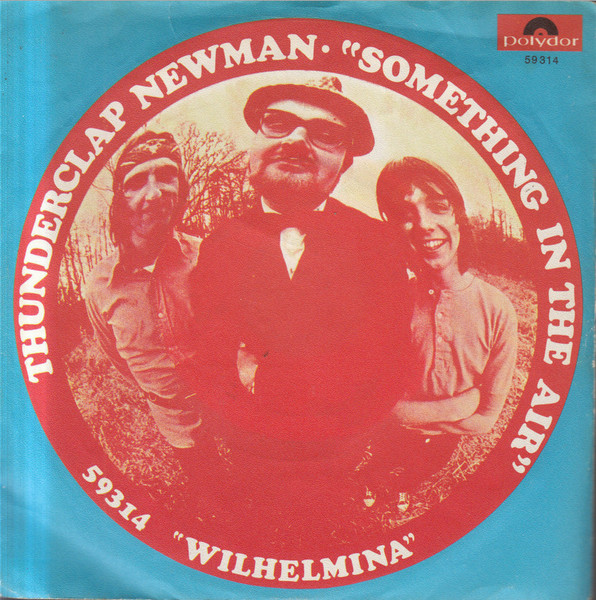
Thunderclap Newman - Something In The Air
Written by: Speedy Keen
Release Date: May, 1969
Highest Chart Position: #1 UK
Album Track: Hollywood Dream
B-Side Single: Wilhelmina
In 1969, Pete Townshend, The Who's guitarist, was the catalyst behind the formation of the band. The concept was to create a band to perform songs written by drummer and singer Speedy Keen, who had written "Armenia City in the Sky", the first track on The Who Sell Out. Townshend recruited jazz pianist Andy "Thunderclap" Newman (a friend from art college), and 15-year-old Glaswegian guitarist Jimmy McCulloch, who subsequently played lead guitar in Paul McCartney and Wings. Keen played the drums and sang the lead.

Jimi Hendrix – Hey Joe
Written by: Billy Roberts
Release Date: Dec, 1966 in UK
Highest Chart Position: #6 UK
Album Track: Are You Experienced?
B-Side: Stone Free (U.K), 51st Anniversary (US)
The lyrics tell of a man who is on the run and planning to head to Mexico after shooting his unfaithful wife. 
Listed at No. 201 on Rolling Stone magazine's The 500 Greatest Songs of All Time in 2010.
"Hey Joe" was the last song Hendrix performed at the Woodstock festival in 1969 and as such, it was also the final song of the whole festival. The song was performed after the crowd, comprising the 80,000 who had not yet left the festival, cheered for an encore

Derek And The Dominos - Layla
Written by: Eric Clapton/Jim Gordon
Release Date: March, 1971
Highest Chart Position: #7 UK
Album Track: Layla And Other Assorted Love Songs
B-Side Single: Bell Bottom Blues
Clapton originally wrote "Layla" as a ballad, with lyrics describing his unrequited love for Boyd, but the song became a "rocker" when, according to Clapton, Allman composed the song's signature riff. The song's length (7:04) proved prohibitive for radio airplay. As a result, a shortened version of the song, consisting of the first 2:43 of Part I, was released as a single in March 1971 by Atco Records in the United States. This version peaked at number 51 on the Billboard Hot 100 singles chart.

Rod Stewart - Maggie May
Written by: Rod Stewart/Mark Quittenton
Release Date: July, 1971
Highest Chart Position: #1 UK/US
Album Track: Every Picture Tells A Story
B-Side Single: Reason To Believe
Maggie May expresses the ambivalence and contradictory emotions of a boy involved in a relationship with an older woman and was written from Stewart's own experience. The song was released as the B-side of the single "Reason to Believe", but soon radio stations began playing the B-side and "Maggie May" became the more popular side. The song was Stewart's first substantial hit as a solo performer and launched his solo career. 

Eric Burdon And The Animals - Sky Pilot
Written by: Burdon/Briggs/Welder/Jenkins/McCulloch
Release Date: Jan, 1968 
Highest Chart Position: #14 US
Album Track: The Twain Shall Meet
B-Side Single: Sky Pilot Pt. 2
The sprawling single “Sky Pilot,” released at the dawn of that war-torn year, proved to be a game changer, one of rock’s first cinematic songs. At more than seven minutes, the number annexed both sides of the 45 record, its many sonic effects captured in true stereo. Even at that length, Eric Burdon’s song was a hit single, reaching No. 14 in the U.S. and remaining an FM radio staple over the decades. While the song’s subtle anti-war message surely concerned the Vietnam War, its shadowing invoked the two world wars.
The song is a balladic slice of life story about a chaplain who blesses a body of troops just before they set out on an overnight raid or patrol, and then retires to await their return.

Cream - White Room
Written by: Jack Bruce/Pete Brown
Release Date: Sept, 1968
Highest Chart Position: #6 US
Album Track: Wheels Of Fire
B-Side Single: Those Were Thee Days
Cream recorded White Room for the studio half of their 1968 double album Wheels of Fire. In September, a shorter US single edit (without the third verse) was released for AM radio stations, although album-oriented FM radio stations played the full album version. The subsequent UK single release in January 1969 used the full-length album version of the track.
Jack Bruce sang and played bass on the song, Eric Clapton overdubbed guitar parts, Ginger Baker played drums and timpani, and Felix Pappalardi – the group's producer – contributed violas. Clapton played his guitar through a wah-wah pedal to achieve a "talking-effect".

Focus - Hocus Pocus
Written by: Thijs Van Leer/Jan Akkerman
Release Date: July, 1971
Highest Chart Position: #9 US/Dutch
Album Track: Moving Waves
B-Side Single: Janis
An edited version was released as a single (with "Janis" as the B-side) on the Imperial, Polydor and Blue Horizon labels in Europe in 1971, but failed to chart outside of the Netherlands. A faster re-recording of the song (titled "Hocus Pocus 2" or "Hocus Pocus II" in some markets) was released in Europe in 1972. When performing live, Focus would play "Hocus Pocus" even faster. Supposedly the song was a bit of a joke by its authors, but if so, it was a very successful million-selling joke. 

Status Quo - Rain
Written by: Rick Parfitt
Release Date: Feb, 1976
Highest Chart Position: #7 UK
Album Track: Blue For You
B-Side Single: You Lost The Love
"Rain" was intended for Blue for You predecessor On the Level – but, at the time of the recording sessions, Parfitt had not completed the song and so it was held over. It in fact followed guitarist Francis Rossi's new introduction to speed; "That's why songs like 'Rain' were so edgy and fast," he explained.

John Mayall - Moving On
Written by: John Mayall
Release Date: 1973
Highest Chart Position: #116 US
Album Track: Moving On
B-Side Single: Keep Our Country Green
The single was lifted from "Moving On", a live album recorded at the Whiskey AGoGo, Los Angeles on the 10th of July 1972 with the aid of Wally Heider's Mobile Recording Truck. For this album, he reshuffled personnel, choosing Mitchell, Solomon, Larry Taylor, Victor Gaskin, Hartley, Robinson, Watts, flautist Charles Owen and baritone and tenor saxophonist Fred Jackson. The album and single, Moving On, was released in January, 1973.

Golden Earring - Radar Love
Written by: G.Kooyman/H.Hay
Release Date: Aug, 1973
Highest Chart Position: #10 US
Album Track: Moontan
B-Side Single: The Song Is Over
Radar Love is written from the point of view of a truck driver who says he has some sort of psychic connection with his girlfriend — "radar love". He senses that she urgently wants him to be with her, and it makes him reckless. His recklessness causes him to have a fatal accident, but even in the afterlife the song's narrator and his lover still have radar love.
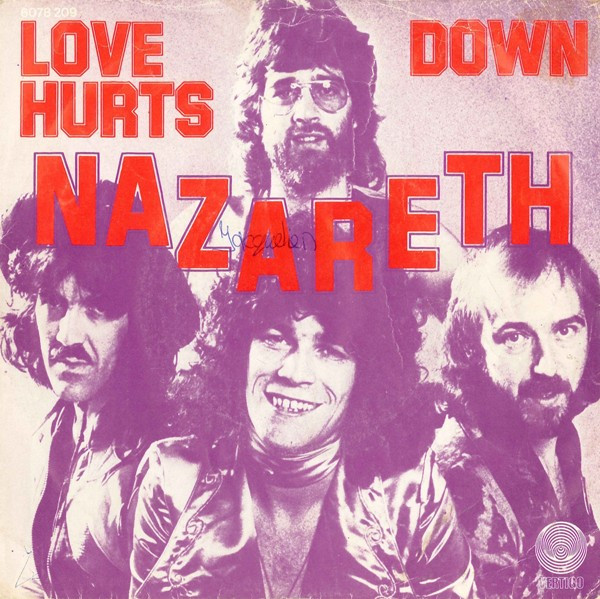
Nazereth - Love Hurts
Written by: Boudleaux Bryant
Release Date: Nov, 1974
Highest Chart Position: #8 US
Album Track: Hair Of The Dog
B-Side Single: Down
Performed as a power ballad, the Nazareth version is the most popular version of the song and the only rendition of "Love Hurts" to become a hit single in the United States, reaching No. 8 on the Billboard Hot 100 in early 1976. Jim Capaladi released a 'more up beat' version of Love Hurts in early 1975 and at one stage both versions were on the same charts at the same time - I personally preferred Nazareth's version.  The album version runs 3:52, with a guitar solo by Manny Charlton that is not on the 3:03 single. The lyrics of the song were changed for Nazareth's 1975 recording, where the original line "love is like a stove/it burns you when it's hot" was changed to "love is like a flame/it burns you when it's hot".
Oh, by the way, did you know that Nazareth got their name from the first line of the Band's "The Weight" - "I pulled into Nazareth..."

Eric Clapton - I Shot The Sheriff
Written by: Bob Marley
Release Date: 1974
Highest Chart Position: #1 US
Album Track: 46 Ocean Boulevard
B-Side Single: Give Me Strength
With respect to the song title, Marley has explained his intention as "I wanted to say 'I shot the police' but the government would have made a fuss, so I said 'I shot the sheriff' instead… but it's the same idea: justice. Clapton kept the underlying reggae beat from Marley's original, but made it more of a rock song, with prominent organ and guitar. In America, reggae was big around this time - in 1972, "I Can See Clearly Now" by Johnny Nash became the first song of that genre to hit #1 in the States. For listeners craving just a touch of reggae with their rock, Clapton's "I Shot The Sheriff" hit the sweet spot.

💿💿💿💿💿💿💿💿💿💿💿💿💿


Various Artists - Immortal Rock Vol.2  (1979)


 In the tradition of the first Immortal Rock album (Polystar 2475 517) this collection features further examples of all time rock classics from the 60's and 70's. 

From Chuck Berry to Roger Daltrey....the Who's Who (no punn intended)  of Rock's Golden era are featured on this 2nd compilation.


Singles featured on this compilation are:


Jimi Hendrix - All Along The Watchtower 
Written by: Bob Dylan
Release Date: Sept, 1968 
Highest Chart Position: #20
Album Track: Electric Ladyland
B-Side Single: Long Hot Summer Night
Hendrix had been working on and off with the members of the band Traffic as he recorded Electric Ladyland. Traffic guitarist Dave Mason caught Hendrix at a party and the two discussed Bob Dylan's newest album, John Wesley Harding, containing "All Along The Watchtower." Hendrix, long fascinated with Dylan, decided to cover the song on the album. On the resulting track, Mason plays rhythm on a 12-string acoustic guitar.

Rare Bird - Sympathy
Written by: Rare Bird
Release Date: Feb 1970
Highest Chart Position: #27 UK
Album Track: Rare Bird
B-Side Single: Devil's High Concern
"Sympathy" is a song by the English progressive rock band Rare Bird. It became the band's only UK chart entry when it peaked at number 27 in the UK Singles Chart in 1970. The song reached No. 1 in Italy and in France, selling 500,000 copies in France and over one million globally.

Hollies - He Ain't Heavy, He's My Brother
Written by: Bob Russell/Bobby Scott
Release Date: Sept, 1969
Highest Chart Position: #3 UK
Album Track: Non-album Single
B-Side Single: 'Cos You Like to Love Me
The Hollies' recorded the song in June 1969 at the Abbey Road Studios, with Allan Clarke on lead vocals. Elton John, who was still called 'Reg' at the time and was working as a session musician at the time, played piano on the song. He got paid 12 pounds for his trouble. 
In the Guardian newspaper of February 24, 2006, Hollies guitarist Tony Hicks said: "In the 1960s when we were short of songs I used to hang around publishers in Denmark Street. One afternoon, I'd been there ages and wanted to get going but this bloke said: 'Well there's one more song. It's probably not for you.' He played me the demo by the writers [Bobby Scott and Bob Russell]. It sounded like a 45rpm record played at 33rpm, the singer was slurring, like he was drunk. But it had something about it. There were frowns when I took it to the band but we speeded it up and added an orchestra. The only things left recognizable were the lyrics.

Rod Stewart - Mandolin Wind
Written by: Rod Stewart
Release Date: June, 1971
Highest Chart Position: #66 Aust 
Album Track: Every Picture Tell's A Story
B-Side Single: (I Know) I'm Losing You
"Mandolin Wind" was first released on Stewart's 1971 album Every Picture Tells a Story and later as the b-side of a single from that album, his version of "(I Know) I'm Losing You.
"Mandolin Wind" has been highly praised by music critics. In his review of Every Picture Tells a Story in Rolling Stone, John Mendelsohn refers to the song as being "nearly as good" as the #1 single off the album, "Maggie May."
The identity of the mandolin player on "Mandolin Wind" is unclear. The liner notes state that "the mandolin was played by the mandolin player in Lindisfarne" but that Rod Stewart had forgotten his name. In 2003, Ray Jackson claimed to be the mandolin player on the album, at least for the song "Maggie May." Jackson is the mandolin player from English folk-rock band Lindisfarne.

Allman Brothers - Ramblin' Man
Written by: Dickey Betts
Release Date: Aug, 1973 in US
Highest Chart Position: #2 US
Album Track: Brothers and Sisters
B-Side: Pony Boy
It was one of the first songs, alongside "Wasted Words", recorded for Brothers and Sisters (1973). They went to the studio to record a demo of the song to send to a friend, which is where the long guitar jam near the finale of the song was created. It is considerably more inspired by country music than other Allman Brothers Band compositions, which made the group reluctant to record it initially.

James Brown - It's A Man's, Man's, Man's World
Written by: James Brown/Betty Jean Newsome
Release Date: April, 1966
Highest Chart Position: #1 US
Album Track: It's A Man's Man's Man's World
B-Side Single: Is It Yes or Is It No?
The song's title is a word play on the 1963 comedy film It's a Mad, Mad, Mad, Mad World. Brown's co-writer and onetime girlfriend, Betty Jean Newsome, wrote the lyrics based on her own observations of the relations between the sexes. Newsome claimed in later years that Brown did not write any part of the song, and she argued in court that he sometimes forgot to pay her royalties. Australian musician Renée Geyer recorded a version in 1974. The song was released in November 1974 as the second single from her second studio album, It's a Man's Man's World. The song peaked at number 44 on the Australian Kent Music Report, becoming her first Australian top 50 single.

Roger Daltrey - Walking The Dog
Written by: Rufus Thomas
Release Date: June, 1975
Highest Chart Position: #52 UK
Album Track: Ride A Rock Horse
B-Side Single: Proud
Walking The Dog was recorded during Daltrey's filming commitments for Ken Russell's film Lisztomania. Daltrey’s version of the regularly rendered song basically sticks to the original blueprint, with the exception of a rather hauntingly repetitious tone slipped into the stew. It is quite baffling that the album from which this single was taken from, Ride a Rock Horse drew mixed responses when initially released. No doubt expectations simply ran too high for the Who celeberity, as this is certainly a potent piece of work. Daltrey’s amazing vocals, combined with sympathetic and inspired instrumentation anchor each number. Had Daltrey been an unknown entity and Ride a Rock Horse marked his maiden vinyl voyage, critics would have probably penned rapturous reviews. Those who wrote this album off the first time around should seriously give it another listen, while those just being introduced to Ride a Rock Horse will be suitably impressed.

Bachman Turner Overdrive - You Ain't Seen Nothing Yet
Written by: Randy Bachman
Release Date: Sept, 1974
Highest Chart Position: #1 US
Album Track: Not Fragile
B-Side Single: Free Wheelin'
The chorus of the song includes the song's famous stutter, and speaks of a devil woman looking at a man with big brown eyes and saying, "You ain't seen nothin' yet. B-b-b-baby, you just ain't seen na-na-nothin' yet. Here's somethin' that you're never gonna forget. B-b-b-baby, you just ain't seen na-na-nothin' yet.
Randy Bachman insists that the song was performed as a joke for his brother, Gary, who had a stutter, with no intention of sounding like the Who's "My Generation" which featured a stuttered lyric.  They only intended to record it once with the stutter and send the only recording to Gary.

Cream - Sunshine Of Your Love
Written by: Jack Bruce/Pete Brown/Eric Clapton
Release Date: Dec, 1967
Highest Chart Position: 
Album Track: Disraeli Gears
B-Side Single: SWLABR
With elements of hard rock, psychedelia, and pop, this song is one of Cream's best known and most popular songs. Cream bassist and vocalist Jack Bruce based it on a distinctive bass riff he developed after attending a Jimi Hendrix concert. Guitarist Eric Clapton and lyricist Pete Brown later contributed to the song and drummer Ginger Baker plays a distinctive tom-tom drum rhythm.

Jon English - Turn The Page
Written by: Bob Seger
Release Date: 1974
Highest Chart Position: #20 Aust
Album Track: It's All A Game
B-Side Single: Just the Way I Am
Turn The page is about life on the road, and the rigors musicians face when they're touring. It presents the other side of fame which the public doesn't see - the loneliness and aggravation.


Lovin' Spoonful - Summer In The City
Written by: John & Mark Sebastian
Release Date: July, 1966
Highest Chart Position: #1 US
Album Track: Hums of the Lovin' Spoonful
B-Side Single: Butchie's Tune
The Lovin' Spoonful recorded "Summer in the City" in two sessions at Columbia Studios in New York in March 1966. The recording is an early instance in pop music of added sound effects, made up of car horns and a pneumatic drill to mimic city noises. The effects were among the first on a pop song to employ an overlapping crossfade, an effect that had typically only been used on comedy albums. 

Eric Burdon & The Animals - Monterey
Written by: Burdon/Briggs/Welder/Jenkins/McCulloch
Release Date: Dec, 1967
Highest Chart Position: #15 US
Album Track: The Twain Shall Meet
B-Side Single: Ain't That So
The song provides an oral account of the June 1967 Monterey Pop Festival, at which the Animals performed. Burdon namedrops several of the acts who performed at the festival such as The Byrds, Jefferson Airplane, the Who, the Grateful Dead, and Jimi Hendrix. Chart wise, the song reached number 9 in Australia and number 20 in New Zealand. It did not appear as a hit in the UK, where the image of the Monterey festival was not as strong.

Chuck Berry - No Particular Place To Go
Written by: Chuck Berry
Release Date: May, 1964
Highest Chart Position: #3 UK
Album Track: St. Louis To Liverpool
B-Side Single: You Two
The song is a comical four verse story. In the first verse, the narrator is riding in his car as his girlfriend drives, and they kiss. In the second, they start to cuddle, and drive slow. In the third, they decide to park and take a walk, but are unable to release the seat belt. In the last verse, they drive home, defeated by said recalcitrant seat belt.

Slade - Get Down & Get With It
Written by: Bobby Marchan
Release Date: May, 1971
Highest Chart Position:  #16 UK
Album Track: Sladest
B-Side Single: Gospel According To Rasputin
Prior to recording the song in the studio, the band had established "Get Down and Get with It" as a popular number in their live-set, based on Little Richard's version. 
Impressed by the general audience reception of the song, Chandler suggested recording the song as a single. The band entered Olympic Studios in Barnes to record it and Chandler told the band: "Just play it like you do on-stage. Blast it out like it's live, and pretend that there's an audience in there with you." Successfully recorded in a single take, the band included foot-stomping and hand-clapping in the recording to give the song a live feel.

💿💿💿💿💿💿💿💿💿💿💿💿💿

This post consists of FLACs ripped from my Vinyl copies of these two compilation albums. Quality of these records is excellent although some base enhancements have been made to some tracks.
Full album artwork and label scans are included for vinyl - as far as I can tell, neither of these compilations have been released on CD.

Tracklist - Immortal Rock (1977)
A1   The Crazy World Of Arthur Brown  – Fire
A2   The Who  –  Pinball Wizard
A3   Thunderclap Newman  –  Something In The Air
A4   Jimi Hendrix  –  Hey Joe
A5   Derek And The Dominos  –  Layla
A6   Rod Stewart  –  Maggie May
A7   Eric Burdon And The Animals  –  Sky Pilot
B1   Cream –  White Room
B2   Focus –  Hocus Pocus
B3   Status Quo  –  Rain
B4   John Mayall  –  Moving On
B5   Golden Earring  –  Radar Love
B6   Nazareth – Love Hurts
B7   Eric Clapton  –  I Shot The Sheriff

Immortal Rock Link (327Mb) New Link 18/10/2023


Tracklist - Immortal Rock Vol.2 (1979)
A1 Jimi Hendrix – All Along the Watchtower
A2 Rare Bird –   Sympathy
A3 The Hollies – He Ain't Heavy He's My Brother
A4 Rod Stewart – Mandolin Wind
A5 The Allman Brothers Band –   Ramblin' Man
A6 James Brown – It's A Man's Man's Man's World
A7 Roger Daltrey – Walking The Dog
B1 Bachman-Turner Overdrive –   You Ain't Seen Nothing Yet
B2 Cream – Sunshine Of Your Love
B3 Jon English – Turn The Page
B4 The Lovin' Spoonful – Summer In The City
B5 Eric Burdon & The Animals –  Monterey
B6 Chuck Berry – No Particular Place To Go
B7 Slade – Get Down & Get With It

Immortal Rock Vol.2 Link (307Mb) New Link 18/10/2023

Thursday, August 26, 2021

REPOST: Focus - Hamburger Concerto (1974)

(Dutch 1969-1978, 2001-Present)
.
Focus is a band I have always admired. They have a way of delivering calm orchestral yet stunning and sharp pieces of music, as well as simple acoustic songs. Focus is a Dutch rock band, founded by classically trained organist/flautist Thijs van Leer in 1969, and is most famous for the songs "Hocus Pocus" and "Sylvia".
In 1971, the group released 'Moving Waves', which brought the band international acclaim and a hit on both sides of the Atlantic with the radio edit of the rock rondo "Hocus Pocus". This rock classic consists of Akkerman's guitar chord sequence used as a recurring theme, with quirky and energetic interludes that include alto flute riffs, accordion, guitar, and drum solos, whistling, nonsensical (Dutch) vocals, falsetto singing, and yodeling. This album established Thijs van Leer and Akkerman as composers who could appeal to progressive-rock album listeners (a large audience in the early 1970s) and radio single buyers.

However, it is their 1974 album "Hamburger Concerto" which really caught my attention as it is nothing short of being a 'masterpiece'. The selftitled track “Hamburger Concerto”, is a brilliant composition which manages to maintain sounds of both classical instruments and of modern rock instruments as well. "Harem Scarem" picks up the pace a notch and has some really great keyboard and guitar work - my favourite track on the album by the way. They do a terrific job at not drowning out different instruments with their assortments of synthesizers and guitars. It really does sound great, but that's not all this album has.
“La Cathedrale de Strasbourg” is a nice change of pace, providing a slow piano drawn piece, featuring some great accompaniment and general good musicianship. “Birth” is an upbeat tune with some great Ian Anderson-esque flute work and nice whining solos. The CD release of the album ends with the bonus track “Early birth”, which carries themes from birth including the flute and guitar and puts them in a great dramatic ending, something only leaving you wanting more. This track was released as the B-Side single to their single "Harem Scarem". 
This is a great instrumental album. If you can't listen to 5 minutes without lyrics, then this is not the album for you, and progressive rock is probably not the genre for you anyhow.
.
The rip here was taken from a CD remastered copy in brilliant FLAC format and includes full album artwork.

Track Listing
01. Delitae Musicae
02. Harem Scarem
03. La Cathedrale de Strasbourg
04. Birth
05. Hamburger Concerto:
I) Starter
II) Rare
III) Medium I
IV) Medium II
V) Well Done
VI) One For The Road
06. Early Birth (bonus B-Side Single)
.
Band Members:
Thijs van Lee(Flute/Organ/Piano/Harpsichord/Recorder/Mellotron/Vibes/Accordian/Whistling/Vocals)
Jan Akkerman (Guitar/Lute/Timpani)
Bert Ruiter (Bass/Auto Harp/Triangles/Chinese Finger Cymbals/Swiss Bells)
Colin Allen (Drums/Conga/Tambourine/Castanets/Cabassa/Chinese Gong/Timpani/Flexatone).

Focus Link (270Mb)   New Improved RIP

Saturday, September 26, 2020

Focus - At The Rainbow (1973)

 (Dutch 1969-1978, 2001-Present)

In 1973, Focus were at their peak! They simultaneously had two Top 10 albums (Focus 3 and Moving Waves) and two hit singles ("Sylvia" and "Hocus Pocus"). All of the musicians were voted as Top 10 musicians in each of their categories. Jan Akkerman was voted world's best guitarist. With a live reputation that proved Focus lived up to these 'Best Musicians' claims, the right thing to do was to release a live album: Focus at The Rainbow. (FACT: on the night of the recording, due to the demand for encores, Focus ran out of pieces to play!).

'At the Rainbow' was the first live album by Focus, released in October 1973 on Imperial / Polydor Records. The album was recorded at the Rainbow Theatre in London on 5 May 1973. A studio album was initially slated for release, but it was shelved due to disagreements within the band. (An album compiled from the tapes of these sessions was later released with the title Ship of Memories.) At the Rainbow was released instead.

The instrumental rockers of the early ’70s never were any good at dulling down their musical expertise; and, indeed, it’s only a matter of seconds into their first and only live release — Live at the Rainbow — until one realises just how talented Focus were. Jan Akkerman, named “World’s Best Guitarist” by Melody Maker in 1973 ahead of Eric Clapton and others, was amazingly on form in this performance. Thijs Van Leer, chief songwriter and performer in the band, showcased his talents on flute, vocals, and organ with unparalleled finesse. Bert Ruiter knocked out his bass lines tight to Pierre Van Der Linden’s drums, undoubtedly two of the finest players on their respective instruments. It would be so easy to go off on a tangent explaining the mastery that Focus had musically; suffice to say, however, the bands technical proficiency is rarely matched in the world of rock. Live at the Rainbow featured some of the band’s best and most well known tracks: “Sylvia,” “Hocus Pocus,” “Focus II,” and so on.

Jan Akkerman, Bert Ruiter, Thijsj Van Leer, Pierre van der Linden

Although much of the content sticks closely to its original studio form (12-minute tracks were regular on studio albums), with maybe an extra solo or two thrown in for good measure, a few songs host drastic changes. “Hocus Pocus,” for example, is almost unrecognisable. This live version is multiple times faster than its studio counterpart — those familiar with only the studio version are certainly in for a shock! Throughout the album the performance is simply astonishing. Live at the Rainbow is a fine purchase for any Focus fan, or, indeed, anyone looking for a band with a good degree of originality and musical ability [ extract from Many Fantastic Colours]

Review 1
(by Ivan Melgar M at progarchives.com)

I always read terrible reviews about this album something with I don't agree, of course is not one of their masterpieces, but the quality of the music and the selection of songs is outstanding.
Probably some fans aren't too happy without "The House of the King", but the mood of the concert is different to any other band, somehow dreamy and oneiric, with that atmosphere that covers the audience as a thick cloud of mist that covers the listener but instead of suffocating him the music helps to relax (Except of course for "Hocus Pocus").

The album starts with the excellent "Focus III", a beautiful track with a gentle intro of keyboards and guitar, it's pleasant to listen how the music perfectly flows, almost with no interruptions or dramatic changes until around the third minute when it turns more jazzy oriented as to prepare the organ ending, a short piece of art.

With no interruptions they lead us to "Answers? Questions!! Questions? Answers!" that creates a perfect contrast with the soft "Focus III", the intro is almost frantic at some points based in Akkerman's great guitar riffs and Thijs Van Leer amazing keyboard plus an extra instrument in Thijs voice, because he's one of the few vocalist that doesn't use his voice for singing but for adding extra sounds and laments.

Jan Akkerman
On this track there are many changes and sudden explosions with an organ that sounds very close to the Italian Farfisa of the late 60's that gives the strong Psychedelic sound, but around the middle Thijs offers us one of his incredible flute semi-solos (with drums background followed by another semi solo by Jan Akkerman that reminds me a bit of Steve Hackett), From that point the songs keeps flowing gently with a jazzy atmosphere where all the members of the band are simply amazing. Eleven minutes of different but very talented prog' rock.

Talking about music that gently flows, it's the turn for "Focus II", again introduced by Thijs keyboard enhanced by Jan's guitar and a very competent Bert Ruiter in the bass, the keyboard parts are faster than in "Moving Waves" affecting in some way the soft and perfect balance of the original version, but still very good and relaxing.

"Eruption" is based in the tragic Greek Myth of Orpheus, the man that created music who was destroyed after her true love's (Euridice) death and went to the rescue, of her down to hell.

The icy queen of the Underworld: Persephone, impressed with the beauty of Orpheus music, pleaded with her husband Hades to let Orpheus bring Euridice back to the land of the living. Hades could not deny his queen her request, and agreed to let Orpheus bring Euridice back on one condition: that he should not look upon her until they were both back in the land of the living. When they were about to reach the light, Orpheus felt doubts and turned back to see Euridice for a second before her soul was taken back to the world of the underworld.


The problem with this beautiful and complex song is that the version for The Rainbow Theater is too short (8:30 minutes against the 23:04 of the original version), this track was composed to musically describe a story and when mutilated for a live concert lacks of sense.

Despite this fact, works as an excerpt, because gives us a clear idea of the beauty of the music with the complex baroque sections like taken from a Cathedral and the peaceful passages that join perfectly with the next sound explosion. Jan Akkerman's solos require special attention because reminds me of Carlos Santana at some points.

Thijs van Leer
The next track is the famous "Hocus Pocus" which as we all know is just a joke where Thijs yodels at his entire pleasure while Bert Ruiter and Pierre Van Der Linden backup him with appropriate bass and drums, don't take it seriously, not even Akkerman's guitar riffs, as I said before it's just a joke.

The last track (because "Hocus Pocus Reprise" is really a filler to complete the planned time) is "Sylvia", Focus first commercial hit, Thijs dedicates this song to a girl that used to sing with him when both worked as backing vocalists for a well known Crooner from the Netherlands. Originally had lyrics but at certain point Thijs decided to use his voice for anything but singing, good track even when more commercially oriented.

Focus concerts were probably the simplest of Progressive Rock, they almost didn't used lights or created an spectacular show, they only did what they knew best, play their music, and for God's sake, they always did it well.

If you want to listen a frantic concert where people shouts and joins the band, don't bother, but if you want a rare testimony of Focus calmed style on stage, then give this one a go.

Review 2

(by George Starostin)

The obligatory live album from the band which is - hear! hear! - not a double one. Now isn't that kinda cute? After a sprawling, extensive, superfluous double studio album, to release just one tiny little LP of live material? This was an epoch when you were looked at askance if you only released a single LP worth of live material, but I guess this was just another 'focus' for the band. And at an era, too, when Focus arguably reached the peak of their popularity, with fans raving about the guitar abilities of Jan Akkerman and all.

How good is the album? It's good. It's also a total disappointment for me, because the entire first side is dedicated to a note-for-note-perfect (with just a few minor changes) recreation of the 'Focus III/Answers? Questions!' suite/jam from the last album, and I never liked it that much. The band's real weakness is in that they were so inventive, improvisational and creative in the studio, there was very little left for them in a live setting. Akkerman's funky guitar flies around like mad and Thijs van Leer's organ is prominent and energetic, but as a rationally minded homo sapiens I see no positive reason for anybody to get interested in these carbon copy recreations so as to waste their money. (Okay, so I did waste my money, but how was I to know I needn't have wasted it before I actually wasted it? Plus, wait a bit, the review isn't over yet). Anyway, there's just nothing particularly special about the first side.

Bert Ruiter

Likewise, I'm not a huge fan of 'Focus II' and 'Eruption' - more of the band's early fusion standards that, when placed in this here context, don't sound radically different from 'Focus III' and 'Answers? Questions!' (Except that 'Eruption' has been drastically shortened - not that it's done it any good). As usual, it all works as decent background music, but has pretty much a totally null level of resonance and sensitivity. In fact, the soft parts of 'Eruption' are mostly there to lull you to sleep...

The whole fun really kicks off only by the beginning of the last fourteen minutes. This live version of 'Hocus Pocus' is easily the definite version of the Focus classic, faster and crazier than the original, with Akkerman's lightning-speed metallic riffage precise and immaculate and van Leer's yodelling as hilarious as ever and more than that - check out the particularly lengthy yodelling exercise in the middle of the song which causes the audience to burst into a smattering of applause. However, perhaps the most beautiful part of the tune is the conclusion, when the band members are introduced one by one by van Leer in more or less the same yodelling style, with him hauntingly chanting out the members' names and duties one at a time. This is really fun.


After that as an encore the band launches into 'Sylvia', which is - don't brand me as a sellout, please - definitely Focus' best number after 'Hocus Pocus', and truly deserved to be a hit single. But alas, it is done really close to the original as well, and then the album closes with one more short reprise of 'Hocus Pocus' - whatever for? Definitely, this is one of the most stupidly concocted live albums I've ever heard. Too bad: a good, prolific band like Focus could have surely deserved a better track listing and a more suitable running time, but then again, most sources I've read tell this was a more or less adequate 'summary' of their contemporary live shows, so maybe I'm asking for too much.

And since this review turned out so relatively short, let me just say a couple general things about prog live albums to sum it up. While the most common statement is that all those mighty live albums released by Yes, ELP, Genesis, etc., in the early Seventies, served one essential purpose (to demonstrate that the band had the ability to pull off their complex music when playing live), it is, in fact, somewhat more complex than that. Those bands who still had a thick 'rock' background somewhere inside their guts, like Yes, for instance, were still trying to remember the basic live rule - a live album should sound more energetic than its studio counterpart - and revved up the adrenaline level. Others, like Genesis, tried to theatralize the proceedings to the max (too bad Genesis' own live album didn't really manage to satisfy that purpose); still others, like ELP, used the live platform to really show off their playing skills in a way that couldn't have been appreciated on the studio albums, throwing on additional improvisations and stuff; finally, sometimes bands used something really different, like Procol Harum with their symphonic orchestra live album, and so on.

Pierre van der Linden

In other words, you can't just use the same identical pattern to take and apply it to everybody; people have their different reasons for doing different things. However, for Live At The Rainbow I really can't find any particular 'additional purpose'. It doesn't rock harder than the studio albums, apart from maybe 'Hocus Pocus'; it ain't theatrical because there are next to no vocals; it ain't showing off any more than van Leer and Akkerman already were in the studio. No unpredictable songs, no unpredictable sounds. What's there to make of it? I dunno. It's just solid live performing.

This post consists of FLACs ripped from my treasured vinyl which, although played many, many times; has been well looked after. No crackles or pops, just great quality progressive rock and yodels. I love this album to death and admire the fact that these four guys could reproduce everything they did in the studio, and in some cases better, when playing live. 

Of course full album artwork is included (plus alternative covers like the one on the left) along with label scans. The other thing I like about this album is the triple fold cover and artwork, and copies in good condition fetch good money on ebay.

Tracklist
A1 Focus III 3:53
A2 Answers? Questions! Questions?
Answers! 11:37
A3 Focus II 4:22
Eruption (Excerpt) 8:44
B1.I Orfeus
B1.II Answer
B1.III Orfeus
B1.IV Answer
B1.V Pupilla
B1.VI Tommy
B1.VII Pupilla
B2 Hocus Pocus 8:30
B3 Sylvia 2:48
B4 Hocus Pocus (Reprise) 2:49

Vocals, Organ, Flute – Thijs van Leer
Drums – Pierre van der Linden
Guitar – Jan Akkerman
Vocals, Bass Guitar – Bert Ruiter


Focus At The Raindow (256Mb) New Link 21/12/2023

Saturday, July 11, 2020

Focus - In And Out Of Focus (1971)

(Dutch 1969-1978, 2001-Present)
.
Focus is a band I have always admired. They have a way of delivering calm orchestral yet stunning and sharp pieces of music, as well as simple acoustic songs. Focus is a Dutch rock band, founded by classically trained organist/flautist Thijs van Leer in 1969, and is most famous for the songs "Hocus Pocus" and "Sylvia".

In 1971, the group released 'Moving Waves', which brought the band international acclaim and a hit on both sides of the Atlantic with the radio edit of the rock rondo "Hocus Pocus". This rock classic consists of Akkerman's guitar chord sequence used as a recurring theme, with quirky and energetic interludes that include alto flute riffs, accordion, guitar, and drum solos, whistling, nonsensical (Dutch) vocals, falsetto singing, and yodeling. 'Moving Waves' album established Thijs van Leer and Akkerman as composers who could appeal to progressive-rock album listeners (a large audience in the early 1970s) and radio single buyers. 

Thijs Van Leer
However, one must not disregard their first release, initially called "Focus Plays Focus", but was later changed globally to "In And Out Of Focus". Worldwide there were 4 different covers, and the track list changed also on several editions. The CD reissues would finally include all 8 tracks, only found together before on Polydor/Sire LP editions. My Polydor copy was released in 1973, but sadly contains only 7 tracks, missing the single taken from album called "House Of The King". I have however rectified this in the post provided.
.
Knowing what Focus have accomplished (Hocus Pocus, Hamburger Concerto), it's really amazing to hear this album, because I don't hear many hints at their future ability to write concise rock or to create delicate, intricate prog, though there are notable exceptions. Uneven, at times uninspired, and in a few cases goofy, In and Out of Focus contains a fair amount of genuinely good music, but don't expect to hear a monumental statement regarding the potential of Focus.

"House of the King". This is the only real prog song on the album, and while short (under three minutes), it's a great example of the uniquely Focus sound. We've got a bouncy, medievalish melody, foot-tappingly played by flute, guitar, and accentuated by handclaps. I can picture dancing in the village square to this!

"Anonymous" and "Focus (instrumental)". Here Focus loosen up a bit and decide to throw down some great jam-rock. They really seem to be comfortable here, and the music reflects it - fun, at times virtuoso, and not too extended. The bass seems more lively here than in future Focus, which is most welcome. Both songs begin with melodies introduced in other songs and build to very satisfying crescendos, laying down some memorable grooves along the way.

Jan Akkerman
The rest... There really isn't much else of importance on this album. Some of the songs remind me of a mellowed-out Syd Barrett--similar vocals and playful style. The most bizarre is "Sugar Island": this Castro makes the poor man rich, he makes the powers fail, followed by some 'daba-daba' scatting. Needless to say, none of it really works, though "Why Dream" does have a great guitar solo to look forward to.

Worthwhile for Focus fans, but probably passable for those just getting into the band. I strongly recommend Moving Waves or Hamburger Concerto before In and Out of Focus.
.
This post consists of FLACs ripped from my near mint 1973 vinyl release and includes full album artwork for this and previous releases, plus label scans.  As mentioned, I have also included the missing single "House Of The King" as a bonus track to make this post complete (ripped from vinyl).
If you haven't heard this album then it is well worth doing so, and is an essential album for fans of the band, as it is a wonderful illustration of their beginnings. Enjoy.
.
Tracklist
01 Focus (Instrumental) 9:39
02 Why Dream 3:54
03 Happy Nightmare 3:59
04 Anonymous 6:43
05 Black Beauty 3:09
06 Sugar Island 3:05
07 Focus... (Vocal) 2:43
08 House Of The King (Bonus) 2:51

Focus Were:
Thijs van Leer (Vocals, Flute, Keyboards)
Jan Akkerman (Guitar)
Martin Desden (Bass)
Hans Cleuver (Drums)

New Link 26/01/2026