Friday, January 24, 2025

Mahavishnu Orchestra - Visions Of the Emerald Beyond (1975)

(U.S 1971–1976, 1984–1987)

Mahavishnu Orchestra's Visions of the Emerald Beyond is clearly, inarguably one of the best sounding Jazz/Rock Fusion Albums of All Time. In my experience few records of any kind offer the kind of Dynamics and Energy found on the best pressings of the album — If you have the size and dynamic firepower to reproduce it.

The amazing engineer Ken Scott (Ziggy Stardust, Magical Mystery Tour, Honky Chateau, Crime of the Century) is the man responsible for the sound here, but the explosive dynamics are not just for show. They’re here for a reason. This music requires that level of sonic realism; better yet, demands it. In truth, the sound is not only up to the challenge of expressing the life of the music on this album, it positively enhances it.

When you hear Ponty’s double-tracked violins explode out of each speaker on the first track, you will know what we mean when I say this record is as big and as bold a recording statement as any you have ever heard.

Mahavishnu Orchestra 1975
The Mahavishnu Orchestra on Visions of the Emerald Beyond is a completely different outfit from the one that recorded three LPs for Columbia from 1971-73. 
To put this thing into perspective it might be worth mentioning that McLaughlin was said to have had the best possible fusion band on the planet with Billy Cobham (drums), Rick Laird (bass), Jan Hammer (keyboards) and Jerry Goodman on the fiddle. This was of course the original Mahavishnu line up, Birds Of Fire being the real thing at the time.
But McLauchlin moved on. The new Mahavishnu was born with the likes of Michael Walden, Ralph Armstrong and Jean Luc Ponty, not to mention the string section. I too am a great fan of Visions Of The Emerald Beyond, and see the new Mahavishnu line up as being just as strong as the original lineup. 


Album Review (By Gary Hill, Music Street Journal: 2006 Volume 4)

Well, I tend to figure that fusion that leans heavily towards the rock end of the spectrum qualifies as progressive rock. In that case, there's no question where Mahavishnu Orchestra belongs. Everyone knows about legendary Mahavishnu guitarist John McLaughlin's fret-board prowess, but by the time this incarnation of the band came around Jean-Luc Ponty had joined bringing his exceptional skills on the violin into the fold .The truth is, these guys were an incredibly talented bunch of musicians (beyond the two most recognizable names, even) and they produced some of the most innovative and challenging music of the period. 

Jean Luc Ponty and John McLaughlin
As opposed to a lot of the output of acts like this not all of Mahavishnu Orchestra's songs were strictly instrumental. Almost half the tracks here have at least some vocals, and that adds to the variety of music that the band created. This album is a real killer - although some would say that it doesn't compare to some of their earlier works. It's a must have for prog fans who are looking to explore the fusion side. For those who haven't heard Ponty and McLaughlin, this one would be a great way to get an introduction to the works of both in one shot. They do manage to steal a lot of the show here, and as strong as these two are on their instruments - who cares?

Track by Track Review

Eternity's Breath Part 1
This rises gradually from silence with an organ-dominated sound. Bass and percussion begin to play across and the cut starts to take on a jazz meets Eastern tones texture. A burst of instrumental exploration gives way to a short percussive solo. Then a rather metallic burst of sound leads to a Zappa-like riff. As the vocals enter this becomes a jazz oriented prog rock powerhouse. The occasional side journeys into more Eastern tones are quite cool. They bring this to a logical conclusion, then a flourish of sound serves as the actual end.

Eternity's Breath Part 2
This fills the vacuum left by the previous one. It is a rather straightforward stomper that calls to mind Blood Sweat and Tears a bit. The guitar soloing on here, though, simply shreds. It should be noted that the BS & T link is in reference to the general musical form, and not the vocals arrangement or any such thing. This one is rather simple in terms of song construction, but gains all of its power from the soloing of Jean-Luc Ponty and John McLaughlin. They do twist it around later into a triumphant sounding segment that adds to the power and majesty of the overall track. Then another new segment emerges out of there and eventually pulls the vocals back in. Even then Ponty is soloing all over this thing. After it's done you can just say "wow!"


Lila's Dance
A pretty keyboard line starts this instrumental in a pretty, playful tone that's a definite contrast to the dramatic majesty of the last number. This runs through for a time as the introduction, then a new fusion sort of groove takes the track in slowly rising forms. Ponty cuts loose with a solo over the top of this and it seems as if the song is about to explode. However, instead of cutting loose into a full out fiery jam it moves back to the more restrained with the soloing laying lines of potent melody over the top of this backdrop. Ponty may be the first to solo on this cut, but he is not the only one as the duties are shared throughout this segment. Then it switches gear into a rather Kansas-sounding riff that serves as a transitionary segment. This gives over to a bass dominated segment. Then they burst back out into a guitar scream fest that is quite effective. The Kansas type riff takes it again later and they move it back out to a more melodic ballad type structure to carry forward. Some incredibly dramatic instrumental sounds are woven over the top of this, but eventually the piano returns to bookend this one out. Fans of stunning instrumental work really should not miss this one. It's a powerhouse, and everyone gets a chance to shine here as they move through all sorts of varying themes.


Can't Stand Your Funk
Well, that may be, but I sure like Mahavishnu's style of funk, and this is it. This groove starts off a bit tentatively, but as it kicks into gear full fledged it's an incredibly tasty slice of powerhouse funky tones and progressions. This instrumental is just a little over two minutes in length, but it's all quality. There's no fat on this funk machine.

Pastoral
As one might expect, the gentle sounds of nature lead this one off. They remain alone for the first two or so seconds, then an acoustic guitar motif joins. Ponty begins to weave lines of violin over the top of this backdrop and slowly they rearrange and augment this basic musical structure, enhancing it with each passing run. This is essentially a mellow balladic number, but don't let that fool you - it's anything but boring. It is quite pretty, but there is also plenty happening in this instrumental piece to keep your attention glued. They even include a drop back to classical instrumentation that is accompanied by a return of the natural soundscape. Violin pretty much rules this number, but the sum here is more than just that one instrument. Eventually only the nature sounds remain to end it.

Ralphe Armstrong & John McLaughlin
Faith
A pretty guitar line starts this, but very quickly they begin to work this over and over, creating waves of drama and power that at times become dissonant. This is an incredibly powerful instrumental that packs a lot of exploration into just two minutes. It drops back about half way through to an electric guitar texture and then a rock concert style solo takes it. Drums join in and the band launch into a frantic, but very short burst of excitement that ends in laughter.

Cosmic Strut
This comes in with something that reminds me just a little of Yes. This segment is very short lived (only a couple measures), though. They launch out into a funky sort of fusion groove from there that again showcases some stellar musicianship all around. This thing really captivates and excites as it carries through its variations. It's a pretty pure fusion-oriented outing. McLaughlin and Ponty steal much of the show, but you really can't take away from the rest of the performers, everyone contributes here.


If I Could See
A total change of pace an operatic voice starts this and the band come in as accompaniment, gradually building up to an equal par. This then begins to resemble a very odd early King Crimson sort of approach. This is all out art in motion - with less of an emphasis on musicality than making a point. As it works through the frantic jamming, though, eventually it begins to take on more definite musical themes and it fires out into a super frantic funky jazz jam that's simply awesome. That jam's origin lie in the space that ties this song and the next one together, so there will be more thorough coverage of it there.

Be Happy
The guys are literally on fire here with the bass in particular shining through. You can't take anything away from McLaughlin's guitar pyrotechnics; it's just that it's not as frequent that you get to hear the bass power a track like this. Ralphe Armstrong plays like a man possessed. This instrumental is another showcase piece and one of the best you're likely to hear anywhere.

Earth Ship
In startling contrast to the previous piece, this one starts with very sedate keyboards that build very gradually. After a time the track begins to play around within a jazzy ballad structure that serves as the backdrop for the vocals. This one is more about atmosphere and emotion than furious soloing. In that way it serves as a respite from the fury that we just experienced. Consider this the chance to catch your breath.

Pegasus
Speaking of atmosphere, this is basically a fairly brief section of spacey atmospheric jamming. It never really rises above the level of sound effects in terms of picking up a clear melody, but again it does a nice job of breaking up the disc.

Opus 1
This is a very brief (fifteen seconds) neo-classical introduction. Perhaps an opportunity for the listener to take a breather and set up for the disc's closer and seques straight into it.

On The Way Home To Earth
Spacey sounds rise up from the lead-in number. Then a noisy keyboard texture takes over a bit like some sort of crazy radio signal from a robot. This works its way into a more full-fledged fusion type groove as it carries on. It's still a bit weird and noise oriented, though. This gets pretty intense, but just doesn't quite work to me until it has a false ending couple minutes in. Then a plodding sort of bass chord takes it for a time, serving as the transition into the next movement. They scream out from there into more frantic fusion jamming, this time more on message in terms of the sounds. They still manage to turn it a little dissonant at times, but this is a rather effective piece nonetheless. They pull it towards a more melodic resolution to eventually end, and that's a good thing. Without that effort I'm not sure that this would make a great closer. Even so the ending is kind of abrupt, awkward surprise.
[Extract from musicstreetjournal.com with thanks]

This post consists of FLACS ripped from my first pressing vinyl (yet another gem in my record collection) which I have played many, many times, but religiously taken care of over the years.  Full album artwork and label scans are included.
No bonus tracks needed with this album - it's already loaded with great jazz fusion and has a unique track listing.
Note that I have taken the liberty of reproducing the tracks "If I Could See" &"Be Happy" as one track because they run into one another and I didn't want to interrupt your listening experience with a digital break.  Along with their brilliant LP 'Birds of Fire', this album is definitely Mahavishnu Orchestra's best release in my opinion.

Tracklist:
A1 Eternity's Breath - Part 1 3:10
A2 Eternity's Breath - Part 2 4:51
A3 Lila's Dance 5:37
A4 Can't Stand Your Funk   5:10
A5 Pastoral 3:42
A6 Faith 1:59
B1 Cosmic Strut 3:29
B2 If I Could See  1:16
B3 Be Happy 3:31
B4 Earth Ship 3:44
B5 Pegasus 1:51
B6 Opus 1 0:21
B7 On The Way Home To Earth  4:45

Bass, Vocals – Ralphe Armstrong
Drums, Vocals, Clavinet – Narada Michael Walden
Electric Violin – Jean-Luc Ponty
Guitar, Vocals – John McLaughlin
Keyboards, Vocals – Gayle Moran
Producer – John McLaughlin, Ken Scott, Mahavishnu 


Monday, January 20, 2025

Procession - Live At Sebastians (1968) plus Bonus Tracks

 (Australian 1967-1969)

On Wednesday, April 3rd, 1968; Procession made recording history at Sebastian
's discotheque in Melbourne, Victoria.
History making, because they recorded the first stereophonic 'Live' performance album ever produced in Australia.
With the rapid advancement of modern recording equipment and techniques, live performance recording no longer presents any major technical problems - as Bill Armstrong and his associates have so capably demonstrated on this album.
However, under this technical 'magnifying-glass', the highest degree of artistry and professionalism is demanded from the performer. Anyone who hears this album or who was present that night will agree that no Australian group could be better equipped for this challenge than Procession.

My personal involvement with Procession began just six months ago when I was associated with presenting their first Australian performance. Having heard them in rehearsal I was impressed with their musicianship and originality, but was greatly concerned that they were too advanced for the general public.


I needn't have worried. In six months they have established themselves as leaders in the conte2mprary music field. It is most rewarding for all of us associated with Procession's early days, to see them so highly respected and so widely accepted by audiences and musicians alike.

It's pointless for me to discuss the individual tracks on this album - I believe they speak for themselves, and demonstrate conclusively why this group is so enormously popular at Sebastians. It only remains for me to say how honoured we are that Procession chose Sebastian's for recording this magnificent album. [Liner Notes by Anthony Knight]


A PRECIS OF PROCESSION

The Procession saga is long and wonderous and should one day be covered in a book (I've left myself a note). However, at this point in time I shall confine my outpourings to a skeletal outline which may help place the music herein in some sort of useful perspective.
Procession was very likely the most publicly ambitious (some may say pompous) of all Australian late sixties rock ensembles. But then, coming from Melbourne, that is understandable. Their launch and every action thereafter was treated with gushin reverence by Yarra scribes and, for a time, it seemed as if Go-Set magazine had been taken over as the official journal of their fan club.

Source: Go-Set, October 1969
One memorable bulletin declared: "You must prepare yourself appropriately, before you are ready for THE PROCESSION! Clear you mind of all the little thoughts and interruptions - and listen intently to their single 'Anthem'. A new sound, unique, untried before in the whole of the pop world. Intricate, involved, ingeniously devised". Of course Sydney (indeed the rest of the country) responded to this with a brick wall of indifference; which was a great shame, given the bard's undeniable excellence.

The saga begins in New Zealand, where songwriter/guitarist Brian Peacock and drummer Craig Collinge formed The Librettos, a Beatle-era chart act which never quite connected in this country (despite a superior cover of Paul Revere & The Raiders' Kicks). Late in 1966 Peacock joined Normie Rowe's 'new' Playboys while Collinge fronted Brisbane's The Knack, one of Australia's first psychedelic trios (a la Cream, Jimi Hendrix Experience).

By the end of 1967, Peacock and Collinge were back together, in the company of Englishmen Trevor Griffin (from London group The Question Marks) and former Adam Faith sideman Mick Rodgers, both of whom had drifted into the Playboys and been inspired by Peacock's vision of a totally original and progressive recording unit. That all four happened to harbour leanings toward modern jazz was not necessarily a coincidence.

Procession: Wakefield-Express-14-Sept-1968
Procession came about through the recording of a stunning Sunshine label power pop single called 'Sad', by The Playboys (sans Normie). Although the song was not a hit, the musical configuration made sense and, on December 17, 1967 (see advert below), the newly-named Procession commenced a three week season at Sebastians and Berties disco. The just-unveiled national four hour Saturday morning rock TV show Uptight (which just happened to be produced by their manager, David Joseph) featured them in a special spot each week, the Lily Brett-Ian (Molly) Meldrum-Go Set PR machine swung into action, and by the beginning of 1968 the country was well aware of the quartet.


Procession's gameplan was to make everything they did a 'first'. Thus their debut single, 'Anthem', was recorded acapella, while their debut album was recorded Live at Sebastians on April 3, 1968 (still the first live debut album in Australian rock history). Their first TV appearance had seen them backed by a 40-voice choir. Their second single, 'Listen', was the first to be recorded on an 8 track recording machine in this country (Armstrong's much-touted Scully unit).

Source: Go-Set-June-15-1968
Unfortunately, apart from one Melbourne station, pop radio claimed 'Anthem' was too long (read: too revolutionary) for airplay and the miffed group, describing Australia as being "not a country for the young" headed off for London, having landed a remarkably large (for the time) advance from Philips/Mercury Records. ln London they had the good fortune to be sent into the studio with Manfred Mann's resident musical genius, Hike Hugg. By this stage, Peacock (who had penned the fine Normie Rowe hit 'Penelope') had truly found his feet as a songwriter and handed Hugg an impressive array of original works to fashion.

The result was a sophisticated, innovative, jazz-tinged album - certainly the most impressive by an Australian act at that time. But, in a repeat of the Australian scenario, British radio showed scant interest in the group and the single 'Every American Citizen', although advertised on the front cover of New Musical Express, sunk without a trace. Not even Mick Rodger's pop idol good looks staring out of the scream rags of the day could get Procession into the charts.

Despite the band's growing live prowess, there never was the promised third album. There were some more (Procession-produced) singles, such as 'Wigwam City', but the initial creative surge had been dampened by disinterest. In a desperate move, Peacock summoned to England the leader of his favourite Australian band, The Party Machine. But not even six months sterling service by the immensely talented Ross Wilson (without recordings) could rescue the situation. Ross went back home to put together Sons Of A Vegetal Mother and come up with the Daddy Cool brainstorm, and Procession fell apart.

Bassist/guitarist Hick Rodgers, the possessor of a magnificent set of rock vocal chords, drifted back to Australia to front the hit-less Bulldog and in 1972 rejoined drummer Craig Collinge in Manfred Mann's Chapter Three/ Earth Band, becoming Manfred's lead singer for a half dozen or so albums. He also was a recording member of Greenslade and Aviator. Collinge achieved certain rock infamy by being part of the 'bogus' Fleetwood Mac formed by manager Clifford Davis which toured America in the early 70s until stopped by the legal efforts of Messer's Fleetwood and McVie. He was also a recording member of Shoot and Third World War. Keyboard player Trevor Griffin became road manager for The Sweet.

Brian Peacock, for all intents and purposes, dropped from sight and at one stage was apparently running a Melbourne health food store (the 70s equivalent of the car wash). He received some reward for his diligence and undeniable anceptual talent in 1978 when the David Joseph-managed New Seekers made the U.K. top twenty with Anthem (One Day ln Every Week), the song that Procession had recorded three times, in three different ways, with consistent lack of success. By that time, Brian had
returned to music as co-leader of Perth blues band Western Flyer, with Matt Taylor. He then moved into artist management via The Dugites and by the early 80s was guiding Perth's Eurogliders to national prominence.

And that, until I get around to the book version, is about all I have to say about the Mind Magicians of Australia's Summer (and a few other seasons) of Love. [Notes by Glenn A. Baker]

This post (requested by blog follower RSVL) consists of FLACs ripped from vinyl (thanks to Deutros for rip) and includes full album artwork and label scans. All photos (thanks to Nick Warburton) and Glenn's notes are also included.
Although I found Procession's material to be a bit dated and pedestrian, I really enjoyed their closing number "Hear Me Calling Your Name" with the band pulling out all the stops and showing a more heavier sound.  Note that the bonus ' Live Uptight' tracks suffer from tape derogation and speed issues making the listening experience a little frustrating.
One final note, if you are interested in knowing where Procession performed during their three year reign, I suggest you pop over to Nick's website

Tracklist
01 - Anthem   4:15
02 - Take Time   2:28
03 - Once Was A Time I Thought   1:51
04 - Penelope   3:06
05 - Signature Tune   4:06
06 - Nobody Knows When You're Down And Out   3:28
07 - With A Little Help From My Friends   3:32
08 - Cloudburst   2:09
09 - Minuet For Moderns   2:26
10 - Sitting In The Park   4:12
11 - Hear Me Calling Your Name   7:38
Bonus Tracks
12 - Intro,  Up And Away,  Ruby (from 'Uptight' TV Show)   4:24
13 - Once Was A Time I Thought (from 'Uptight' TV Show)   1:31
14 - Interview (from 'Uptight' TV Show)   4:51
15 - Anthem (from 'Uptight' TV Show)   3:20
16 - Penelope (from 'Uptight' TV Show)   2:56
17 - AMBO Agency Ad (from 'Uptight' TV Show)   0:41
18 - God Rest Ye Merry Gentlemen (from 'Uptight' TV Show)   2:14

Procession Are:
Mick Rodgers - Guitar, Vocals
Trevor Griffin - Keyboards
Brian Peacock - Bass, Vocals
Craig Collinge - Drums


Thursday, January 16, 2025

REPOST: Doobie Brothers - Selftitled (1971)

(U.S 1970–1982, 1987–present)
.
As one of the most popular Californian pop/rock bands of the '70s, the Doobie Brothers evolved from a mellow, post-hippie boogie band to a slick, soul-inflected pop band by the end of the decade. Along the way, the group racked up a string of gold and platinum albums in the U.S., along with a number of radio hits like "Listen to the Music," "Black Water," and "China Grove."
Originally a trio called Pud formed in California in 1970 and comprising Johnston, Hartmann and bassist Greg Murph, the latter quickly replaced by Dave Shogrer.. Started out as a hard rock band, toyed for a spell with gospel-oriented material using horns before return to rock roots. Expanded to four-piece with addition of Pat Simmons, a native of Sar. Jose.

Signed to Warner Bros, this lineup appeared on 1971 debut album although Shogren left soon after. Tiran Porter and Mike Hossack (percussion) were enlisted to bring Doobies up to quintet. This use of two guitarists and two percussionists was later to draw comparisons with similarly boogie-oriented Allman Brothers, although Doobies have always professed a closer affinity to San Francisco band Moby Grape. Indeed, the Grape's Skip Spence had been instrumental in bringing original Doobies together.
The Doobie Brothers honed their chops by performing live all over northern California in 1970. They attracted a particularly strong following among local chapters of the Hells Angels and scored a recurring gig at one of the bikers' favorite venues, the rustic Chateau Liberte in the Santa Cruz Mountains. An energetic set of demos (some of which were briefly released on Pickwick Records in 1980 under the title Introducing the Doobie Brothers), showcased fuzz-toned, dual lead electric guitars, three-part harmonies and Hartman's frenetic drumming and earned the rock group a contract at Warner Bros. Records. (with Tiran Porter on Bass). At this point in their history, the band's image reflected that of their biggest fans - leather jackets and motorcycles.

However, the group's 1971 self-titled debut album departed significantly from that image and their live sound of the period. The album, which failed to chart, emphasized acoustic guitars and frequently reflected country influences.
Their second album, the gold-seller 'Toulouse Street' (1972) found the band experimenting with horns on certain tracks and moving further in direction of hard rock, results being a high placing on U.S. album lists and a hit single "Listen To The Music". The 1973 set, 'The Captain And Me', repeated the process with gold status and a hit single, "Long Train Running" - and by now the Doobies were a substantial concert attraction in the U.S. Attracting cult attention in U.K., they managed to sell-out two London Rainbow gigs on their British debut early in 1974 with very little pre-publicity.

Later that year the group's instrumental prowess was boosted by the talents of former Steely Dan's slide guitarist Jeff 'Skunk' Baxter (though many critics interpreted the move as a backward one on Baxter's part). The guitarist had, however, already appeared in session role on earlier Doobies albums.
More personnel changes occurred in the following year: Hossack departed to be replaced by Keith Knudsen, formerly with Lee Michaels, with line-up boosted to six by addition of keyboards player Michael McDonald - like Baxter before him, a recruit from Steely Dan [extract from 'The New Musical Express Encyclopedia of Rock', by Logan & Woffinden, Salamander 1977]

The new sound was showcased on 1976's 'Takin' It to the Streets', a collection of light funk and jazzy pop that resulted in a platinum album. Later that year, the group released the hits compilation 'The Best of the Doobies'. In 1977, the group released 'Livin' on the Fault Line', which was successful without producing any big hits. Johnston left the band after the album's release to pursue an unsuccessful solo career. Following his departure, the Doobies released their most successful album, 'Minute by Minute' (1978), which spent five weeks at number one on the strength of the number one single "What a Fool Believes." Hartman and Baxter left the group after the album's supporting tour, leaving the Doobie Brothers as McDonald's backing band.

Following a year of audition, the Doobies hired ex-Clover guitarist John McFee, session drummer Chet McCracken, and former Moby Grape saxophonist Cornelius Bumpus and released One Step Closer (1980), a platinum album that produced the Top Ten hit "Real Love." During the tour for One Step Closer, McCracken was replaced by Andy Newmark. Early in 1982, the Doobie Brothers announced they were breaking up after a farewell tour, which was documented on the 1983 live album Farewell Tour. After the band's split, McDonald pursued a successful solo career, while Simmons released one unsuccessful solo record. In 1987, the Doobies reunited for a concert at the Hollywood Bowl, which quickly became a brief reunion tour; McDonald declined to participate in the tour.

By 1989, the early-'70s lineup of Johnston, Simmons, Hartman, Porter, and Hossack, augmented by percussionist and former Doobies roadie Bobby LaKind, had signed a contract with Capitol Records. Their reunion album, Cycles, went gold upon its summer release in 1989, spawning the Top Ten hit "The Doctor." Brotherhood followed two years later, but it failed to generate much interest. For the remainder of the '90s, the group toured the U.S., playing the oldies circuit and '70s revival concerts. By 1995, McDonald had joined the group again, and the following year saw the release of 'Rockin' Down the Highway'. But the lineup had once again shifted by the turn of the new millennium. 2000 saw the band — Hossack, Johnston, Knudsen, McFee, and Simmons — issue Sibling Rivalry, which featured touring members Guy Allison on keyboards, Marc Russo on saxophone, and Skylark on bass [extract from Wikipedia]
.
Album Review
One of the most inauspicious debuts by a major rock group, this subdued slice of country boogie might be called the missing link between Moby Grape and the later, revved-up Doobies of "Listen to the Music." Only a handful of West Coast hippies bought this record originally, but it lays the blueprint for the Doobies' future radio-friendly sound: chugging rhythm guitar, stretched-out harmonies, Tom Johnston's joyful R&B vocals, and Patrick Simmons' acoustic picking. A muffled mixing job helped keep this album in the morgue, which is sad, because "Nobody" and "Greenwood Creek" rate with some of Johnston's best tunes, and they both deserve issuance on a definitive Doobie Brothers compilation. [reviewed by Peter Kurtz, All Music Guide]
.

I personally like this first release as it demonstrates the roots from where the Doobies latter music would spring from. For example, if you listen closely to the track "Beehive State", you can definitely hear some Doobie riffs that were indicative of greater things to come.
This post consists of FLACs ripped from my vinyl copy which I bought 2nd hand for the pricely sum of $1.99 back in the late 70's and includes full album artwork for both CD and Vinyl plus label scans. My copy exhibits the newer Warner Bros record label and is a 1974 re-release - probably made in response to the popularity of the Doobie Brothers at that time. If you haven't listened to the Doobie's earlier material, then you really haven't 'Listened To The Music' (pun intended !)

NEW IMPROVED RIP!
.
Track listing
01 - Nobody (Johnston) – 3:42
02 - Slippery St. Paul (Simmons, Johnston) – 2:14
03 - Greenwood Creek (Johnston) – 3:04
04 - It Won't Be Right (Johnston) – 2:38
05 - Travelin' Man (Johnston) – 4:25
06 - Feelin' Down Farther (Johnston) – 4:20
07 - The Master (Johnston) – 3:30
08 - Growin' a Little Each Day (Johnston) – 3:20
09 - Beehive State (Randy Newman) – 2:42
10 - Closer Every Day (Simmons) – 4:19
11 - Chicago (Simmons) – 1:40

.
Band Members:
Tom Johnston - guitar, harmonica, piano, harp, vocals
Patrick Simmons - guitar, vocals
Dave Shogren - bass, organ, keyboards, vocals
John Hartman - drums
.
The Doobies Link (213Mb)  New Link 16/01/2025
.

Tuesday, January 14, 2025

REPOST: Paul Norton - Let It Fly (1992)

(Australian 1980 - 1994)
.
Paul Norton (aka McNaughton) started playing bass in various bands in his teens, which led to the formation of Melbourne band The Runners. After a couple of years of constant live work The Runners were signed to Mushroom records in 1981 and released their first single "Sure Fire Thing" in 1982 followed by The album 'Hitting the Wall' and the single "Endlessly". The Runners toured constantly throughout the early eighties and went through many line up changes before disbanding in 1985.
Paul spent the next couple of years playing with various bands (Wendy and the Rocketts, Steve Hoy and the Hoy Boys) before launching a solo career in 1988. Again signed to Mushroom Records, Paul released his first single "Stuck On You" which received immediate airplay and got to number two on the Australian charts. Paul then went to London to work with producers Paul Muggleton and Mike Paxman on the next single "I Got You" (#34) and the album 'Under a Southern Sky' (the song "Southern Sky" (#32) was later chosen for Australia Day Celebrations at the 2000 Olympics in Sydney).

Paul worked live with his band for the next couple of years before teaming up with American musician/producer T-Bone Wolk (Hall and Oates Carly Simon) to work on his second album 'Let It Fly' which was recorded at Metropolis studios in Melbourne and mixed in New York at Electric Lady and Bearsville studios. Let It Fly was released in 1992 with the singles "When We Were Young" and "Lil Red Riding Hood". Paul worked live with his band over the next couple of years touring extensively throughout Australia including many aboriginal communities and Arnhem Land.
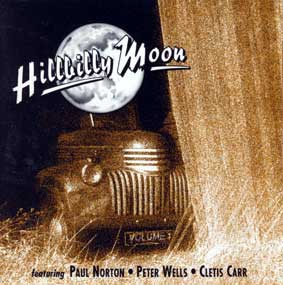
In 1994, Paul met Peter Wells RIP (Rose Tattoo) and Cletis Carr and together they formed Hillbilly Moon and later that year released the album 'Hillbilly Moon Volume One' with the song "She Left Me" receiving solid airplay on Country Music Television.
.
Paul was Musical Director and wrote the score for The Australian Shakespeare’s production of Much Ado About Nothing and the finale for the critically acclaimed comedy Certified Male. Paul has written for and with some of Australia’s finest performers including Debra Byrne, Gerry Hale, Wendy Stapleton, Donna Fisk and Michael Cristian, Dobe Newton and Colleen  Hewitt. In the last few years Paul has divided his time between writing producing and working live and is currently working on a new album.
2006 saw Paul tour Australia with The Countdown Spectacular, featuring 27 of Australia's top rock acts of the 70's and 80's performing to 100,000 people nationwide. [extract from Paul's Website]
.
Album Review
This album is easily the equal of 'Under A Southern Sky' and it's excellent lead single "When We Were Young" combined the cruisy, catchy feel of his earlier hit "Stuck On You" with a nostalgic lyric that teenagers young and old could relate to.
And yet for some inexplicable reason, radio stations ignored it, bar a few scattered plays in Melbourne, resulting in neither the album nor the single taking off. As a follow up single Paul issued the old Sam The Sham hit "Lil' Red Riding Hood", the album's only cover/remake. It probably seemed like a good idea at the time in that it was a nicely rockin' little version, it had recognition factor and Paul and the band, with Nick Barker guesting on vocals, sound like they're having fun too. But another of Paul's originals would have been a much better option.

With his gritty voice, the occasional use of fiddle on some tracks and the music's hybrid of country and rock styles, Paul does at times remind me of John "Cougar" Mellencamp (especially in the track "What Are We waiting For"). Without slavishly copying of course. In fact there's a downright Stones-like blues-rock swagger on a couple of my favourite tracks like "Little Miss Understood" and "Lie To Me". Elsewhere there's a stomping soul style feel on "Nothing She Can't Do" featuring some nice blues harp and the down-home country stylings of "Too Many Angels", with an incongruous but strangely befitting sax solo by Joe Camilleri
All up a great album to be sure, not a synthsizer to be found anywhere and it should have made him huge. The backing cast is also of major note as first of all, it was helmed by noted US producer T Bone Wolk (Hall & Oates/Carly Simon/Elvis Costello/Billy Joel/Wendy Matthews/UK Squeeze etc).
.
.
His band on the album is top notch too and includes his ex-Runners band mate Mark Greig on guitar, wife Wendy Stapleton on backing vocals and drummer John Watson (Kevin Borich/Renee Geyer/Aussie Crawl). Plus guest appearances by the aforementioned Nick Barker and Joe Camilleri, with drummer Freddie Strauks (Skyhooks/Jo Jo Zep), Jen Anderson (Black Sorrows) on violin and finally Mike Brady providing backing vocals on a track or two.
.
Paul went on to form Hillbilly Moon with Peter Wells RIP (Rose Tattoo) who issued one acclaimed album as well as writing for and with the likes of Debra Byrne, Gerry Hale, Wendy Stapleton, Donna Fisk and Michael Cristian, Dobe Newton and Colleen Hewett.  [thanks to Micko at the Midoztouch forum for this great album review].
.
This post consists of FLACs ripped from my CD copy and includes full album artwork. A great album and well worth the listen, even if you haven't heard any of Paul's solo material. The more you listen to it, the more it grows on ya. Perhaps the radio stations should have given it a better listen.

NEW IMPROVED RIP !
.
Track Listing
01.  When We Were Young
02.  When The Kingdom Comes
03.  Too Far Gone
04.  Fly Away
05.  Star
06.  Lil’ Red Ridin' Hood
07.  Too Many Angels
08.  Getting Away With Murder
09.  Little Miss Understood
10.  What Are We Waiting For
11.  Lie To Me
12.  How Great It Is
13.  Nothin’ She Can’t Do
14.  Ain’t That The Truth


Band Members:

Paul Norton (Bass, Guitar Vocals)
Mark Greig (Guitar)
T-Bone Wolk (Bass, Keyboards, Vocals)
Tim Millikan (Percussion and Drums)
John Watson (Drums)
Dino Baptiste  (Harmonica)
Backing Vocals: Wendy Stapleton/Mike Brady/Nick Barker/Nikki Nicholls/Bobby Mayo/Kasim Sultan/Mark Rivera
Additional Drums: Peter Luscomb/Freddie Strauks/Michael Braun/Doug Bradly
Keyboards: Bobby Mayo
Violin: Jen Anderson
 .

Paul Norton Link (431Mb) New Link 14/01/2025
.

Friday, January 10, 2025

REPOST: John Farnham - Time Brings Change (1988)

(Australian 1967-Present)
.
In a country of 20 million people John Farnham is the one Australian artist who stages arena sized concerts whenever he tours to satisfy the demand. He is without challenge Australia's most successful solo artist, on stage and on record. His Whispering Jack album was the first album to sell over a million copies in Australia alone. John got his first big break singing the now famous Susan Jones TV ad commercials. Not long after this he was to record his first hit Sadie in 1967. Sadie was a big gamble – it was commercial, sure but it was also corny. The radio stations wouldn’t play it. It was only after a Four Corners TV segment on how a record company promoted an unknown, which featured the song, that they were willing to play it at all! 

After John made an appearance on Uptight singing his song, the station’s switchboards were, however, inundated with calls requesting a repeat of the song. Sadie ended up being the biggest selling Australian hit of the 60’s. John was on his way!
.What fans were responding to was "Johnny" Farnham's bright boy-next-door personality. He was someone teenage girls and the mothers could both like. Farnham was also a fine singer and survived "Sadie" to release a long string of pop hits between 1967 and 1973, including the local hit versions of Three Dog Night's "One," B J Thomas' "Raindrops Keep Falling On My Head" (#1) and David Cassidy's "Rock Me Baby. He also starred in the stage musicals Dick Whittington And His Cat, Charlie Girl and Pippin. His schedule denied Farnham trying his luck internationally or developing on record. Success continued virtually on the basis of his talent and that personality alone and in the late to mid seventies his career was reduced to nightclub and cabaret performances trading on his past. Even his record company lost faith in him and dropped him.

In 1980, changing from Johnny to the more mature John Farnham, he set about resurrecting his career. The trigger was a dramatically rearranged impassioned performance of the Beatles' "Help" on a nationally broadcast Royal Command TV concert. He reminded everyone what a fine singer he was, and in July released Uncovered, a well received comeback album recorded under the production eye of Little River Band's Graham Goble. In September 1982 long-time Farnham fan Goble was inspired to convince the rest of LRB they should take the radical move of removing Glenn Shorrock, singer of all the band's hits, and making Farnham their lead singer. The band's American record company was in shock. So were non-Australian fans. It was a hurdle Farnham could not overcome, and at the end of 1985 he left LRB and began work on a new make or break solo album.
.
The anthemic single "You're The Voice restored Farnham to #1 for the first time in 17 years. The carefully crafted adult contemporary October 1986 album Whispering Jack was No.1 for 18 weeks, and became the biggest selling album in Australian history. "You're The Voice" sold a million copies in Europe and reached the top ten in England. A consummate singer and performer since 1986 Farnham has been Australia's No.1 attraction, with successive big selling albums and sold out concert tours. International interest has continued to beckon but the dedicated family man is happy with his career as it is [extract from blue.desert]
.
 .
This post consists of  FLACs ripped from my CD copy of this album. Full album artwork is included for CD only.  This is not your usual compilation of early material by Farnham (no "Sadie" or "Raindrops Keep Falling" on this one), but rather some of his lesser known cabaret tracks which in their own right, are just as good. My favourites are his: Elton John cover "Take Me Back To The Pilot" and his renditions of the stage classics "Hair" and "Day By Day".

One point of contention regarding this album, however, is that it should be credited to 'Johnny' Farnham and not 'John' Farnham. This is because all tracks on this compilation predate 1980, which is when Farnham changed his stage name from Johnny to John. This album was no doubt released by EMI to cash in on the success that Farnham was having during his Whispering Jack era. If you haven't heard his early 70's material, then this album is a nice introduction to his Cabaret years.
.
        New Improved Rip !
  
Track Listing
01 - Charlie Girl (1972)
02 - Who Can I Turn To (1972)

03 - Hair (1972)
04 - Saturday Dance (1974)
05 - For Once In My Life (1971)
06 - Take Me To The Pilot (1971)
07 - Diana (1973)
08 - Memphis Tennessee (1973)
09 - Rag Mama Rag (1971)
10 - Things To Do (1974)
11 - Band Of Gold (1971)
12 - Day By Day (1972)
13 - White Christmas (1970)
14 - Till Time Brings Change (1974)

.
Johnny Farnham (270Mb) New Link 10/01/2025
.

Monday, January 6, 2025

REPOST: Carlos Santana & Buddy Miles - Live! (1972)

(U.S 1966–present, U.S 1967–2008)
.
I purchased Carlos Santana and Buddy Miles Live on vinyl in 1972 when it was first released, and I still consider it one of my favorite live music albums. The brass sound that was popular in the early 1970's adds energy and pop to this live recording. I first heard the fast version of Evil Ways on this live album, and still prefer it to the slower studio recording that is on the Santana Greatest Hits album. In fact, the first five cuts on this live album are a wild ride. If I have a possible complaint about Carlos Santana and Buddy Miles live, it would be that it is too short. If this album were only the first half, I'd love it. The combination of Carlos Santana's blistering guitar solos (and those of Neal Schon) and his Latin-rock-based band with the heavy, heavy gut drumming of Buddy Miles (soon to be a member of Jimi Hendrix's second great group, A Band of Gypsies, made for great, continually exciting music. "Lava," "Them Changes" (much better than on Buddy Miles's own group recording of the same time). 

The first half of the album is as exciting music as you could find at the time. The second half is a long, meandering piece entitled "Free Form Funkafide Filth", and the piece is about as good, and as dated, as its title. It's somewhat boring, heavy, and it doesn't go anywhere. But that doesn't matter because the first half is so good!
I wish this group had played together longer.
.
Live Album or Studio Scam?
There seem to be all sorts of urban legends surrounding this 1972 Top Ten album from Carlos Santana and Buddy Miles. Some people claim that the concert never took place (see topix.com) which seems unlikely, since Santana and Miles toured together extensively in late 1971 and early 1972. Others suggest that Carlos played little on the album, and while I respect the six-string talents of Neal Schon (who legend also says turned down an invitation from Eric Clapton to flesh out Derek and the Dominos to play with Santana's band, and who built a great reputation for himself as lead guitarist for Journey), there are numerous guitar runs on 'Live!' that have Carlos Santana written all over them. I think many of the myth-makers are deluded by the overly-engineered master tapes. It was common practice in the early seventies to modulate the amplitude of the crowd noise and this seems to be what was done with 'Live!'. While it sounds hokey at times (with what sounds like looped audience applause at times), that doesn't mean the performances didn't happen.
.
Perhaps also lending to the controversy is the liner notes listing the recording date as 'January 0, 1972', a non-existent date, suggesting the concert never happened. But the concert actually took place in Hawaii, in the center of the Diamond Head volcanic crater, on January 1, 1972 during the 'Sunshine '72 Festival', so the bogus date on the linear notes is probably a typo or was done as a joke.
Supporting that fact is a collage of about fourteen photographs from the concert itself. One can see Carlos playing guitar in several of them, and there's a number of Hawaiian-looking people standing around as well. That's proof enough for me. I guess this one doesn't rise to the level of the McCartney death hoax!
.
Fortunately, the music does rise to the occasion. I first acquired a copy of this album as one of my 12 "free" records when I joined the Columbia Record Club. I wasn't sure if I would like it, but in 1972 most people were convinced you couldn't go wrong with Carlos Santana, and I was one of them. I wasn't disappointed. While it may take a little time and a few listens for the 25 minute plus "Free Form Funkafide Filth" to grow on you... it does. I'm not sure how 'free form' this filth is (it's credited to Miles, Santana, drummer Gregg Errico, and bassist Ron Johnson), but it manages to hit a funk groove on several occasions and passes the ample running time (especially for a vinyl record) admirably.
.
The real gems, however, are on side one. While the track listing lists five separate tracks, tracks one and two ("Marbles" and "Lava") and tracks four and five ("Faith Interlude" and Mile's best known composition, "Them Changes") segue seamlessly into one another, creating a musical suite. Only an upbeat, horn augmented version of "Evil Ways" stands alone, almost as a centerpiece. All of these tracks, save "Faith Interlude", which is perfectly titled given it's buoyant strains, are funky tomes of dynamite. Robert Hogins on organ and Coke Escovedo on timbales, along with a trio of conga players, do yoeman's work keeping up with Santana, Schon, and Miles. Over the years these tracks have merged in my mind, and belong together as one piece of work every bit as much as the flip side of the original vinyl disc.
.
This album has been reissued on CD several times, having been remastered in 1994 and then reissued in 2005 and 2008. The pressed copies of the 2008 release must have gone quickly, explaining why it is no longer available. Sadly, no additional tracks have ever been added to any of the reissues, suggesting that no additional quality recordings from the concert exist. That's a little hard to believe, but what else could explain it? If additional material comparable to what is being offered here is ever released, criminal negligence charges should be levied against Bob Irwin, the "Reissue Producer", for keeping it under wraps for so long. [Don Schmittdiel 2008]
.
The rip was taken from CD in FLAC format and includes artwork from both CD and LP. Photos taken at the Sunshine '72 Festival inside the Diamond Head volcano, Honolulu Hawaii are also included. I have also chosen to include an alternative rip of Side 1 as a single FLAC file (riiped from my vinyl), to retain the continuity of the tracks as heard on the LP, where one song runs into the other.
I personally enjoy this alternative, as the continuity of the concert atmosphere is retained.
.
Track Listing
SIDE 1
01. "Marbles" (McLaughlin) – 4:18

02. "Lava" (Miles) – 2:10

03. "Evil Ways" (Henry) – 6:36

04. "Faith Interlude" (Miles, Santana) – 2:13

05. "Them Changes" (Miles) – 5:50

SIDE 2
06. "Free Form Funkafide Filth" (Errico, Johnson, Miles) – 24:54

.
Band Members:
Carlos Santana - guitar, vocals
Neal Schon - guitar
Buddy Miles - Drums, percussion, congas, vocals
Ron Johnson - Bass
Bob Hogins - Organ, Electric Piano
Greg Errico - drums
Richard Clark - drums, percussion, congas
Coke Escovedo - percussion, tímbales.
Mingo Lewis - percussion
Mike Carabello - percussion, congas
Victor Pantoja - percussion, congas
Hadley Caliman - flute, saxophone
Luis Gasca - trumpet

NEW IMPROVED RIP !
.
Santana and Miles Link (455Mb)
New Link 6/01/2025
.

Thursday, January 2, 2025

Galapagus Duck - The Voyage Of The Beagle (1983)

 (Australian 1969  - Present)

Based in Sydney back in the 70's, Galapagos Duck was an integral part of the foundation and success of the Jazz Club 'The Basement'. The band continuously performed in the club as it's primary 'house band' for 16 years - during which time 'The Basement' became known as one of the greatest Jazz Clubs in Australia and around the world. 'The Duck' also toured extensively all throughout Australia, visiting the capital cities and - on many occasions - performed in country areas including the remote areas of Western Australia and the Northern Territory.

In the period until Voyage of the Beagle, released in 1983, they made an astonishing 9 albums starting with Ebony Quill in 1974-- bear in mind that these are stuffed with cover versions and sometimes jazzed-up of really obnoxious songs like Grazing in the Grass.

'Voyage of the Beagle is of great interest to me as it's a thoughtfully composed concept album about Charles Darwin's explorations, so you can certainly imagine the creative and evocative potential of the subject matter that went into its creation. Note also the dramatic difference in CD and LP covers as shown above and below.

By 1983, Tom Hare was the only founding band member from Galapagos Duck's first line-up with Greg Foster the next in line. Other band members were John Conley, Bob Egger, Mal Morgan and Mick Jackman (who does most of the vocals).  Irrespective, all band members are accomplished jazz musicians, each skilled in multiple instruments and song writing. 

The Voyage Of The Beagle
(Album Liner Notes)

The origin of the species known as the Galapagos Duck has little real relevance to Charles Darwin or his theories but rather is related to the writings of another eminent, more contemporary Englishman, Mr Spike Milligan.

One steamy night many years ago in the heart of deeper Sydney-town the members of a certain jazz band wailed away the hours with Spike, a long-time friend, drinking and joking in the tavern where the band performed. It was this late-night session which prompted the adoption of the band's curious name, now a household word among jazz followers, the Galapagos Duck.

Apart from its name and the fact that it features very significantly in the evolution of the jazz idiom in Australia, the Galapagos Duck has little to do with the life and work of the father of Evolution. However, because of the name the members of the band feel a certain empathy with Darwin and have more particularly developed a fascination with his epic voyage which took him through that part of the world from which the basis of many jazz forms and indeed most of modern popular music finds its roots.

This recording, which is a selection of original compositions by the members of the band, attempts in musical terms to trace the Beagle's voyage.


After having been twice driven back by heavy south western gales, Her Majesty's ship Beagle, a ten-gun brig, under the command of Captain Fitzroy, RN, sailed from Devonport on the 27th of December, 1831.' And so The Voyage Begins

Its primary mission was to survey the poorly known coastal areas of South America. On board was a young naturalist, Charles Darwin, who undertook the voyage without pay partly to put off his intended vocation. His father felt it was high time his son settled into some suitable career such as the ministry.

The outstanding outcome of this five-year voyage was the most revolutionary change that has ever occurred in man's view of himself . In 1837, Darwin began developing a theory to explain how species evolve and after almost twenty years of thoroughly working through his ideas he produced his masterpiece 'Origin of Species'.


It was Darwin's visit to the Galapagos Islands in the Pacific west of Ecuador, and his examinations of gigantic fossil bones at Punta Alta in Argentina, that chiefly stimulated his speculations as to how the diverse species of the earth might have come about.

'The Archipelago is a little world within itself . . . the different islands to a considerable extent are inhabited by a different set of beings.' Life on the Archipelago

At Punta Alta in Argentina Darwin wrote, '...the remains of these nine great quadrupeds and many detached bones were found embedded on the beach, within the space of about 200 yards square. It is a remarkable circumstance that so many different species should be found together.' The Skeletons of Punta Alta


In July of 1832 somewhere off the coast of Uruguay, Darwin observed a natural phenomenon which has been experienced by many sea travellers down through the ages. He found it worthy of note in his diary'...we witnessed a splendid scene of natural fireworks; the masthead and yardarm-ends shone with St Elmo's light... St Elmo's Fire

He was fascinated by the life in the lush forests of South America: 'the elegance of the grasses, the novelty of the parasitical plants, the beauty of the flowers, the glossy green of the foliage, but above all the general luxuriance of the vegetation, filled me with admiration.' In a Brazilian Forest

Throughout Darwin's diary during his South American travels there are many references to the splendour of the Cordillera range'... From some high land we hailed with joy the white summits of the Cordillera, as they were seen occasionally peeping through their dusky envelope of clouds'. Cordillera

After leaving the Galapagos Archipelago the Beagle travelled to Tahiti and then on to New Zealand and in his writings Darwin compares two races of Polynesians, the civilized, peaceful Tahitians and the savage, ferocious New Zealanders. The Tattooed Warriors: 'I should think more warlike race of inhabitants could not be found in any part of the world.'

From New Zealand the voyage continued on to Australia where Darwin observed some of the traditional dances of the Aborigines. 'The natives . . . were persuaded to hold a 'corroboree' or great dancing party .. .

The dancing consisted in their running either sideways or in Indian file into an open space, and stamping the ground with great force as they marched together . . .

there was one called the Emu dance, in which each man extended his arm in a bent manner, like the neck of that bird . . .' The Emu Dance

The Beagle left Australia for the Keeling Islands, the coral atolls in the Indian Ocean nearly one thousand kilometres from Sumatra. Darwin described the idyllic setting of one of these: 'Excepting near the lagoon, where there is some sand, the land is entirely composed of rounded fragments of coral . . .' Coral Island

On October 2 the voyage came to end upon the Beagle's arrival back in England. '. . . and at Falmouth I left the Beagle, having lived on board the good little vessel nearly five years.' The Voyage Ends

This post consists of FLACs ripped from my newly acquired vinyl. Although the outer cover is ripped the vinyl is in excellent condition and still has its original liner note insert, which outlines the story of the Beagle's Voyage (as above).  Label scans and artwork are also included for both vinyl and CD releases. 

As mentioned above, the CD release comes with a totally different cover (see right) which in my opinion is horrible and I much prefer the more relevant and colourful vinyl cover, but I'll let you be the judge.  Anyhow, enjoy this masterpiece folks.

Track Listing:
A1 The Voyage Begins (Leaving England 1831)  4:04
A2 St Elmo's Fire (Uruguay) 3:54
A3 The Skeletons Of Punta Alta 4:15
A4 In A Brazilian Forest (Brazil) 3:55
A5 Cordillera (Chile) 5:27
A6 Life On The Archipelago (Galapagos Islands)  3:36
B1 Latin Doll (Leaving South America) 5:00
B2 Tattooed Warriors (New Zealand) 3:45
B3 The Emu Dance (Australia) 6:23
B4 Coral Island (Keeling Islands) 4:14
B5 The Voyage Ends (Return To England) 4:15
B6 Epilogue 'Origins-The Beginning' 1:50

Members:
Bass Guitar, Guitar, Didgeridoo – John Conley
Flute, Trumpet, Flugelhorn, Saxophone – Tom Hare
Keyboards – Bob Egger
Keyboards, Vibraphone, Marimba – Mick Jackman
Trombone, Harmonica, Didgeridoo – Greg Foster
Drums – Mal Morgan

The Voyage Of The Beagle Link (262Mb)