Friday, May 17, 2013

The Angels - Out Of The Blue (1979) 12" E.P

(Australian 1970-present)
.
The Angels were formed in December 1974 by Doc Neeson, the Brewster brothers John and Rick after a barmaid name call Angel at Adelaide, South Australia. Bon Scott reply to Doc, John, Rick “The Angels is catchy name”. After adopting electric instruments Charlie King joined the band on drums.
Doc Neeson added Keystone to avoid confusing with Red Angel Panic and become The Keystone Angels. The line-up were bass player, vocals Doc Neeson, rhythm guitarists, vocals John Brewster, lead guitarists Rick Brewster and drummer Charlie King. Began playing 50s rock and roll on the pub circuit and released first single, “Keep On Dancing” with John Brewster on lead vocals.
The Keystone Angels were added to Sunbury Music Festival '75 in Victoria. Backing band for Chuck Berry on his Australian tour. Support act for AC/DC on High Voltage Tour at Port Augusta at Mount Gambier in South Australia. Bon Scott, Malcolm Young recommended them to George Young, Harry Vanda and were signed to Albert Production as The Angels. They recorded a demo of “Am I Ever Gonna See Your Face Again” in 1974 the song was issued on Rocka compilation album in 1975.


"We did a tour of South Australia with the Angels, I think they were the Keystone Angels at the time, and were doing 50's rock 'n' roll covers and around about the same time Cold Chisel had just started, so there were bands emerging" - Angus Young
Albert Production issued first single, “Am I Ever Gonna See Your Face” in April 1976. The Angels made their debut TV appearances on Countdown. Charlie King left the band and was replaced by Graham “Buzz” Bidstrup a former member of Fahrenheit 451 on drums in August 1976.
Chris Bailey a former member of Tattered Soul, Red Angel Panic, Headband, Mount Lofty Rangers with Bon Scott in 1974. They released “Round and Round”, later remixed and produced by Ted Yanni as “Round and Round and Round” in 1996.

Chris Bailey joined the band on bass in January 1977, to allow Doc Neeson to concentrate on vocals. The move to frontman allowed the band to develop an energetic and theatrical live presence. Rick Brewster would remain motionless, his head remained still to one side, for the entire performance. Performed at Bondi Lifesaver in Sydney with support act Gerry Joe Weise and Gary Conlon.
Albert Production issued first album The Angels in August 1977, for which the band re-recorded the single tracks, followed a nationwide support tour to AC/DC and was an enormous seller in Australia. The re-issued and re-mastered from the original source tapes and features the award winning artwork in a digipak format along with an 8 page booklet and bonus rare and live recordings.

Performed at Bombay Rock in Brunswick with support acts Skyhooks and Kevin Borich. Performed at 2JJ Open Air Concert at St. Leonard's Park in Sydney with Cold Chisel and Madder Lake. Performed at Bananas in Melbourne with support acts The Boys Next Door and X-Ray-Z. Support act for Meat Loaf Australian tour at Pavilion in Sydney, Festival Hall Melbourne, Bombay Rock in Brunswick, Tiger Lounge in Melbourne, Commodore Sandringham, Festival Hall Melbourne. Performed at Tiger Lounge in Richmond with support act The Boys Next Door.

Albert Production issued Face to Face album on 12 August 1978, reached #16 in November and stayed on the Australian charts for 79 weeks. Mark Opitz engineered, produced the album with The Angels. Includes a live version of “Live It Up” was recorded in April by 2JJ. Live at La Trobe version of “Straight Jacket” is the same version as overseas re-recorded for Dark Room. Peter Ledger, who designed the cover, won Best Australian Album Cover Design Award.

.
Face to Face was originally released in August 1978. This seminal album featured Australian rock classics including “Straightjacket” “Take A Long Line” “Marseilles” and “Comin' Down”. Albert Production re-issued is coincide with the 30th anniversary. This release has been re-mastered from the original source tapes and features the award winning artwork in a digipak format along with an 8 page booklet and 5 bonus live recordings.
Performed at ANU Refectory in Canberra with support act Midnight Oil. Rehearsals for David Bowie on Low And Hereos World Tour of Australia. Support act for David Bowie at Sydney Hordern Pavillion, Adelaide Oval, Perth Entertainment Centre, Melbourne Cricket Ground, Lang Park in Brisbane, Sydney Showground, Queen Elizabeth II Park in Christchurch, Western Springs Stadium in Auckland.
Albert Production issued The Tour EP on 7 November 1978, in coincide with their national tour as 'Special Guests' to David Bowie. The lyric “who pays for paradise” appeared in the song “After the Rain”. It was backed by live versions of “Who Rings the Bell” and “Comin' Down”.
In Early January 1979, performed at Royal Antler with INXS. Performed at Manhattan Hotel in Vermont Melbourne with support acts The Boys Next Door and Fast Buck. 2SM radio station held a free concert their performed in front of 60,000 at Victoria Park with Dragon, Split Enz, Kevin Borich and Sports in Sydney. Doc Neeson climbing up and around the stage scaffolding by a flying beer can and damage to the park. Special Award at TV Week Countdown Awards.

.
Albert Production issued No Exit album on 23 June 1979, entered the Australian album chart at #8 upon its release and again at #15 in September. George Young contributed as a backing vocalist to “Out of The Blue”.
No Exit kept the ball rolling with hits like “Shadow Boxer” and “Mr Damage”. The reputation for the Angels had grown and this album showcases their power that the band had in their live shows. The release has been re-mastered from the original source tapes and featuresthe award winning artwork in a digipak format along with an 8 page booklet and 6 bonus live recordings.
Performed at La Trobe University in Melbourne and recorded songs “No Exit”, “Am I Ever Gonna See You Face Again”, “Waiting For The World”, “After Dark”, "Straightjacket”, “After The Rain”, “Out Of The Blue”, “Save Me”, “Dawn Is Breaking”, “Be With You”, “Shadow Boxer”, “Ivory Stairs”, “Can't Shake It", “Marseilles” on 13 September 1979.
Alberts Production issued Out Of The Blue EP on 29 September 1979, if you listen to the song you will hear 'baby' by George Young on vocals. A re-recorded version of “Am I Ever Gonna See Your Face Again” and two live version of “Mr Damage” and “Save Me” were recorded at 2SM Elizabeth Theatre. [sourced from aussiebands.com.au]
.
E.P Review
The four track Out Of The Blue EP is actually just a single track on side one, "Out Of The Blue", with three tracks on side two. So it's kind of like a single with three B sides. Of those B sides there's two belting live tracks, "Mr Damage" and "Save Me", which the sleeve says were "live recordings from 2SM Elizabethan Concerts". The final track is the spruced-up and re-released version of "Am I Ever Gonna See Your Face Again". I must confess, I never really thought much of the song "Out Of The Blue" being single material. I still find it somewhat surprising that someone in the decision making process thought it merited being pressed as the A side of a single and EP.

.
It is most definitely the B sides here that make this record worth owning. The live rendition of "Mr Damage" is intense and brutal, for those few seconds just before the song starts Doc Neeson monotonically talks at the crowd in that creepily cryptic on-stage persona he'd adopted back then: "rest easy if you think you can, this is a warning! be ready! stand by! prepare for eventuality!" The song "Save Me" also makes an excellent live track, it comes off slightly quicker and more raw and frantic than the studio version on No Exit. Doc's once-again cryptic and muffled intro going something like "some roll dice, and spun coin..." (whatever that means) before some mug in the crowd near the mic yells out "Rick Brewster!"

The final track is the very familiar re-vamped version of the old Angels standard anthem "Am I Ever Gonna See Your Face Again" (yes, I can hear you all out there right now retorting with "no way! get *ucked! *uck off!"). Yes, this is the version with that wailing electric guitar in the intro and in the bridge, the bit that is sorely lacking from the original version on the 1977 album The Angels. One presumes that it was this B side track that captured the record buyer back in 1979, rather than the somewhat pedestrian "Out Of The Blue". No way, get *ucked, *uck off. (review by batfink).
.
Post consists of MP3 rip (320kps) from mint vinyl and includes full album artwork. My copy still has the original colour poster inside, which has never been mounted - it's as new as the day I originally purchased the E.P in 1979.  Enjoy !
.
Track Listing
01 - Out Of The Blue
02 - Mr Damage (* Live)
03 - Save Me (* Live)
04 - Am I Ever Gonna See Your Face Again (Alternative Version)
* Live recordings from 2SM Elizabeth Theatre Concerts

.
The Angels were:
Doc Neeson - Vocals
John Brewster - Guitar, Vocals
Rick Brewster - Guitar
Graham Bidstrup - Drums
Chris Bailey - Bass, Vocals


R.I.P  Doc Neeson  (04/06/2014) - One of Australia's finest
.
The Angels EP Link (36Mb)  New Link 14/11/2024
.

Wednesday, May 15, 2013

Budgie - Reading Festival (1982) FM Broadcast

(UK 1971 - present)
.
For some, Budgie will bring back memories of first gigs, joss sticks, greatcoats, haircut angst and heavy drinking. The combination of Burke Shelley's bass notes and a mix of cider and cheap wine was pleasantly lethal, but it all somehow made sense at the time. Hey, it was part of growing up.

The Welsh trio made some impact with their eponymous debut album in 1971 which set the blueprint for subsequent outings but in truth they never really bettered the combination of Shelley's thumping bass and screaming vocals and Tony Bourge's riffola, pinned down by Ray Phillips' solid drumming.

Titles like 'Nude Disintegrating Parachutist Woman' and 'Hot As A Docker's Armpit' added a certain novelty value and spice to the setlist. The first two album efforts were produced by Rodger Bain who had worked with Sabbath on their first album and later produced Judas Priest, the band's style had echoes of Sabbath and Zeppelin, with a nod to sixties beat (and Beatle-esque) music.

Budgie also showed their sensitive side with slower tracks like 'Parents' giving a welcome respite. But the next bout of no-nonsense, heads-down, wig-out was thankfully never far away.

After the debut came a thrusty succession of classic hard rock albums some with distinctive cover art by Roger Dean and, invariably, our seed-sucker in any manner of different guises adding a strong visual element to the mix. On 1973's 'Never Turn Your Back On A Friend' there was the track 'Breadfan', later covered by Metallica. They also covered 'Crash Course In Brain Surgery', Budgie's first single and now a bonus track on the 2005 first album reissue.

.
In the late seventies, like so many others, Budgie struggled with the onset of punk and several line-up changes provided further instability. By 1978 Bourge and drummers Phillips and Pete Boot, had gone. The band became increasingly more polished and their later work less distinctive. They even added a keyboard player.
.
The band soldiered on in the eighties buoyed by the resurgence of interest in things metal, with an appearance at the Reading Festival in 1982 and cult popularity in the States, boosted by Metallica's patronage.  While any denim wearing Budgie fan will tell you that Budgie’s last few albums didn't quite compare to their earlier work, the material still sounds great when the boys played it live. particularly at the Reading 82 Festival. Just listen to the lukewarm reception “Truth Drug,” gets when introduced by Shelley, then the massive ovation after the boys pummel it through the crowd. Other later material like “Superstar,” and “I Turned to Stone,” all sound great when blasted through the Reading speakers.
.
They also built a particular following in Poland, where they played as the first heavy metal band behind the Iron Curtain in 1982. Also notable was their tour support of Ozzy Osbourne in 1984..
The band stopped gigging in 1988, members went into studio production, occasionally guesting on other projects; Thomas most notably worked on the Phenomena CD with Glenn Hughes out of the Black Sabbath studios. Thomas left the band in 2001 after headlining the "Welsh Legends Of Rock" outdoor festival.


Budgie are still gigging albeit with Bourke Shelley (vocals, Bass) and Steve Williams (Drums) as the mainstayers with Craig Goldy on Guitar. (see my previous post and review)
.
This post consists of an MP3 rip (192kps) probably taken from a tape recording of this FM Radio Broadcast (source unknown) and includes limited artwork. There is radio commentary at the start and finish of the broadcast.
The quality of the recording is damn good and probably originated from the BBC Recordings of this festival. My favourite track is of course "I Turn To Stone" (John Thomas's masterpiece and best known track). For more information about the 1982 Reading Festival and the other bands who played along side Budgie, see another previous post.

.
Track Listing
01 - Forearm Smash
02 - Crimes Against The World
03 - I Turn To Stone
04 - Truth Drug
05 - Superstar

.

Budgie are:
Bourke Shelley (Vocals, Bass)
John Thomas (Guitar)
Steve Williams (Drums)
.
Budgie Link (40Mb)

Saturday, May 11, 2013

Various Artists - Living In The 60's (1979)

(Various Australian, Bristish and American artists from the 60's)
.
The 60s decade produced some of the best music of all time. Even today it is listened to not only by the 60s generation but by our children and grandchildren.  Oldies stations playing the 60s are popping up everywhere.  The music is popular today as it was when we were kids. The music of the 60s generation had rock, instrumentals, love songs, surfing music, songs of protest,  hillarious and crazy songs. The 60s generation of music set the stage for music to come.  Countless songs from the 60s generation have been remade by others.  Television commercials used the recordings to sell their products. Movies such as Dirty Dancing and American Grafitti immortalized a period of our history.
Australian music charts in the 1960s were dominated by American and British music, and local acts were strongly influenced by overseas trends. Some Australian musicians enjoyed international success. Folk outfit the Seekers were extremely popular in America and Britain, becoming the first Australian group to sell over a million records.
By the late 1960s, the American psychedelic and acid rock movements had filtered into Australia. This music was prompted by, among other factors, Vietnam War protests and the new drug and counter-culture scene. Lyrics from this music style spoke of peace, love, freedom, social protest and civil rights - the social revolution had arrived.
Most of the artists on this compilation are representative of the 'popular music' being produced in Australia, Britian and the States at that time.

Band Profiles: (mostly sourced from discogs.com and wikipedia)

Gerry And The Pacemakers
Gerry and the Pacemakers were a British beat group prominent during the 1960s. Like The Beatles, they came from Liverpool and were managed by Brian Epstein. The group was comprised of Gerry Marsden, Freddie Marsden, Les Chadwick, and Arthur McMahon (aka Arthur Mack), who was replaced on piano by Les Maguire in 1961. They are the second most successful group from Liverpool to hit the U.S. pop charts behind the Beatles.
Their first big hit, "How Do You Do It" was released 14/03/1963 and spent 18 weeks in the charts reaching No. 1 for 3 weeks.

The Hollies
The Hollies are an English pop group formed in Manchester in the early 1960s. Most of the band members are from throughout East Lancashire. Known for their distinctive vocal harmony style, they became one of the leading British groups of the 1960s and early-1970s. They enjoyed considerable
popularity in many countries, although they did not achieve major US chart success until 1966. Along with the Rolling Stones and the Searchers, they are one of the few British pop groups of the early 1960s that have never officially broken up and that continue to record and perform. The Hollies were inducted to the Rock and Roll Hall of Fame in 2010.
"Bus Stop" is a song about a couple who meet one rainy day at a bus stop. Love blooms when they share an umbrella. In a Manchester newspaper, Graham Gouldman said he wrote this whilst riding on the No. 95 bus. It ran from East Didsbury - the route went through Manchester city centre, to Sedgeley Park, Cheetham Hill, Prestwich, and on to Whitefield near Bury. Graham was living with his family on this route in Broughton Park Salford at the time.  It reached number five on the UK chart and on the US pop chart in 1966. It was The Hollies 12th UK hit but only their 4th US hit.

The Easybeats
The Easybeats, are one of Australia's greatest pop bands of the 60's. Formed in Sydney in 1964, they were the first Australian rock n roll act to have an international hit with 'Friday On My Mind'.
Lead singer Stevie Wright originally came from England (although he'd been in Australia for some years), and bassist Dick Diamonde hailed from the Netherlands, as did guitarist Harry Vanda, while the others, guitarists George Young and drummer Gordon "Snowy" Fleet, were recent arrivals from Scotland and England -- most significantly, Fleet was Liverpool born and raised, and had been a member of the Mojos, one of that city's more promising bands of 1963 and 1964. They all had talent, but he had a sense of style and an idea of what worked in rock & roll; it was Snowy Fleet who came up with the name "The Easybeats," and the sharp image for the early group, which made them a piece of authentic Brit-beat right in the heart of Sydney, 13,000 miles from Liverpool and as precious there as water on a desert. By the time "Friday On My Mind" was released in Australia, The Easybeats had already had half a dozen Top 10 hits in Australia, including four at #1. "Easyfever" may have engulfed the Aussie pop scene, but in London the pressure was on them to come up with something fresh for their new British producer, Shel Talmy. One of the results, Harry Vanda and George Young’s Friday On My Mind, was their fifth Australian #1, but this time it was an international hit as well. It rose to the Top Ten not only in England but across Europe and much of the rest of the world, and reached the Top 20 in the United States as well where, for the first time, Americans became aware of The Easybeats.

Cilla Black
Cilla Black is an English singer, actress, entertainer and media personality. She began her career as a singer in 1963, and is most famous in the UK for her singles "Anyone Who Had a Heart" (1964) and "You're My World" (1964), both of which reached number one. Black had eleven Top Ten hits on the British charts between 1964 and 1971.
She was a close friend of The Beatles, and was a hat-check girl at the Cavern during their formative years as a group. John Lennon and Paul McCartney wrote songs for her to launch her career as a singer and her manager was Brian Epstein.
In May 2010, new research published by BBC Radio 2 claimed that her version of "Anyone Who Had a Heart" was the UK's biggest selling single by a female artist in the 1960s."You're My World" was also a modest hit in the United States, peaking at No.26 on the Billboard Hot 100.
.
The Monkees
Unlike most bands of the time, the Monkees were not formed by its members, but rather by TV producers: they were a fictional band in the TV show of the same name.
TV producers, Bert Schneider and Bob Rafelson, formulated an idea for a show about a Beatles-like band, then put ads in newspapers, seeking musicians to star in the series.
The band was composed of Mike Nesmith, Mickey Dolenz, Davy Jones, and Peter Tork. All of the members had some musical experience.
The Monkees' principle audience consisted of young teenagers and children. Nonetheless, singles like 'I'm a Believer' became Top 10 hits, and the 'Prefab Four' became media icons. By 1967 the Monkees were the most popular band in the US, their records outselling the Beatles and The Rolling Stones. Other top hits included 'I'm a Believer' (1966), 'A Little Bit Me A Little Bit You' (1967), 'Mary Mary' (1968) and 'I'm Not Your Stepping Stone', with the group selling over 65 million records worldwide.

Peter & Gordon
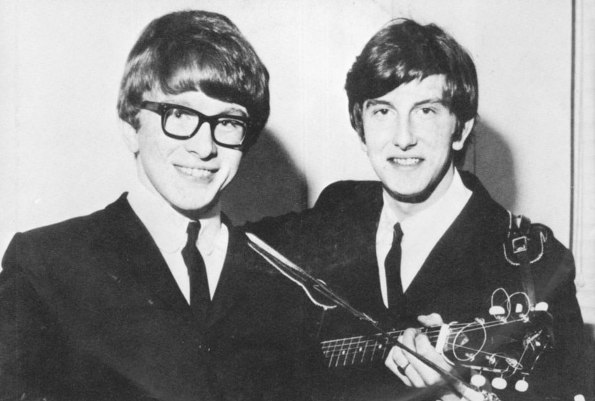
Peter and Gordon were a British pop duo, comprising Peter Asher (b.1944) and Gordon Waller (1945-2009), who achieved international fame in 1964 with their first single, the million-selling transatlantic No.1 smash "A World Without Love". The duo had several subsequent hits in the so-called British Invasion-era.
Peter Asher and his sister, actress Jane Asher, were child actors in the 1950s. They played brother and sister in a 1955 episode of the television series The Adventures of Robin Hood. Jane Asher dated The Beatles' Paul McCartney between 1963 and 1968, and Peter and Gordon recorded several songs written by McCartney but credited to Lennon–McCartney, including "A World Without Love" which reached No.1 on the US & UK charts.
Peter Asher and Gordon Waller were often called "the Everly Brothers of the British Invasion." They harmonized in ear-pleasing intervals, strummed acoustic guitars in tandem and recorded an impressively consistent string of hit songs. Blending folk, blues and rock 'n' roll with their own pop-flavored English sensibility, their sound and vocal work powerfully influenced the Byrds and others that followed in the wake of the Invasion.

Manfred Mann
Manfred Mann was a British beat, rhythm and blues and pop band (with a strong jazz foundation) of the 1960s, named after their South African keyboardist, Manfred Mann, who later led the successful 1970s group Manfred Mann's Earth Band.
A 5-piece group led by Keyboardist/vocalist Manfred Mann, they signed a record deal with EMI in 1963, under the HMV label. From 1964 to 1969 they had a succession of hit records: ("Do Wah Diddy Diddy", "Sha La La", "Pretty Flamingo", and "Mighty Quinn"). Both Do Wah Diddy Diddy and Pretty Flamingo reached No.1 on the UK and US charts.
.
The Animals
The Animals were part of the budding, homegrown U.K. blues scene of the early Sixties and one of the most noteworthy bands of the British Invasion. Comprised of Eric Burdon (vocals), Chas Chandler (bass), Alan Price (keyboards), John Steel (drums) and Hilton Valentine (guitar).
Originally known as the Alan Price Combo, the group changed its name to the Animals when Burdon joined in 1962. In 1963, they performed a monthlong residency (much like the Beatles did) in Hamburg, Germany. They also served as the U.K. backing band for visiting bluesmen, including John Lee Hooker and Sonny Boy Williamson. Their career took off with their move to London in January 1964. Less than a year later, on September 5, 1964, “House of the Rising Sun” became the Number One single in America. Their brooding arrangement of “House of the Rising Sun” - a traditional folk song recorded by Josh White and Bob Dylan - became an early milestone in the British Invasion. Despite the song's unconventional lyrics (it was about a house of prostitution in New Orleans), “House of the Rising Sun” topped the American and British charts. In fact, it stayed at Number One in the U.S. for three weeks.The Animals followed “House of the Rising Sun” with seven more Top 40 hits (and six more Top 40 hits as Eric Burdon and the Animals), at least four of which – “Don’t Let Me Be Misunderstood” (Number 15), “We Gotta Get Out of This Place” (Number 13), “It’s My Life” (Number 23) and “Don’t Bring Me Down” (Number 12) – are bonafide classics of the British Invasion era.

Johnny Farnham
John Farnham, aka Farnsy, Johnny, Whispering Jack and The Voice is an iconic Australian entertainer whose career has spanned over four decades.
Farnham was born on the 1st July 1949 in England and moved to Melbourne at the age of 10 and has lived here ever since. This wannabe plumber took a break from his apprenticeship in order to pursue a music career which has seen him become one of Australia's best-loved performers with a career spanning over 40 years.
In 1967, Sadie (The Cleaning Lady) was his first hit which topped the Australian charts for six-weeks running.  Selling 180 000 copies in Australia, "Sadie" was the highest selling single by an Australian artist of the decade. Farnham's debut studio album, Sadie was issued in April 1968.
He later released a cover of BJ Thomas's "Raindrops Keep Falling On My Head" in 1969, which also reached the #1 position on the Australian charts.

The Beach Boys
The Beach Boys are an American rock band, formed in 1961 in Hawthorne, California. The group was initially composed of brothers Brian, Dennis and Carl Wilson, their cousin Mike Love, and friend Al Jardine. Managed by the Wilsons' father Murry, the Beach Boys signed to Capitol Records in 1962. The band's early music gained popularity across the United States for its close vocal harmonies and lyrics reflecting a Southern California youth culture of surfing, cars, and romance.
"Good Vibrations", which Brian described as a "pocket symphony" became the Beach Boys' biggest hit to date and a US and UK number one single in 1966; many critics consider it to be one of the best rock singles of all time. It was one of the most complex pop productions ever undertaken, and was reputed to have been the most expensive American single ever recorded at that time. The song's innovative instrumentation included drums, Hammond organ, piano, tack piano, two basses, guitars, electro-theremin, harmonica, and cello. The group members recall the "Good Vibrations" vocal sessions as among the most demanding of their career.
"I Can Hear Music" was released in 1969 (from the 20/20 album) but was not the mega hit that Good Vibrations was.

The Twilights
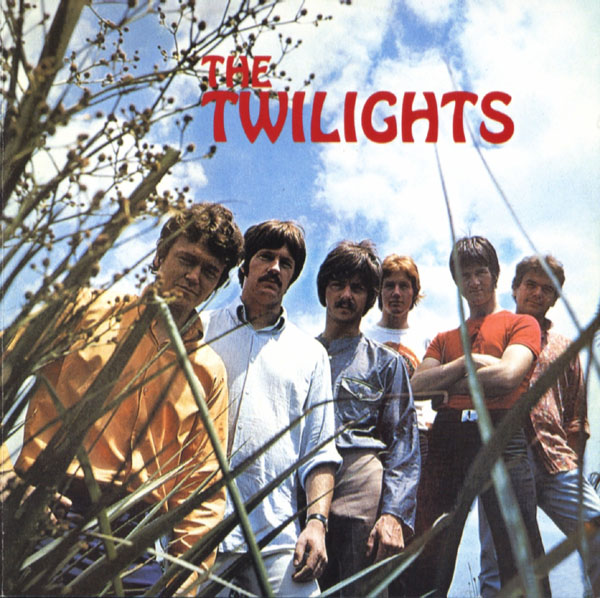
One of the better Australian groups of the '60s, the Twilights were not especially innovative, but played competent, harmony-driven British Invasion-styled rock, strongly recalling both the "beat" and pseudo-psychedelic era Hollies. Relying largely on the original material of guitarist Terry Britten, they recorded over a dozen singles, as well as a couple albums, between 1965 and 1968, chalking up a few large Australian hits such as "If She Finds Out", "Young Girl", and "Cathy Come Home", as well as cover versions such as The Velvelettes' "Needle In A Haystack", and Sam Cooke's "You Got Soul".
Popular in Adelaide from 1964, The Twilights expanded their national audience when they relocated to Melbourne in 1965. As part of their prize in winning the national Hoadley's Battle of the Sounds in July 1966, The Twilights were produced by Beatles engineer Norman "Hurricane" Smith at Abbey Road
Twilights vocalist Glenn Shorrock and guitarist Terry Britten have followed long and diverse careers: Shorrock was famously with Axiom and Little River Band, and Britten's compositions have been widely recorded, including We Don't Need Another Hero and What's Love Got To Do With It? by Tina Turner

Russell Morris
Originally a member of Melbourne's Somebody's Image between 1966-68, guitarist and vocalist Russell Morris struck out on his own in 1969. Morris' career started in September 1966 with the formation of the Melbourne group Somebody's Image, which rose to prominence with a local hit version of the Joe South song "Hush." He then achieved a No. 1 hit in 1969 with the Johnny Young song "The Real Thing" which was pruduced by the guru of Aussie Rock 'Ian Molly Meldrum'. "Real Thing" remained at No. 1 for weeks and was the largest selling Australian single in 1969. The song itself was a seven-minute epic moving from a gentle beginning through full-on psychedelia with sound effects and phasing (ending with a 'Zeig Heil' and a nuclear explosion!).
As well as its amazing chart success in Australia, and Without any promotional support from Morris, "The Real Thing" became a hit in several American cities, reaching #1 in Chicago, Houston, and New York.

Kathy Kirby
Vocalist. Nicknamed "The Golden Girl of Pop", she was one of the most successful female singers to hail from Great Britain during the 1960s. Born Kathleen O'Rourke, she received a Christian School education and was in possession of a voice with operatic range at an early age. In 1956 she was brought to the attention of bandleader Bert Ambrose (whom she would perform with), and he served as her manager during the peak of her career in the mid-1960s. Kirby, would adopt the "blonde bombshell" look with her hairstyle which was compared to that of Marilyn Monroe and after signing with the Decca record label, she was voted Top British Female Singer (1963), as she scored five Top-40 hits on the UK Charts which included her cover of the Doris Day hit "Secret Love" (1963) and "I Belong" (1965). Her popularity reached across the Atlantic, as she appeared on a 1965 episode of "The Ed Sullivan Show", and back in England she hosted her own TV series "The Kathy Kirby Show" (1964 to 1965). By the late-1960s, she was recording with Columbia Records and remained with the label until the early 1970s. At that period, her career was on the decline and with the exception of sporadic performances in public, she was no longer associated with the entertainment industry.

Billy Thorpe
Rock musician born in Manchester, England. Family moved to Australia in the 1950s. Billy Thorpe is one of the enigmas of Australian music, a man of many careers. It began in Brisbane when the young Thorpe was overheard by a television producer playing his guitar and singing at the back of his parents' Brisbane store. At the age of ten he was appearing regularly on Queensland television and appearing on the same stage as many of the top artists of the day.
When he was 17 he moved to Sydney as a solo country/pop singer just as the Beatles were breaking. Always one to recognize opportunity knocking, Thorpe teamed up with instrumental band the Aztecs and together they became one of the first Australian groups to contribute to the new '60s era of pop, in June 1964 scoring a huge national hit with their version of the Rolling Stones' version of "Poison Ivy." After a couple more era-influenced hits, Billy Thorpe & the Aztecs gravitated toward releasing songs that showed off Thorpe's fine singing voice and scored another major hit with a straight ballad version of "Over the Rainbow" from the film The Wizard of Oz, and in July 1965 a version of the Platters' "Twilight Time." By now the original Aztecs had been replaced by other musicians. Thorpe also became the star of his own national TV show, 'It's All Happening' in 1966. In the space of two years he had scored nine major hits.  By early 1967 the band had broken up.
.
This post is an MP3 rip (320kps) taken from almost virgin vinyl and includes album artwork and all photos depicted.  This is probably my favourite compilation album of 60's music, with all songs being No.1 Hits that have lasted the test of time. Hope you enjoy it.
.
Track Listing
01 - How Do You Do It (Gerry and the Pacemakers)
02 - Bus Stop (The Hollies)
03 - Friday on My Mind (The Easybeats)
04 - You're My World (Cilla Black)
05 - A Little Bit Of Me, A Little Bit Of You (The Monkees)
06 - World Without Love (Peter and Gordon)

07 - Pretty Flamingo (Manfred Mann)
08 - House Of The Rising Sun (The Animals)
09 - Raindrops Keep Falling On My Head (Johnny Farnham)
10 - Good Vibrations (The Beach Boys)
11 - I'm A Believer (The Monkees)
12 - Do Wah Diddy Diddy (Manfred Mann)
13 - Needle In A Haystack (The Twilights)
14 - Look Through Any Window (The Hollies)
15 - Don't Let Me Be Misunderstood (The Animals)
16 - The Real Thing (Russell Morris)
17 - Secret Love (Kathy Kirby)
18 - I Can Hear Music (The Beach Boys)
19 - Over The Rainbow (Billy Thorpe)
20 - I Like It (Gerry and the Pacemakers)

.
Hits of the 60's Link (145Mb)  Link Fixed 10/04/2020
.

Tuesday, May 7, 2013

Dynamic Hepnotics - Live (1984)

(Australian 1979–1986)
.
The Dynamic Hepnotics were a successful Australian soul/blues/funk band during the 1980s, with a line up that went through a number of changes during the bands time from 1979 to 1986. No matter where I saw the Dynamic Hepnotics play, they were consistently great to hear live.
The Dynamic Hepnotics formed in Sydney in 1979 with Tim Martin on saxophone (ex-Friends), Manuel Patti on bass guitar, Richard Ruhle on drums, Andrew Silver on guitar (Big Town Playboys) and "Continental" Robert Susz on vocals and harmonica (Rugcutters, Humdinger Dogs). One of their early gigs was at the Potts Point night club, Arthur's. In May 1980 this line-up issued a four-track extended play, Shakin' All Over on the Mambo label. By the time of its release, Silver and Susz had been joined by Bruce Allen on saxophone (ex-Jeff St John Band, Ol' 55), Allen Britton on bass guitar (Mangrove Boogie Kings) and Robert Souter on drums (Lizard, Gulliver's Travels, Living Legends). The group issued a single, "Hepnobeat", in September 1981 and subsequently changed from Mambo to Missing Link Records. Jim Niven from The Sports played organ on the single. An early line-up featured television presenter, Jonathan Coleman, on piano.
.
In August 1982 they released a six-track EP, Strange Land, which was produced by Ross Wilson (Daddy Cool, Mondo Rock, Jo Jo Zep & The Falcons) for Missing Link. The group contributed to the soundtrack of 1983 feature film, Going Down. By 1984 the band had signed with Mushroom Records' White Label Records. In late January Dynamic Hepnotics appeared at the Narara Music Festival. They released a single, "I'll Make You", in May. Their highest charting hit, "Soul Kind of Feeling", appeared on the Australian Kent Music Report Singles Chart in October 1984 and peaked at No. 5.
.
Early in 1985, they issued Live (aka The Dynamic Hepnotics Live), which including cover versions and originals recorded live in the studio. An audible hissing noise was recorded onto the album from the sound of fire extinguishers used to put out a fire under the stage as the group performed. Mike Gubb joined on keyboards. Live was followed by "Gotta Be Wrong (Way to Love)" in May, which reached the top 20. Their album, Take You Higher, reached the top 20 on the related Albums Chart in June. At the end of that year, Dave Brewer replaced Silver on guitar, Mark Simmonds replaced
"Continental" Robert Susz
Allen on saxophone and Peter Bishop joined on trumpet. The group's final single, "On Our Way Now", was released in March 1986, which reached the top 100. Souter was replaced by Duncan Archibald on drums, Gubb was replaced by Chris Pascoe on keyboards and Lloyd Swanton replaced Britton on bass guitar. However, the group disbanded before the end of the year. In 1986, "Soul Kind of Feeling" won the APRA Music Award for 'Most Performed Australasian Popular Work'.
In November 1998 Susz reformed The Dynamic Hepnotics to perform at the Mushroom 25 Live concert, celebrating the 25th anniversary of Mushroom Records.Frontman "Continental" Robert Susz went on to form the band 'The Mighty Reapers' after the split of The Dynamic Hepnotics in 1988. Susz still performs today in the group 'Continental Blues Party'.
Robert Susz and members of The Dynamic Hepnotics came back together in 1998 to perform at the Mushroom 25 Live concert, celebrating the 25th anniversary of Mushroom Records.
The band won the APRA award for most played song on radio in 1986 with the song "Soul Kind Of Feeling" which stayed in the Australian Top 10 for 6 months.
The band broke up in 1986 after releasing 4 albums. Most of the band members went on to play with other well know Australian bands. [extracts from Wikipedia]
.
After Disbandment
In 1988 Susz formed a "stylish soul / R&B" group, The Mighty Reapers, with Archibald, Brewer and Ruhle. That group recorded three albums, The Mighty Reapers (1993), Trouble People (1994) and The Hurt Is On (1997). Susz was later in the group, Continental Blues Party. Formed in 1999, this sophisticated Sydney R&B outfit led by singer-songwriter-harmonica player Continental Robert Susz of Dynamic Heptonics and Mighty Reapers fame continues in the tradition of those great 80's and 90's bands specialising in soul, blues and burning funk. On the Soul Side transforms a live performance vibe into a studio setting the way Blues Party albums were created by many 50's and 60's era Afro-American Soul and Blues artists. In doing so, it captures a distinctively smooth, genuine black music sound that carves a niche on the local contemporary scene for one highly experienced team drawn from earlier successful Susz combos.
.
Bruce Allen later toured &/or recorded with The Allniters, Eurogliders, The Eddys, Glenn Shorrock, Doug Parkinson and Ross Wilson, and currently performs with a number of Sydney-based bands including The Layabouts, The Bellhops and The Hollywood Hombres. Mike Gubb has worked with a number of Australian bands, including Mental As Anything, Ganggajang, The Whitlams and Dog Trumpet. Lloyd Swanton formed a jazz trio, The Necks, in 1987 with Chris Abrahams and Tony Buck. Dave Brewer has worked with The Catholics (formed by Swanton in 1991) and currently performs with Perth-based blues band The Doodaddies. In late 2008, Brewer released a solo album titled Life of Riley. Richard Ruhle performs with Sydney-based jazz 4-piece Seriously Cool. Robert Souter performs with Mental As Anything. Duncan Archibald performs with Sydney-based band The Moods.
.
This post consists of an MP3 rip (320kps) taken from vinyl and includes album artwork. I have chosen to include the bonus track "Louie Louie", taken from another gig in 1984, when they played at the Prospect Hill Hotel (thanks to Gruntrat from his LivePreserver website)
The Dynamic Hepnotics were exactly that, Hypnotic.....they got people up and dancing with their infectious funky blues and soul music and this album captures some of this hype.
.
Track Listing
01- Turn On Your Love Light
02 - Out Of Control
03 - I'll Make You

04 - The Things I Do For You
05 - Hepnobeat
06 - Ain't That Enough
07 - The Last To Know
08 - (I'm A) Roadrunner
09 - Shake Your Hips
10 - Keep Workin'
11 - Louie Louie (Bonus Live Prospect Hill Hotel, 1984)

.
Band Members:
Robert 'Continental' Susz  (Vocals, Harp)
Andrew Silver  (Guitar, Vocals)
Alan Britton (Bass, Vocals)
Robert Souter (Drums)
Bruce Allen (Saxaphone, Vocals)
Mike Gubb (Keyboards)
Guest Artist: Jason McDermid (Trumpet)

.
Dynamic Hepnotics Link (108Mb)
.

Saturday, May 4, 2013

Bob Dylan - Live Unlicensed (1995) Bootleg

(U.S 1961 - Present)
.
Live at Free Trade Hall, Manchester 1966
Bob Dylan (born Robert Allen Zimmerman May 24, 1941) is an American musician, singer-songwriter, music producer, artist, and writer. He has been an influential figure in popular music and culture for more than five decades. Much of his most celebrated work dates from the 1960s when he was an informal chronicler and a seemingly reluctant figurehead of social unrest. A number of Dylan's early songs, such as "Blowin' in the Wind" and "The Times They Are a-Changin'", became anthems for the US civil rights and anti-war movements. Leaving his initial base in the culture of folk music behind, Dylan's six-minute single "Like a Rolling Stone" radically altered the parameters of popular music in 1965. His recordings employing electric instruments attracted denunciation and criticism from others in the folk movement, and this Bootleg recording comes from this era in his career.
.
Dylan playing at Free Trade Hall, Manchester
This bootleg has since been officially released as 'Live 1966'. Only for the completist. This is a guasi-legit release, as a loophole in the Australian copyright law allowed such releases as long as they were printed in plain view that they were not licensed by the controlling Label. This title went a little overboard.
Long thought to have come from the Royal Albert Hall (RAH) show, it has now seen official release as Live 1966. Though the recording is now known to have come from the Free Trade Hall in Manchester, even the official release is subtitled the RAH concert in a nod to the most famous mis-named bootleg of all time. This Label was the premier boot manufacturer in the mid to late 1980's, and simultaneously released this title on vinyl as well. The incredible cover artwork on RAH is from one of the most sought after posters among Dylan collectors... the 1960's Martin Sharp poster. The recording is as crisp and clear (Excellent mono) as any that had been released to date. As this has become a retro-active pirate, it should be left for the completeist [source: Bobsboots.com]

The Swingin' Pig Vinyl Release
The Swingin' Pig released this album in 1989 on vinyl and on CD.  Although it has been released to death, you can't fault this incredible package.  The front cover is the rare Martin Sharp sixties poster.  The back cover lists lots of historical information.  Genuine piggy gold foil sticker on front.  Nice full printed labels (as was standard with this company in the late 80's) best feature # one: incredible looking white marble vinyl.  Best feature # two: great sound mastered from all new plates.  Of course, the source is the Manchester show; but in a testament to the longevity of the myth created by that handful of bootleg pioneers 30 years earlier, even the official Sony release of 1998 would be sub-titled - The "Royal Albert Hall" Concert.
.
Note: During the end of the May 17, 1966 concert at the Manchester Free Trade Hall, Dylan was called "Judas!" by audience member Keith Butler, between the songs "Ballad of a Thin Man" and "Like a Rolling Stone". Dylan answered back, and told the man that "I don't believe you . . . you're a liar!", before he shouted to the members of the band to "Play it fuckin' loud!", where they then finished off the set with "Like a Rolling Stone"
.
.
In more detail, the story is as follows:
The incident occurred during Bob Dylan and The Hawks (later The Band) notorious UK tour in May 1966. It was on these dates that Bob first appeared in Britain with an electric band. (His tour the previous spring, immortalised in the film Don't Look Back, was still solo Dylan, in protest mode, with just an acoustic guitar.)

The 1966 bootleg was not only of first-rate sound quality; it was also the most dramatic, confrontational concert I'd ever heard - and I was a regular at Clash gigs at the time. It remains, for me, the most exciting live album of all. Dylan, on that tour, split his audiences straight down the middle. Many were thrilled by his new psychedelic songs and the massive onslaught of The Hawks roaring through the biggest PA system that had, at that point, been assembled in the UK. It had flown in with the band from Los Angeles.

But many others in those staid, municipal concert halls were outraged and betrayed by their darling acoustic minstrel plugging into the mains. (It was, though no one realised it at the time, the birth of rock music as opposed to pop music). No matter that Dylan had released five electric singles - notably, "Like a Rolling Stone" - and one electric album in the previous 12 months: British audiences were still getting up to speed on his earlier records and they wanted back the Woody Guthrie protégé they'd seen in 1965.
.
This tension between artist and audience snapped in an almighty confrontation on the bootleg. Slow hand-clapping and jeering throughout Dylan's electric half of the show - which was later properly identified as his concert at Manchester's Free Trade Hall on 17 May 1966 and finally given official release by Columbia Records in 1998 - climaxes with one betrayed folkie letting fly with a long yell of "Judas!" It became the most famous heckle in rock'n'roll history.

Dylan is rattled, and for an awkward second the audience is stunned - until a yelp of solidarity with the heckler goes up. It is still a genuinely shocking moment. (Concert-goers in those days were routinely reverential. They still stood for the national anthem at the end). Dylan eventually composes himself and leers: "I don't believe you. You're a liar!" And then, off mic: "You fucking liar!" (some claim he said: "Play fucking loud!") before he and the band kick into the most majestic, terrifying version of "Like a Rolling Stone", their final number - a performance of Gothic immensity surely drawn from Dylan by his anger at that single shout.
The heckler was identified some 33 years later as 'Keith Butler' when he spoke with Chris Nelson in an indepth interview. He wasn't proud of what he had said, as he states "The 'Judas!' shout, that's something that I hadn't talked about barely at all....It was embarrassing. It wasn't something you felt particularly proud of. That had been buried away."
To read the full interview, see here. Note too, that I have included a podcast documentary of the concert produced by BBC Radio, that discusses this famous concert at length.

The post is an MP3 rip (320kps) taken from from CD bootleg and includes full album artwork, along with the alternative (and famous) artwork for the RAH release (see below). The quality of the recording is quite astonishing considering it was done in 1966.
Note that the original CD is a single music file, however, I have broken the recording into 8 separate audio files (using Audiodacity), according to the track listing. Also note that I have removed about 30 secs of inaudible banter by Dylan at the start of "One Too Many Mornings" to improve your listening experience.
Standout tracks for me on this album are "Just Like Tom Thumb's Blues" and "Like A Rolling Stone".
.
Track Listing
01 - Tell Me Momma

02 - I Don't Believe You
03 - Baby Let Me Follow You Down
04 - Just Like Tom Thumb's Blues
05 - Leopard-Skin Pill-Box Hat
06 - One Too Many Mornings
07 - Ballad Of A Thin Man
08 - Like A Rolling Stone

09 - Podcast Documentary of the Concert

Dylan is backed by The Hawks (aka The Band)
Rick Danko – bass guitar, vocal

Garth Hudson – organ
Mickey Jones – drums
Richard Manuel – piano
Robbie Robertson – electric guitar

Bob Dylan Link (177Mb)  New Link 05/08/2016
.

Sunday, April 28, 2013

Various Artists - King Of Pop 74' - 75' (1974)

(Various Australian Artists 1974)
.
In Australia, Rock Music Awards have had a somewhat haphazard existence. Looking back on the 1967 King Of Pop Award, Ed Nimmervoll wrote:- 'Normie Rowe was the first King Of Pop, although accidentally rather than officially. "Go Set" was the big teen magazine of the day and in 1967 they conducted a standard pop poll to arrive at the most popular personalities and groups of the day .. When those awards were announced on the Go!! Television Show, in a moment of fun it was decided to close the show with a mock crowning of the King Of Pop'. (from Juke, 28 October 1978).

Such was the beginnings of the 'King of Pop' awards which evolved into the T.V. Week King Of Pop Awards (also known as the T.V. Week Rock Awards). But well before all that was the National Battle Of The Sounds.

Like Australia's major TV awards, the Logies, The King Of Pop Awards were inaugurated and run by the Packer-owned TV WEEK magazine. Like the Logies they were decided by reader polls. The awards began in in 1967. The awards ceremony was televised by the 0-10 Network from 1967 to 1975, and from 1976 to 1978 they were handled by the Nine Network.

Singer Normie Rowe won for the first two years. He was succeeded by singer Johnny Farnham, who won the award for five consecutive years from 1969 to 1973. The "Queen Of Pop" title was added in 1972 although there had been a "Best Female Artist" award since 1969. Colleen Hewett took the honours in 1973, only to loose it to Debbie Byrne in the following year.  Farnham was also dethrowned by a young Jamie Redfern  who went on to work with the famous pianist 'Liberace' in the U.S.
There were also other awards such as "Best DJ" and Most Popular Group".
In 1979 the awards were overhauled, the now old-fashioned "King Of Pop" title was dispensed with, and they were renamed the "TV Week Countdown Awards" and were screened on the ABC in conjunction with the ABC pop show of the same name. The Countdown Awards were eventually discontinued in the '80s, some time before Countdown was axed in 1989. By this time, the peer-voted ARIA awards were becoming recognised as the major award for popular music.

For a complete listing of award winners between 1967-1978 see the Milesago website

More information on Jamie Redfern can be found here, and Debbie Byrne at her own website

This record was a unique first in Australian Pop-recording industry. It was released as a souvenir of the "Pop world's most glittering night". Next to the list of various artists, the cover depicts the trophy that was presented to award winners.
As it says on the sleeve: The album "features 20 tracks from all your top performers." It contains many hit songs by previous King Of Pop winners and guest presenters. David Cassidy and Gary Glitter were the guest presenters at the 1974 King of Pop Awards on March 8th, 1974.
.
.
1974 Award winners were:
King of Pop — Jamie Redfern
Queen of Pop — Debbie Byrne
Best New Talent – Benjamin Hugg
Best Songwriter – Harry Vanda & George Young
Contribution to Australian Pop Industry – Brian Cadd
Most Popular Australian Album – My Name Means Horse (Ross Ryan)
Most Popular Australian Group – Sherbet
Most Popular Australian Musician – Brian Cadd
Most Popular Australian Single – "Hitch a Ride" (Jamie Redfern)

.
This post consists of  FLACs taken from my 'near mint' vinyl and includes full album artwork and label scans.  TV Week photos were sourced from Debbie Byrne's website with thanks.
The music on this album is a little dated but there are still some classic tracks like Stevie Wright's "Evie", Brian Cadd's "Every Mother's Son" and Ross Ryan's "Orchestra Ladies".  There are also some rarities like Debbie Byrne's cover version of "I Am Woman" and Benjamin Hugg's one hit single "Thank God You're Here With Me".  Irrespective of your musical tastes, this album contains something for everyone and showcases some of the Popular music that was being produced by Australian Artists at the time (with the exception of the opening tracks on each side of the album by guest artists David Cassidy and Gary Glitter).
.
Track Listing

01 - Rock Me Baby (David Cassidy)
02 - I Am Woman (Debbie Byrne)
03 - Jenny (Jamie Redfern)
04 - Sit Yourself Down (Colleen Hewett)
05 - Don't You Know It's Magic (Johnny Farnham)
06 - Games People Play (Allison Durbin)

07 - Every Mother's Son (Brian Cadd)
08 - You've Got The Gun (Sherbet)
09 - Evie Part 1 (Stevie Wright)
10 - Neither One Of Us (Linda George)
11 - Always Yours (Gary Glitter)
12 - You've Got A Friend (Debbie Byrne)
13 - Hello Funny Face (Jamie Redfern)
14 - Superstar (Colleen Hewett)
15 - Comic Conversation (Johnny Farnham)
16 - Higher and Higher (Normie Rowe)
17 - Cassandra (Sherbet)
18 - Thank God You're Here With Me (Benjamin Hugg)
19 - Orchestra Ladies (Ross Ryan)
20 - Keep On Rocking (Brian Cadd)

.
King Of Pop 74' FLACs Link (380Mb) New Link 25/10/2015
.

Thursday, April 25, 2013

Status Quo - The Rest Of (1976)

(U.K 1962 - Present)
.
The band originated as 'The Scorpions' formed by Alan Lancaster and Francis Rossi in 1962, then 'The Spectres' and with personnel changes (including the recruitment of Rick Parfitt), became Status Quo in 1967. The high-energy, heavy beat, head-banging band has enjoyed huge popularity in Europe, the UK and of course Australia with such singles as "Down, Down", "Rockin' All Over The World" and "In The Army Now", but never really made it in the U.S charts.
Francis Rossi, Rick Parfitt, Alan Lancaster and John Coghlan have never gone through the usual hassles of changing personnel or threatening splits, simply because what unites them is a love of no-nonsense, no-holds-barred rock 'n' roll.

They've rolled round the world producing that gut-ripping, foot-stomping excitement. Times were great in 1967 when they had hits with "Pictures Of Matchstick Men", "Ice In The Sun" and "Down The Dustpipe". Times were bad afterwards for a while, when they re-thought their musical policy. Now times are consistently good for one of the biggest-selling, biggest-drawing bands in the business. Their fans are not just legion, they're fanatically loyal.
L to R: John Coghlan, Alan Lancaster, Rick Parfitt, Francis Rossi
The secret is in the energy the boys put into their work. It's as Rick Partitt says "I couldn't just sit down and listen to our band. I'd have to be up on my feet and bopping". And drummer John Coghlan, power-department of Quo s adrenalin rock, says "We first get the atmosphere. Then we'll sweat bucketful's to keep it going." And now let's turn to this album, it's early Quo material, and it's from the late 60s when the band was with Pye and there's one very good reason for putting it all together on an LP at this time of Quo-mania. The fans have demanded it. There is now a fantastic demand for every last note played by Quo, from collectors whose allegiance goes right to the start and from new young addicts only recently tuned on to the startling rock fireworks of the band.
Just one other explanatory quote from band-man Alan Lancaster: "I don't think there's a rock band quite like us in the sense that we put everything into it. Sometimes it's obvious we're getting off on the audience as much as they get off on us. They identify. So do we"


The hard work and energy is there in abundance in this album. Things change fast in the pop music world but what clearly hasn't changed over the years is the sheer energy,' hard graft, application and dedication of four guys who called themselves Status Quo but in fact helped change the whole face of rock/pop with a sharp injection of heavy metal. Try the track "Something's Going On In My Head". Or "Nanana". No, better still - try all of them. For something's always going on.
(Linear Notes by Peter Jones)
.
They scored unprecedented success at the 1972 and 1973 Reading Festivals (see previous post), and in 1973 notched up the first chart album Piledriver on their new label - Vertigo. In the same year they enjoyed three more hit singles "Paper Plane", "Mean Girl", and "Caroline", all performed in same listlessly laid-back fashion earning them the tag 'Poor man's Canned Heat'.
However, the group had the last laugh as sales of subsequent albums grew with each release, starting with 'Hello!' in 1973, their 1975 set 'On The Level' taking them to No.1 spot at the same time their single "Down, Down' topped the singles charts. Andy Bown played keyboards on and off from 1974-79.
.
Since 1974 every new LP on Vertigo made the U.K Top 5.
The long tours and hard work seemed to have no effect on rock's longest established line-up. So it was surprising that 1982 began with the announcement of Coghlan's retirement. Pete Kirchner (ex-Original Mirrors) stepped in on drums and Quo promptly released two further chart albums, before announcing a final European tour in 1984. Band Aid concert appearances in 85' was billed as the end, but they reappeared in mid 86' with Andy Bown on keyboards and ex-Climax Blues Band Jeff Rich and John Brown on drums and bass, recording the popular album 'In The Army Now' [extract from 'The Illustrated New Musical Express Encyclopedia of Rock', by Nick Logan and Bob Woffinden, Salamander Books, 1987, p219].
.
This album is a Pye compilation (tracks taken from 'Dog Of Two Head' and 'Ma Kelly's Greasy Spoon'), which was made up of songs not already included on Pye's earlier compilations released under the Golden Hour Series (which I plan to post at a later date). The album was later re-pressed on the Astor label but is now deleted. This posts consists of a fresh MP3 rip (320kps) taken from my precious vinyl copy and has had some bass enhancement applied to it. Full album artwork and band photos are also included. Overall, this album is a great precursor to their finest LP's - namely Piledriver, Hello, Quo and On The Level.
. 
Track Listing
01 - Something's Going On In My Head (Lancaster) 4:44
02 - (April) Spring Summer And Wednesdays (Rossi-Young) 4:10
03 - Lazy Poker Blues (Green-Adams) 3:34
04 - Is It Really Me? (Lancaster) 2:42

05 - Gotta Go Home (Lancaster) 6:50
06 - Need Your Love (Rossi-Young) 4:45
07 - Nothing At All (Lancaster-Lynes-Young) 3:50
08 - Someone's Learning (Lancaster) 7:08
09 - Nanana (Rossi-Young) 2:24


Band Members:
Francis Rossi (Guitar, Vocals)
Alan Lancaster (Bass)
Rick Parfitt (Guitar, Vocals)
John Coghlan (Drums)

Roy Lynes (Keyboards) 
.
Status Quo Link (94Mb)  Link Fixed  09/10/2025