Friday, June 9, 2023

Duck - Laid (1972)

 (Australian 1972)

In 1972 Bobbi Marcini, John Robinson (ex-Dave Miller Set, Blackfeather) and Steve Webb became the core a new supergroup called Duck, with the lineup completed by renowned jazzer and session pianist Bobby Gebert (who worked with many well-known rock bands including Tully), bassist Teddy Toi (ex-Aztecs, Fanny Adams) and percussionist Larry Duryea (ex Tamam Shud). They recorded 16 tracks at Melbourne's TCS Studios, although only 12 were eventually released. Singer Jon English (ex-Sebastian Hardie) performed lead vocals on several songs, alternating with Bobbi. The resulting LP released on Warner Brothers, 'Laid', released in July 1972, was a mixed bag, but included some strong tracks including Neil Young's ''Southern Man'', Bill Withers' ''Ain't No Sunshine'', Frank Zappa's ''Dog Breath'' and Nick Gravenites' ''Buried Alive in the Blues''.

Two Duck singles were issued the first, ''Sweet Inspiration/Southern Man'' came out before the LP in May 1972, followed by their version of Paul McCartney's ''Maybe I'm Amazed'' and on the flip side Bob Dylan's ''The Man in Me'' in September. Encouraged by the results of the project, the core members of the band decided to become a permanent outfit and hit the boards. But by the time they premiered as a live act, Jon English was already ensconced as 'Judas' in Harry M. Miller's production of Jesus Christ Superstar so his place was taken by former Wild Cherries lead singer Danny Robinson for touring. Guitarist Russell Smith (ex-Company Caine, Mighty Kong) also toured with them.

According to contemporary reports, the group suffered from the all-too-familiar management woes, and both Bobbi and and John have confirmed that the group's relationship with producer G. Wayne Thomas was part of the problem. Clearly this was not an isolated incident, since it is known that the members of Tamam Shud, who featured prominently on the 'Morning Of The Earth' soundtrack, were never paid for their contributions to that album and have never seen a cent from it to this day. When Bobbi fell ill in late 1972, she went into hospital for an appendectomy and when she came out, Duck had folded. Percussionist Larry Taylor, also known as Larry Duryea, passed away on 9 December 2003 in Los Angeles, California, after a long struggle with cancer. Jon English died following post-operative complications late in the evening of 9 March 2016.
[Extract from history of aussie music - thanks to Kimbo]


Album Review (by Resevoir_dog - 2022)

An interesting range of cover versions are found on this rare Australian LP, including a Zappa tune and also Lucille Has Messed Up My Mind which Zappa covered on Joe's Garage about 7 years later when Jeff Simmons was in the Mothers. There are also some more predictable covers of Dylan, Lennon, Bill Withers and McCartney tunes. Another interesting cover choice was the Stones' "Memo From Turner" (wrongly called Memo To Turner) which originally appeared in the cult Mick Jagger-James Fox film Performance. It was only ever released as a split single and also appeared on their Metamorphosis compilation. The album flopped commercially - perhaps Duck was a rather lame name, but interestingly at least 23 other groups decided to call themselves Duck.


Newspaper Article: Have The days of the Supergroup gone?

For the past three months six Sydney musicians, under the name of DUCK, have been constantly rehearsing together in an attempt to give Australian audiences back some entertainment.

Strong words, but with Duck's impressive line-up they have proved to be such the band to present these aims properly. Their live performances are energetic, very exciting and musically astonishing.

Duck are Bobbi Marchini (ex-Hunger) vocals and percussion, Teddy Toi (ex-Wild Cherries and Fanny Adams) bass and vocals, John Robinson (ex Blackfeatrher and Hunger) guitar, Bob Gebbert (ex Tully) electric piano, Steve Webb (ex Blackfeather) drums and Larry Duryes (ex Tamam Shud) congas and percussion. Besides these musicians, Jon English will feature in the Sydney performances and Danny Robinson will perform with the band in Melbourne.


"The Australian music scene today is dull, with only a handful of groups who give the audience what they want, good music and entertainment, so Duck was formed to play good rock and roll and also to entertain the audience at the same time". With this statement John Robinson named the Aztecs and Blackfeather as examples of groups who fall into this handful.

Duck is the brainchild of Isis Productions (G. Wayne Thomas and others). Since it's inception, the band has been financially backed thus enabling them to rehearse as much as possible. John explained further. "With our backing, together with session work as a band and as individuals. Duck has been kept alive".

Besides Duck doing gigs and recording as a band, each member is able to pursue their own solo projects in recording or whatever. Asked about the material that they'll be doing, John replied "mostly cover versions, but once the band is fully established we will do more original material by members of the band. At present our repertoire consists of about ten percent original material.

Material on their album includes McCartney's "Maybe I'm Amazed". Jeff Symmon's "Lucille", The Hollies' "Long Cool Woman In A Black Dress", Joplin's "Buried Alive In The Blues" and John Lennon's "Mother".

Duck recently recorded 16 tracks at TCS but picked 12 tracks for the album. The release date is planned for October.

Danny Robinson sings Dylan's "Man And Me" on the LP, this was also planned for a single but was retracted because G. Wayne Thomas thought it wasn't commercial enough. Duck haven't had any success with their single release because they don't seem to be able to actually get one released. Not because the record isn't good enough, it's just that they believe they can do better.

The days of the super-groups have gone, perhaps not with the formation of Duck. The band plan to do their first concert in Sydney at the end of this month. Duck are finally in flight, watch for them as their live performances are really something else. [Sydney Newspaper article, 1972 by D. Nugent]

This post consists of MP3's (320kps) ripped from vinyl (not my rip) and includes album artwork and label scans. As a cover band Duck were a highly professional and talented group, however it is a shame that they didn't go on to record their own material. 

Sadly, like most supergroups they didn't stay together for very long and one can only wonder what 'might have been'.  


Tracklist
A1 Maybe I'm Amazed (Jon English)  3:28
A2 Southern Man (Bobbi Marchini) 2:24
A3 Anyway You Want Me (Jon English & Bobbi Marchini) 3:45
A4 Dog Breath (Jon English & Bobbi Marchini) 2:41
A5 Burned Alive In The Blues (Bobbi Marchini) 2:38
A6 Memo To Turner (Jon English) 3:41
B1 The Man In Me (Jon English) 3:20
B2 How Long Before I'm Gone (Bobbi Marchini) 3:59
B3 Ain't No Sunshine (Bobbi Marchini) 3:22
B4 Long Cool Woman In A Black Dress (Jon English) 3:07
B5 Mother  4:25
B6 Lucille Has Messed My Mind Up (Jon English) 3:26
B7 Do Right Woman (Danny Robinson & The Virgil Brothers) 3:26

Band Members:
Jon English (vocals), 
Bobbi Marchini (vocals), 
Danny Robinson (vocals), 
John Robinson (guitar), 
Russell Smith (guitar), 
Bobby Gebert (keyboards), 
Teddy Toi (bass), 
Larry Duryea (percussion)
Steve Webb (drums)

Duck Link (102Mb) New Link 18/11/2024

Tuesday, June 6, 2023

Procol Harum - Live in Concert With The Edmonton Symphony Orchestra (1972) + Bonus Single

(U.K 1967 - 1977, 1991 - Present)

Recorded on 18th November 1971 at the Northern Alberta Jubilee Auditorium in Edmonton, Canada, the album captured a truly magical performance by Gary Brooker (vocals, piano), B.J. Wilson (drums), Chris Copping (organ and harpsichord), Alan Cartwright (bass) and Dave Ball (guitar), the Edmonton Symphony Orchestra and the Da Camera Singers. Classic Procol Harum material such as ‘Conquistador’, ‘Whaling Stories’, ‘A Salty Dog’ and the epic ‘In Held ‘Twas in I’ were beautifully arranged by Gary Brooker and the resulting album was one of Procol’s most successful and spawned a hit single in ‘Conquistador’. It remains one of the finest collaborations between a rock band, orchestra and choir. 

This release also includes an illustrated booklet featuring material from Gary Brooker’s personal archive and an essay by Procol Harum authority Roland Clare, as well as a bonus track "Luskus Delph" which was the B-Side of their "Conquistador" single.

Procol Harum 1972

This whole album was an afterthought -- Procol Harum had been invited to play a concert with the Edmonton Symphony Orchestra and the Da Camera Singers in Edmonton, Alberta, Canada, in August of 1971, at the tail-end of their last tour with Robin Trower in the lineup. Amid all of the preparation -- including the writing of new orchestral arrangements by Gary Brooker and with a new lead guitarist, Dave Ball, just joining the lineup -- Brooker decided that it might be a good idea to preserve a professionally made tape of the show and suggested that A&M Records, to which they were signed, might want to record the performance; the label agreed with just a week to go until the concert. Even "Conquistador," the song on which the resulting album's commercial success was built, was added at the last minute, with no time for the orchestra to rehearse the arrangement that Brooker wrote on the flight from England. 


They did it coldly, opening the concert, and the eventual album featured a performance -- highlighted by the orchestra's brass in a Spanish mode, running scales on the strings, and B.J. Wilson's powerful drumming -- helped loft the single to number 16 in America. The group's second-biggest hit record (after "A Whiter Shade of Pale"), in turn, helped lift the album into the American Top Five. Ironically, the success of the LP also left Procol Harum's image slightly askew, with the presence of the orchestra and choir and the selection of songs, from the most ambitious part of the band's repertory, all combining to present the group as more of a progressive rock act than they actually were. 

"Conquistador" was the most accessible song on the album, and nothing else here matches it for sheer, bracing excitement, but the rest -- especially "Whaling Stories", "A Salty Dog" and the multi-part "In Held 'Twas I" -- were all opened up by the vast canvas provided by the orchestra, and the group didn't wimp out in their own performance; Wilson, Ball, Brooker, and company all played hard and heavy where the songs required it.

If anyone who wants to get into the music and history of Procol Harum, this is an excellent start to understand how much the band were ahead of their time and both Gary Brooker and Keith Reid were the Mount Rushmore of singer-songwriters in the realms of Lennon/McCartney. 

Concert Review
"In Concert with the Edmonton Symphony Orchestra and the Da Camera Singers"
Of all the rock-orchestral fusions this one really does work primarily because Procol have used the technique before, and because they use it with arrogance, assurance and don't set out to compromise.
From the very beginning when the guitar and strings play together on "Conquistador" with perfect balance, this is a success.

This album really brings home just how good Procol are on sea songs. "Whaling Stories" makes brilliant use of the orchestra to heighten the effect of a sea battle with a whale, working up from just string-backed vocals to a terrific crescendo.

"Salty Dog" is also impressive in its grandeur, complete with quadrophonic seagull noises. In contrast, "Twas Teatime At The Circus" from the long "In Held 'Twas I" on side two, captures all the rumbustious humph of the circus, and then plunges into the eerie thunder-opening of "In The Autumn Of My Madness" , a chilling number with good use of flute and organ.
A very complete and highly talented album which should help dispel this group's image of the the 1967 one-hit wonders. C.B

Chris Copping and B.J Wilson

Ripped from my vinyl, this post consists of FLACS and includes full album artwork for both CD and vinyl media, plus label scans.  I distinctly remember when this album was released in Australia.  A school mate of mine brought the LP to school one day, and we played side one on a brilliant sound system that was located in the school's Music Centre. The Director of Music at the time was rather impressed with our selection of music, although he wasn't as impressed several years later, when we played Sabbath Bloody Sabbath at full blast !

Track Listing
01. Conquistador
02. Whaling Stories
03. A Salty Dog
04. All This and More
05. In Held 'Twas in I
06. Luskus Delph (Bonus B-side single)

Procol Harum were:
Gary Brooker (vocals, piano)
B.J. Wilson (drums)
Chris Copping (organ and harpsichord)
Alan Cartwright (bass)
Dave Ball (guitar)  

Procol Harum Live Link (287Mb) New Link 05/09/2023

Wednesday, May 31, 2023

W.O.C.K On Vinyl: Barry Humphries - Snow Complications (1965)


Before things get too serious here at Rock On Vinyl, I thought it might be fun to post a song / album at the end of each month, that could be categorized as being either Weird, Obscure, Crazy or just plain Korny.

With tomorrow being the first day of Winter in Australia and the recent passing of Barry Humphries, I thought I might dedicate this month's WOCK on Vinyl post to Barry Humphries (again) by presenting his popular piece of comical satire entitled "Snow Complications" - released as a single back in 1965.

I believe Humphries wrote "Snow Complications" when he was reasonably young. Maybe it is based on overheard stories while attending a Melbourne private school or perhaps his family did some skiing.  Barry's Brother was a builder who partially specialised in Alpine construction, so I'd say there was probably a bit of both.

So, do you remember this monologue from the sixties — about going to the snow, with the line “believe you me it's a great life up there amongst the snow community and you can really have a ball, no matter which of the major schools you went to, particularly if you're lucky enough to get snowed in with a stack of gluweins, a few crates of tinnies, a couple of little snow bunnies and no complications.”? 

Apparently this famous line brought about an association of Snow Bunnies with Melbourne Football supporters, as discussed below by 'Clint Bizkit' on the Demonland.com website in 2007:

Snow Bunny Supporters

For many Melbourne supporters, the Queens Birthday long weekend means making a difficult decision.

Do they go and watch the Dees take on the Pies at the MCG, or do they head for the hills to get their first taste of snow for the year?

Well that's what you would think if you took any notice of opposition supporters and some football personalities in the media.

However, seeing as the Queens Birthday has just recently come and gone for another year and with Melbourne having a break this weekend, I thought that I should take this opportunity to dispel the "Snow Bunny Melbourne Supporter" stereotype once and for all!

Well not quite, but I do want to share a few observations that I made whilst working up at Mt Buller last year.

Before anyone says anything, the "Snow Bunny Melbourne Supporter" stereotype says nothing about working at the snow.

If you were to believe the stereotype, then you would imagine the ski fields being filled with nothing but rich snobs who drive four wheel drive BMW's and "support" the Melbourne Football Club. And while the snow does have its fair share of rich wankers, they are not all Melbourne supporters.

In fact, I did not see a single piece of Melbourne Football Club merchandise for the whole time I was up there!

60's Snow Bunny
If you were then to use this football merchandise observation as a way of finding out which AFL team's supporters spend the most time at the snow then you would have to say that the "Snow Bunny Supporter" tag belongs with Fremantle, West Coast, Adelaide and Port Adelaide supporters.

There is however, a good reason for this. For many Western and South Australians, the need for warm clothing is almost nonexistent, hence why they pull out the footy scarves and beanies when at the snow.

Nonetheless, it was something that really stood out to me and I thought that I would just do my bit to try and clear up the "myth" about those of us who support the Melbourne Demons.

'Maxim Bob' then went on to say in his reply post:

Stuff the stereotype !

This tripe about snow bunnies started with Barry Humphries way back in the 60's on one of his early (best-selling) records, for those who remember vinyl. About going to the snow etc. I always thought it was more about Geelong Grammar (Sam Newman springs to mind...his almer mater), although Barry did attend Melbourne Grammar and was poking fun at some of his classmates. But by no means all.

Nevertheless this populist mud has stuck and we've had to live with it as the Melbourne Football Club ever since. The so-called alliance with the MCG hasn't helped this perception either.

In the old days the opposition supporters would sit in the 'Outer' and look across to the Grey Smith stand and the Members and the Ladies stand and give us kids heaps. We were sitting in the 'Inner'.

And fair enough. We had the privileged seats and looked high and mighty. The irony was that many of us got a free ticket in as juniors and supported the Dees regardless of where we sat. In '64 I stood in Bay 13. It didn't matter to me where I was in the ground as long as I was there.

The salient point is that since then we've developed (and always had) a much broader supporter base than the popular perception of toffee-nosed skiers. 

RIP  Barry Humphries

Well, who would have thought that one of Mr Humphries comical monologues could dispel such a long, lasting myth - but then again, I suspect he was still chuckling to himself, right to the end.  And yes, it ticks the Obscure box for W.O.C.K postings, but also because it was released under the subtitle 'Chunder Down Under'.   


The files were ripped to FLAC from a pristine Bulletin Records 45 (thanks to SunnyToo from Ausrock) and includes cover art and label scans.

Track Listing:
01 - Snow Complications
02 - The Old Pacific Sea


Friday, May 26, 2023

REPOST: Bandicoot - Selftitled (1976)

(Australian Band: 1976-78)
.
.Mick Fettes, was the front man and vocalist for Madder Lake, which was one of the most original and distinctive of the "new wave" Australian groups that emerged around 1970. They were also an important and popular part of the Melbourne music scene in the early 70's. It's unfortunate that they're only known for their two excellent albums - Stillpoint (1973), Butterfly Farm (1974) and one "Best Of.." compilation (1978). Both studio albums have recently been released on CD by Sandman Records (aka Aztec Records).
.
Things came to a head however, at the end of 1975. While on a trip to Sydney, Mick Fettes, who was very much the voice and face of Madder Lake, decided he had had enough, and one night before a gig at the Bondi Lifesaver he quit the group.

Mick took a well-earned sabbatical and then teamed up with an his old mate, musician and comedian Shane Bourne. Mick and Shane knew each other from the Reefer Cabaret, where Madder Lake had played many times, and where Shane performed comedy spots between acts. After several months' writing the pair formed a new group, Bandicoot, which also included drummer Gary Young (Daddy Cool). They recorded an album and single in 1976 for the Rainbird label, and toured extensively.

Bandicoot (featuring Mick Fettes far right)

This rip was taken from a vinyl pressing in FLAC format and includes full Album Artwork for CD and vinyl, along with label scans (thanks to Antichubais at Ausrock for the rip and artwork)

Note: Sadly, Mick Fettes passed away on the 18th of November, 2016 aged 65. RIP mate
.
Track Listing:
01. Living Off The Radio
02. Rock n Roll Dreams
03. Winter Boy
04. Star Of The Screen
05. Oo-wee
06. Just Goes To Show
07. Hoe Down
08. Country Girl
09. Who Am I To Say
10.Backstage Goddess
11.Midday Dawn
12.Living Together Alone
13.Woman Of Stone

Band Members:
Mick Fettes (Vocals)
Ross Davies (Guitar)
Mick Elliot (Guitar)
Chris Stafford (Bass)
Gary Young (drums)


New Improved FLAC Rip


Bandicoot Link (231Mb) 

Saturday, May 20, 2023

Jimi Hendrix - The Story Of Jimi Hendrix (1978)

 (U.S 1963 - 1970)

During his lifetime Jimi Hendrix sanctioned the release of five albums, one of which was a compilation of hit singles and favored LP tracks (Smash Hits). Since his death, that figure has swelled to an indeterminate number (at least 50), making Hendrix one of the most prolific recording artists in the world, at least on paper.

But the huge number of Hendrix LPs to be found in the racks on any large record store belies the fact that no other artist has had his reject barrel plundered so thoroughly as Hendrix. Most of the material is sub-standard, sometimes boring and grossly exploitative.

The posthumous releases fall into five distinct categories:

a) Re-issues. The "official" Hendrix material from the four studio albums recorded between 1967 and 1970 (Are You Experienced?, Axis: Bold As Love, Electric Ladyland and Cry Of Love) has been repackaged ad infinitum by Polydor (or Warner Brothers in the US) to the extent that duplications, and duplications of duplications, abound like rabbits all around the globe. Different combinations of the same tracks litter the 19 albums on the current UK Polydor catalogue.

Jimi Hendrix Experience
b) Pre-1966 material.
Before Hendrix was brought to London in 1966, he recorded with various American artists, always in a subordinate capacity or simply jamming in the studio while the tape was running. Records with (or indeed by) the Isley Brothers, Curtis Knight, Little Richard and Lonnie Youngblood fall into this category, as do the Jimi Hendrix At His Best trilogy (a gross misnomer) and most albums with the word "roots" somewhere in the title. Many of these tapes have been leased by the producer to several different labels over the years with the result that the same titles crop up again and again.

c) Post-1966 material and jams. Hendrix loved to play, whether it was on stage, in the studio or in someone's front room, and he never seemed to care whether a tape recorder was running. Again much of this material is poor quality, but American producer Alan Douglas assembled a series of albums from such studio out-takes during the Seventies with the sanction of the Hendrix estate and the "official" record companies (Polydor and Warner Brothers). These offer a higher quality of material than anything in category (b) but would never have seen the light of day had Hendrix lived.

d) Live. Many Hendrix concerts were recorded, presumably for personal use at the time, only to find their way on to official records during the Seventies. The quality varies considerably and it is doubtful whether most of these would have been released had Hendrix lived. The CBS double set The Jimi Hendrix Concerts, released in 1982, is the best of the bunch.

e) Compilations. The list of Hendrix compilations is almost endless, with the most popular on vinyl being 'The Essential Jimi Hendrix Vol 1 & 2' released by Warner Bros. Another popular compilation is 'The Story Of Jimi Hendrix', 2 LP set that was only released by Polydor in Germany, Yugoslavia, Scandinavia and Australia and is the focus of my post today.

As a general rule, the material on Polydor (Warner Brothers in the US) represents the best of Hendrix's work despite the numerous duplications. The cream however, appears on the four studio LPs originally released by Track Records in the UK. [Extract from 'Hendrix: An Illustrated Biography' by Victor Samspon, Proteus Books. 1985 p105]


Classic Track Dissections

Foxy Lady
The U.K. version of Are You Experienced has the perfect album opening, the sound of Hendrix scraping his pick down a string to produce the effect of his guitar emerging from the aural distance, gradually increasing in volume and then exploding-with a flare of feedback-into "Foxy Lady's" sublimely lecherous riff.

Hendrix's riff is not the staccato work that is beloved by heavy metallers, but one that utilizes the qualities made possible by his cranked-up amps to create a delightfully rippling and continuous sound. Furthermore, Hendrix enriches even that unusually exotic palette by throwing in the occasional flourish, the bright, trebly, solid-bodied sonic qualities of which are a deliciously startling contrast to those of that thin, growling lick.

An additional contrast to the type of heavy metal with which Hendrix's music is, ludicrously, so often associated is the sweetness of his manner and sentiments. "Foxy Lady" is without doubt a song about sex. Decades of rock singers' braggadocio has made us automatically assume that speaking or singing about sex equates with boastfulness or oppressiveness. To celebrate the pleasures of intercourse is a perfectly natural human desire, for both men and women. "Foxy Lady" does precisely and merely that-and when Hendrix sings "I'm coming to git ya," he is being playful, not predatory.

The absence of "Wild Thing" on his debut album might very well be explained by this opening track. Surely, "Foxy Lady" is Hendrix's rewriting of that Chip Taylor classic. Though there is no direct plagiarism, the common attributes of the two songs are so significant as to seem to rule out coincidence. "Wild Thing" and "Foxy Lady" are both compositions with a great blaring dirty riff , a stop-start structure, and an unashamedly horny ambience.

Manic Depression
"Manic Depression" is the finest example of the excellence of the Experience as a group and the ultimate proof of the idiocy of the opinions of the likes of Nik Cohn. On "Manic Depression," all three members of the Jimi Hendrix Experience are operating as equals. Hendrix's playing is of the elevated nature one takes for granted with him, but the rhythm section is on fire. Mitchell's drums are heart-stopping in both their thunder and their relentlessness. Redding's playing, meanwhile, is sublime: when Hendrix pauses each time before singing the line about what manic depression is doing to him (effectively the chorus of the song), Redding shatters the silence with brawny, climbing basslines that are utterly fabulous.

Those who thought "Purple Haze" was pushing the envelope in terms of volume, distortion, and sheer musical belligerence must have been astounded that, on this track, not only was the Experience able to go further in all of those areas, but actually went considerably further. "Manic Depression" is brutally aggressive and colossally loud. It never lets up in its determination to make as much noise as possible' even those pauses before the title refrain vocal line are splintered by an unyielding Redding. Nothing-not the Velvet Underground's clangorous experimentation on its first album (released a couple of months before the release of Are You Experienced), not Dave Davies's amp-shredding performance on "You Really Cot Me" in 1964 - had ever sounded this extreme before.

And yet, the song at no point threatens to become unlistenable. A keen musicality is evident at every juncture. The Experience may not have sat down and plotted each counterpoint and contrast - they weren't that kind of band - but the song is superbly structured. Instruments drop away and inflections are introduced in an intricate arrangement that is the antithesis of a featureless aural assault. In addition to the contrasts within the instrumentation is the extreme counterpoint the lyric (and the melody it rides on) provides to the artillery shell music. "Manic Depression" is not the song of self-assertion implied by its music. Its words are insecure ruminations, frequently almost muttered by Hendrix. At the ends of verses, Hendrix's voice rises climatically (something required by the swelling melody line), but by the beginning of the next verse is back to a mumbled hesitancy, appropriately mirroring the way somebody in the emotional doldrums will determine to do something to improve his situation and then deflate in a confidence-draining second.

As the song careens toward a close, Hendrix and Mitchell indulge in a bout of call and response, throwing the gauntlet of sonic outrage back and forth to each other. Then Hendrix signals that it's time to bring proceedings to a finish with a note on the guitar that is just a little too earsplitting and distorted to be called keening. Mitchell takes the cue with some climatic kit explorations, while Hendrix brings the song home with incrementally descending single notes. The track ends in a gentle rush of feedback and exhausted cymbal splashes.

Love or Confusion
"Love or Confusion" is the first track on Are You Experienced that is not built upon recognizable musical foundations.

Although the songs hitherto have all been experimental in their own ways, this composition is almost otherworldly in its unusualness. Its departure from the preceding tracks is almost jarringly apparent from the first note: a trebly single guitar strum, which is followed by some bass work from Redding that is disconcertingly reminiscent of a human pulse, followed by the introduction of drumming mixed in such a way as to make Mitchell sound as though he is far off in the distance, yet still clearly audible. The surreal and exotic feel is then deepened by Hendrix's subsequent guitar work, it's as though not guitar notes, but sparkles and comet flares are dancing before us. To cap it all, when Hendrix starts singing, he sounds as if he is standing atop a mountain overlooking a canyon of which we, the listeners, are at the bottom, his words traveling down to us through a series of echoes.

It doesn't stop there. The track is an incredibly heady concoction of variations of color and texture: undulating guitar parts-all with different tones-over lap and interlock and separate again. One guitar part provides a quiet howl of feed-back at regular junctures and, miraculously, sounds no less musical than the track's conventional guitar work. When an interlude occurs, up pops another amazing part: a scraped guitar string, whose quiet, continuous rasping quality is like some kind of small engine warming up. Mitchell's circular drumming patterns echo Hendrix's lyric, which refers to the narrator's mind going 'round and 'round as he tries to solve the puzzle about the mental state expressed in the song's title.
The mundanity of such a dilemma is undermined by the fact that Hendrix is referring to such things as reaching up and touching the sun. Behind everything, there is Redding who-every time he becomes audible-is contributing that very slightly disquieting pulsing.

This track is not just a song, it is an aural painting. Everything in it is used to color and shade and provide perspective (and then make nonsense of perspective). It's a triumph not only for the group, but for the producer and engineer. And yet, though it is obviously a track that simply could not have been made without modern-day electric instruments and cutting-edge studio technology, there is something about "Love or Confusion" that seems utterly ancient. How mind-blowing all this must have been to the audience of 1967.

I Don't Live Today
No one, absolutely no one, could have maintained the sheer staggering brilliance of this album first five tracks, so it would be absurd to be disappointed or surprised that the following song, "I Don't Live Today" (the last track on side one of the original vinyl release) constitutes a slight falling away of quality.

Inevitably, there are several good things about this track. Hendrix's lyric is excellent. When he says he wishes that somebody would hurry up and rescue him so that he can be on his "miserable way," he is superbly, and with great economy of words, evoking despair, whether that despair be an individuals or the despair of a devastated and brutalized race. There are several sublime musical elements, too. Hendrix's guitar break has a nice liquidly quality to it. Mitchell's drumming is, as ever, never less than thoroughly imaginative. His dropped beats create a pleasantly disorienting lag effect. When he resumes a normal signature as he moves with Hendrix into the instrumental break, his drumming matches Hendrix's guitar work for gorgeous fluidity.

Yet the bad outweighs the good. Hendrix always had a masterful ability to make a brutal riff sound attractive, "Purple Haze" being the classic example. Yet the six-note lick on "I Don't Live Today" fails to delight in the same way. Its unimaginativeness is the very opposite of the incredible sonic invention of "Purple Haze," and the licks repetition almost becomes irritating. What sinks the track ultimately is the feed back. The way that the wails of Hendrix cranked-up guitar rush into the listener's face is presented as interesting in its own right, yet Hendrix doesn't do anything clever with it as he does on the previous track, nor does he incorporate it into the melody or arrangement. The track ends up as frequently form-less and often comes perilously close to being a din.

3rd Stone From The Sun
At half of its length, "3rd Stone from the Sun" would have been a very good, dreamy instrumental interlude before the album's punchier remainder. The song is fatally weakened, however-and the entire album sustains a flesh wound because it not only outstays its welcome but, in that extraneous playing time, mistakes technical innovation for aesthetic worth.

The track starts out well, like a Shadows instrumental brought into the space age: just as Hank Marvin explored the possibilities of lead guitar lines on the Stratocaster, presenting lines that were interesting in their own right-not just scene-setting for a vocal-on hits such as "Apache" and "FBI," so does Hendrix in the first couple of minutes of "3rd Stone Redding's bass commands equal attention' the melody he is playing bears no relation to that of the guitar, thus presenting an alternative option in the unlikely event that some might not want to listen to Hendrix's fretwork.

Then things begin to go wrong. As though the two are trying to cancel out the qualities of their playing for the first few minutes, Redding's bass figures become repetitive and overly simple, and Hendrix's feedback and backward experiments lose sight of the first standard of music: listenability. The listenability factor is also affected by the fact that-unthinkable on all other tracks-one looks at one's watch. Because the soporific nature of "3rd Stone." couldn't be a more unfortunate contrast to the way that every other song crackles and bristles with energy, it results in a profound slowing of the album's momentum. This might have been redeemed at the time by the novelty of the noises Hendrix was making, but 35 years later we are left with what some consider a boring period piece.

Remember
Following "3rd Stone ." as it does (on the U.K. version of the album, at any rate), the conventionality of "Remember" is thoroughly refreshing, although it's not only by comparison that this song triumphs. "Remember" is a ludicrously underrated song in the Hendrix canon. Yes, it is an R & B number (although had the word been more common then it would have been labeled soul) that lovingly embraces all the traditions of that genre-from its strident melody to its punchy rhythm to its use of the mockingbird motif-but it is in no way pedestrian. 

Hendrix delights in the traditions of the type of song he had once played night after night on the Chitlin circuit, but he does so with the aid of a superb backing band and his own inimitable inventiveness. These make all the difference. The melody is simply delicious and makes for a wonderfully fresh and exuberant sound. That, and a lyric that holds out hope in the face of desertion, results in a track that, like many great love songs, has a sunny and life-affirming quality despite its sad tale. of course, it's Hendrix's guitar playing that also lifts the track above the merely generic, those distinctive Hendrix qualities of quicksilver patterns and colossal volume serve to make of the form something that is grander and more resplendent, as though the genre has been dressed up in sonic ruffles and bows. 

The only black mark is a minor one: after Hendrix says that before his baby left him his mockingbird used to sing so "sweet," shouldn't the next line end with "week" rather than the non-rhyming "day"?
One should be suspicious of Hendrix fans who dismiss the likes of "Remember." Not only do their views smack of self-conscious edginess, they also betray a lack of understanding of both Hendrix the musician and Hendrix the man: "Remember" is no less quintessentially Hendrix than "Purple Haze."

Are You Experienced
The placing of "Remember" (in the U.K. album version) in front of the albums title and closing track neatly-and startlingly-shows just far Jimi Hendrix had come in the space of less than a year. If "Remember" represents Hendrix's roots, "Are You Experienced" demonstrates how he built upon those roots to take his music into the stratosphere. "Remember"-and all the songs like it that Hendrix had performed in 101 dim and dark venues on the Chitlin circuit-is performance. "Are You Experienced" is creation: the use of instruments to paint an aural picture. Integral to this is the obtaining from those instruments not their expected sounds, but the sounds you would least expect-and integral to that are production effects.

The track fades in. A fluttering backward guitar part (sounding uncannily like modern-day deejay scratching techniques) provides a fanfare for spangled guitar work and a very heavy percussive track. Hendrix's vocal, which occurs almost immediately, is both intimate (he's speaking in the second person) and distant (he doesn't waste time with formalities as he begins to almost hector the listener). Hendrix is encouraging the listener to become an initiate. Of what, however, is unclear. He could, of course, easily be talking about drugs (although he provides room for ambiguity with the final line' "Not necessarily stoned, but beautiful.") or, just as easily, he could be referring to sex. 
Then again, the song might be meaningless-the result of a whimsical desire to provide a sort of theme tune for a band called the Experience. It's irrelevant, both the lyric and the music are impressionistic. Shimmering strands of interweaving sounds in various degrees of focus dance across the rhythmic backdrop of shuffling backward rhythm guitar and quasi-militaristic drumming. The wheezing, fluttering backward guitar solo is truly stunning and clearly well thought out: the arbitrary sequences of noise that usually resulted from the tactic in this era would not have been so easy on the ear.
Whatever its considerable qualities, however, the album could have done with a less fey closer-something with more of an impact than this musical equivalent of a view through a kaleidoscope.

Hey Joe
"Hey Joe" sounds unlike anything else in Hendrix's canon, but, to the credit of the band (and Chandler) seems any- thing but the flag of convenience and foot-in-the-door tactic it was. In his rendition of Billy Roberts' tragedy (filtered through Tim Rose's vision), Hendrix manages a remarkable feat' to create the definitive reading of a song that anybody and everybody (a lot of them supremely talented) had already tackled.

Strangely, the opening guitar figure and the rest of the song are almost like two un-matching components, the intro is so sudden, dramatic, and dagger-sharp, it makes one expect something altogether more searing and up-tempo than the downbeat affair that follows. It's no matter, though, for the subsequent performance is exquisite in its brooding atmosphere and mood of defiance. Mitchell deserves much of the credit here. He adroitly sidesteps the problems many drummers face as to what to play on slow songs, crashing about his kit but doing it with such care and intelligence as to not destroy the mood in any way. Conceptually, the track's ending is magnificent (if probably unintended), Hendrix saying that no hangman is going to put a noose around his neck as the track is faded out paints a picture of a man disappearing into the distance-utterly opposite for a protagonist on the run. Hendrix's singing here and everywhere else on the track would be impressive in any case, but knowing how shy and insecure he was about his vocals then, his passion and presence takes on another dimension.

Purple Haze
"Purple Haze" was as great a departure from Hendrix's debut as could possibly be imagined. "Hey Joe" is, in terms of both theme and musical style, gritty reality. "Purple Haze" drives a coach and horses through the very concept of reality. The first bars are lumbering, dinosaur footsteps. Then the dinosaur speaks in the form of a gargantuan, growling riff, with Mitchell shadowing it for emphasis. The riff moves seamlessly into a swinging rhythm guitar part, the type of which Hendrix specialized in at the time: a supple, melodic, multiple-stringed affair-with outer margins blurred by distortion-that is far removed from the stabbed rhythm guitar style common at the time, yet avoids the equally unimaginative wall-of-sound rhythm guitar that is fashionable nowadays.

The lyric-whose rendition is EQ'ed to make it sound like Hendrix is declaiming from Mars-is genuinely poetic and clever. Overfamiliarity has dulled us to its charms, but just think about that frisson of delight you experienced the first time you heard Hendrix say-in an insane aside to the listener - "Scuse me while I kiss the sky!" The guitar solo is a stream of molten gold followed by some heavy breathing and the repetition of that growling riff once more. Another verse of grand-scale bewilderment-the protagonist, rather than not knowing what day of the week it is, is instead confused as to whether the time space he occupies is tomorrow or the end of time-and soon we reach the end of the song, a fade where the molten gold guitar tone, counterpointed by some fine rocket-ship-engine bass, once again reigns.

The Wind Cries Mary
"The Wind Cries Mary" boasts probably Hendrix's finest lyric. All the studying at the feet of Bob Dylan came together in a track that could pass for the missing verses of "Desolation Row." The two lines that counterpoint a queen weeping and a king having no wife are the high points of a song that is packed with dazzling imagery.
The music, however, is not as beautiful as the words-at least, if one hears it in stereo. 

This author remains unconvinced of the claims for the superiority of the mono versions of Are You Experienced tracks, but without doubt, Mary gains power in that mix. Hendrix's guitar playing is a rather rude presence in stereo-emphasizing how his three-note descending part at the end of each verse is unimaginative by his standards-but in mono, everything slips into focus, especially his lovely, warm singing. The music is a little too stiff, unfortunately. Improvisation generally worked for the Experience, but here, the lack of suppleness inherent in first takes is just a little too evident. [extract from 'Not Necessarily Stoned, But Beautiful' by Sean Egan, Unanimous Ltd, 2002. p185-202]

This post consists of FLACs ripped from my German Vinyl pressing which I came across at a garage sale some decades ago. Full album artwork for vinyl and label scans are included. (This compilation has never been released on CD).  The condition of the vinyl is spectacular, as is the cover and the pressing quality lives up to its high German standard.  I played this double LP compilation set quite regularly until I acquired equivalent CD 'Best Of' releases, when I wanted to hear my favourite Hendrix songs.

Australian Gatefold 
However, there are two essential tracks missing from this 'Story Of Hendrix Compilation' - notably "Fire" and "Redhouse" and I always thought that these should have replaced the lesser known tracks "Gypsy Boy (New Rising Sun)" and "Trashman".

This compilation set is hard to find and doesn't appear on eBay that often. When it does it usually sells for $100+     One bizarre feature of my copy is that the Side 3 & 4 labels are on the wrong side of the record,  which I only discovered while ripping the vinyl for this post!  Not sure if this pressing error makes my copy super collectable or actually devalues it, but I can't believe I haven't discovered this earlier.  Anyhow, I hope you enjoy this comprehensive collection of Hendrix tracks and the Experience!

Tracklist
01 Purple Haze 2:40
02 Love Or Confusion 3:05
03 Message To Love  3:14
04 Gypsy Boy (New Rising Sun)  3:51
05 Little Miss Lover 2:10
06 I Don't Live Today 3:48
07 And The Gods Made Love 1:20
08 She's So Fine  2:31
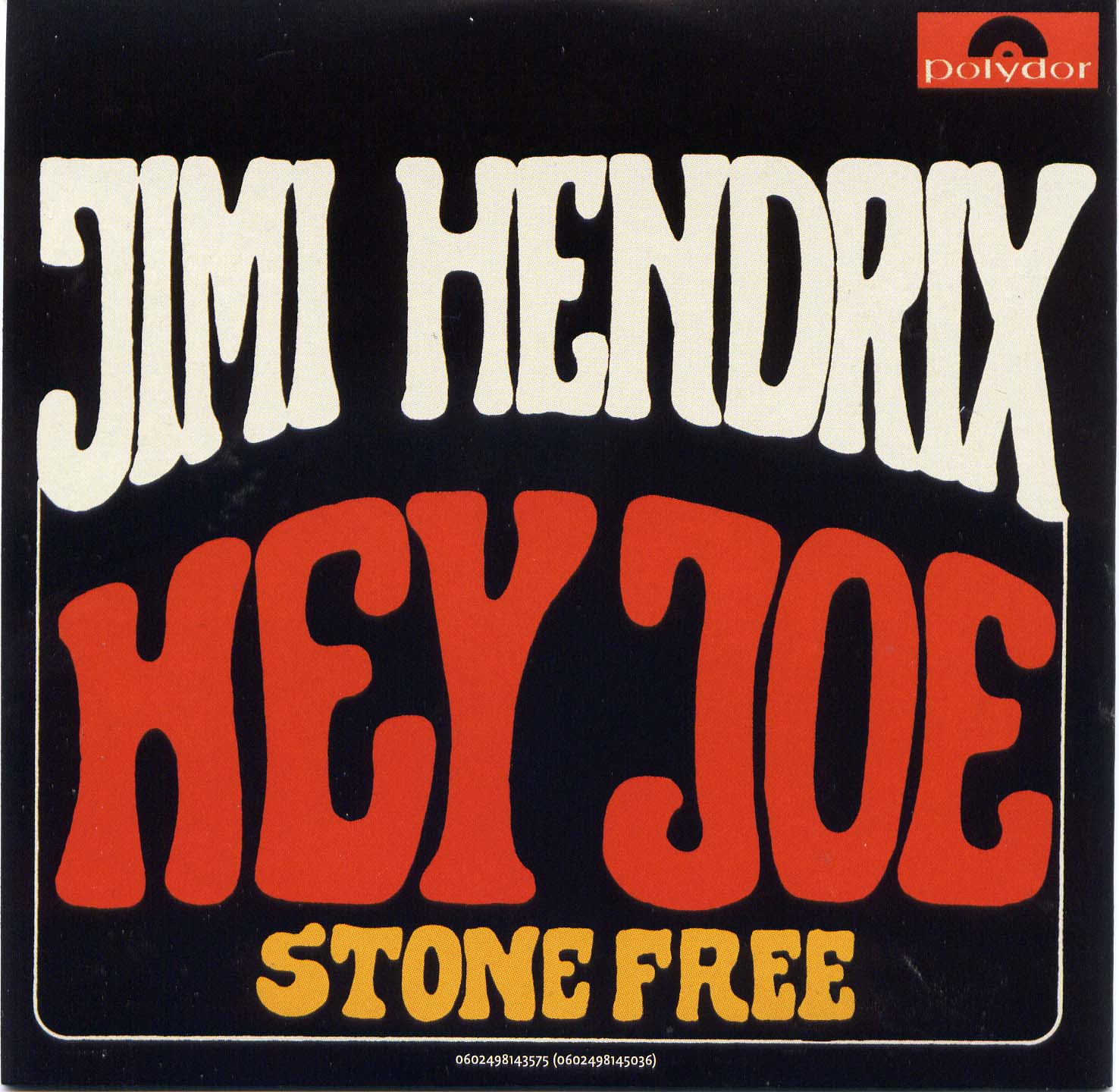
09 Hey Joe   3:22
10 Remember 2:43
11 Are You Experienced 4:02
12 3rd Stone From The Sun 6:30
13 The Wind Cries Mary 3:15
14 All Along The Watchtower   3:58
15 Manic Depression 3:31
16 If Six Was Nine 3:53
17 Bold As Love 3:55
18 Little Wing 2:25
19 Foxy Lady 3:10
20 Burning Of The Midnight Lamp 3:35
21 Trashman   3:16
22 Castles Made Of Sand 2:35
23 Voodoo Chile 3:32
24 Stone Free Again   3:25

New Link 04/05/2026

Friday, May 12, 2023

Uriah Heep - Innocent Victim (1977) plus Bonus Tracks

(UK 1969 - Present)

Almost a year had elapsed since Uriah Heep and their newly appointed singer John Lawton (from Lucifer's Friend) decamped to north London's Roadhouse studios to create their tenth album called Firefly. The album was flagged for release in the following February after which the band flew to the States to support Kiss, and also headlined the Reading Festival back home in the U.K

In the shape of the ballad 'Wise Man', Firefly had given the British five piece - completed by guitarist Mick Box, keyboard player/guitarist/singer Ken Hensley, drummer Lee Kerslake and newly arrived bassist Trevor Bolder (formerly of David Bowie's Spiders From Mars) - a rare hit single in the UK. Given their inconsistency during the latter years spent with David Byron at the microphone, it was a far from below-par album from Uriah Heep. Consequently, many of their fans (including me) were however reluctantly prepared to accept the band's decision to move on with Lawton.

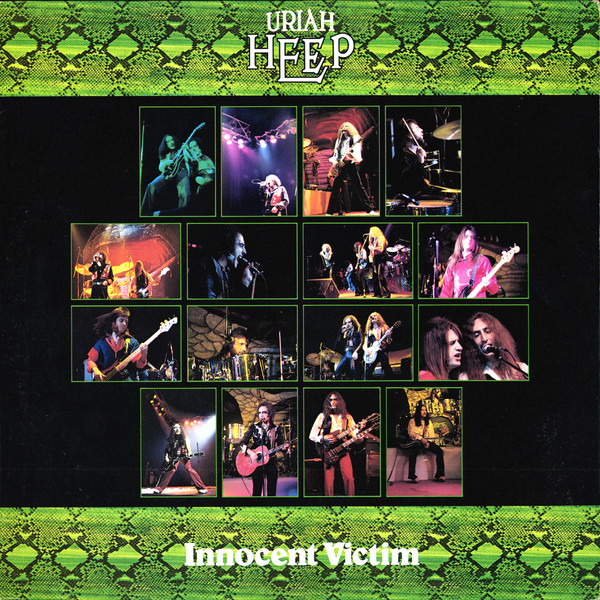
European & UK Cover
However, the punk rock revolution was in full swing, and in popularity terms the group still found themselves reeling on the ropes as a consequence of Byron's absence. Firefly failed to chart well, and while many acts might have taken a contemplative break, or at least paused to lick their wounds, the quintet were about to begin their second of 1977.

The lineup remained the same for Innocent Victim, their eleventh studio release, as did the choice of recording studio (the Roadhouse again) and the man in the producer's chair - long serving manager Bronze Records label boss Gerry Bron. This time however, Hensley received a co-credit for his involvement.

The possessor of a fine, bluesy voice, Lawton undoubtedly grew in confidence on his second album with Uriah Heep. Having joined them just three weeks before commencing his share of the recording of Firefly, John's involvement was always going to be peripheral. This time, he co-wrote the impressive "Free 'N' Easy" with Box. The other 'new boy'. Trevor Bolder, also chipped in with a shared by-line of his own on "Roller".

Uriah Heep 1977

Hensley was far less prolific than usual, being involved with just four of the original album's nine tracks. More so than ever, the band's work bore the stamp of Jack Williams, the American tunesmith who'd cut his teeth working for a publishing company owned by The Who's Pete Townsend and Roger Daltrey, before accepting Ken's invitation to relocate to England and work for Hensley's own outlet of the era, Humble Tunes. Williams brought the band three songs; "Keep On Ridin' " (Penned in tandem with Hensley), plus "The Dance" and "Choices". Puzzlingly, one of the finest Lawton-era recordings - "The River" - failed to make the final listing (though it is added here as a bonus track).

With hindsight, Innocent Victim is a more varied and sophisticated effort than Firefly, though none but the least objective devotee could have claimed it was as good. [I must be that least objective devotee - I think it is fare better!]

To some, its combination of rock numbers and slick, scarf-waving ballads like "Illusion" represented an attempt to tap into the lucrative US stadium rock market - not what they believed an act as 'eavy and 'umble as Heep should have been doing.

Once again, the band failed to dent the UK chart, though the album was an enormous success throughout the rest of Europe - even racking up their biggest ever sales in German. Its ability to shift a million copies there was largely attributable to the crossover success of another 7" triumph.

As the Roundhouse recording sessions neared completion, Hensley had walked in one day with the song concerned. "Free Me" was laid down in two days flat. Mick Box commented many years later: "It was instant. There was no extended writing or rehearsal period - it just emerged. And everybody was very excited about it".

It sounded like a hit from the minute we heard the demo" agreed Gerry Bryon afterwards. "And it certainly did a lot to put the band back on the right track commercially. In Germany we were soon back playing venues which were as big if not bigger than anything we had played previously". "Free Me" later also topped the singles chart in New Zealand and also received good airplay here in Australia.


But there was also a flipside to this success. However many new doors "Free Me" opened for the band, it also slammed others firmly in their faces. Heep had worked hard to earn themselves a reputation as a tuneful, powerful rock band. Yet newcomers seduced by the single baulked at the rest of the record's hard rock repertoire, and many who'd grown up with Heep felt alienated by this new, more lightweight direction. The band had unwittingly made a rod for their own backs.

Innocent Victim certainly spelled the beginning of the end for John Lawton, who has belatedly concurred that the album wasn't all it could've been. As a singer observes: "There are some good numbers on there, but it wasn't consistent enough. And then, out of the blue, there was the hit single "Free Me". It turned out to be Heep's biggest single ever in Europe. It went straight to No #1 in Germany and stayed there for about five weeks.

"And it had nothing to do with what Heep were doing before that; it was a straightforward pop song". expands Lawton. "Consequently this was seen as the way to go. And after that we started to write weird pop songs. That just wasn't me, I can't write pop songs to save my life. For me, "Free 'N' Easy" was what it was all about - blood and guts".

Differences over the band's direction would ultimately inflame an unfortunate rift between John and Ken, just as the keyboard maestro had fallen out with David Byron. Hensley's frustration was stoked by Bronze's insistence that Heep deliver yet more songs in the vein of 'Easy Livin' ("Free 'N' Easy" being a mild example of the phenomenon). He also didn't look too favourably upon the presence of Lawton's wife Iris on tour, finding it intrusive.

When it surfaced in November 1977, Innocent Victim elicited a mild disinterest from the press. The opinion of Classic Rock reviewer - Geoff Barton - who'd crossed swords with Heep on many occasions in the past, was perhaps typical. Barton reviewed the LP in the pages of the weekly 'Sounds Mag' and found himself addressing what must now be a very real possibility - namely that Uriah Heep will still me making music by the time the writer reaches the grand old age of 60! Understandably, the weary journo admitted he didn't know "whether to laugh or cry" at such a notion. 

The album he professed was: "Alright. Not world-shattering, epoch-making, mind-blowing, senses-shattering, soul-searing, the pinnacle of greatness... just alright".   [Liner notes by Dave Ling - Classic Rock Mag]

This post consists of rips in FLAC format, taken from my U.S Vinyl pressing that I purchased from an import shop in Flinders Street - probably in 1978 (there were always delays in getting hold of the latest releases in Australia).  It still has the shrink wrap on the cover and the vinyl is almost virgin.  The cover is different to the European 'Snake' cover but I personally like the more conservative U.S one anyhow.  The bonus tracks were ripped from the expanded CD release and full album artwork is included for both media sets, along with label scans.


My favourite tracks are "Free 'N' Easy" and "Illusion", but I must admit I didn't really like "Free Me" at the time, as it sounded like a complete 'commercial' cop out to me.  I have since softened to it in my old age and can now appreciate that the band was under the pump to provide Bronze with another hit (for their survival). 

Although I initially found it hard to accept Lawton as Heep's new vocalist (when David Bryon exited), I was surprised to learn that my favourite track on the album was actually written by Lawton. To wit, I decided to do some research into his past and discovered his connection with the band Lucifer's Friend.  Upon further investigation, I came across a track that he wrote and sang with that band called "Ride The Sky", which is in the same vain as "Free 'N' Easy", and is a killer track.  I have included "Ride The Sky" in this post so you can appreciate the same I hope. 

Track List
01  Keep On Ridin'   3:41
02  Flyin' High   3:18
03  Roller   4:38
04  Free 'N' Easy  3:02
05  Illusion  5:02
06  Free Me  3:35
07  Cheat 'N' Lie  4:50
08  The Dance  4:48
09  Choices  5:42
[Bonus Tracks]
10  Illusion / Masquerade (Full unedited version)   (8:17)
11  The River (Out-take)  3:07
12  Put Your Music Where Your Mouth Is (Previously Unreleased)  2:54
13  Cheat 'N' Lie (Alternative Live Version)  5:58
14  Free Me (Alternative Live Version)  5:47
15  Free 'N' Easy (Alternative Live Version)  3:15

Band Members:
Vocals – John Lawton
Bass – Trevor Bolder
Drums, Vocals – Lee Kerslake
Guitar – Mick Box
Keyboards, Guitar, Vocals – Ken Hensley
Producer – Gerry Bron, Ken Hensley

New Link 12/10/2023