Monday, June 6, 2011

The La De Das - Legend (1975)

(New Zealand 1965-75)
.
Kevin Borich is one of Australia’s leading guitar virtuoso. He arrived with the La De Das from New Zealand and they proved themselves to be one of the tightest hardworking rock & roll bands in the world. They took the Australian charts by storm with tracks like Borich's “Gonna See My Baby Tonight” and Chuck Berry's " Too Pooped To Pop" which had the smarts of great pop records underpinned by a crack band. [quote by Glenn A. Baker]
.
Borich recalls their early days on his website:
Trevor Wilson (bass), Brett Neilsen (drums) and yours truly were "The Mergers" jammin at Rutherford High School. Phil Key joins, Trev's mum calls us the La De Da's, we hate the poofy name but go with it cause it's weird enough. We play around Auckland and Bruce Howard (keyboards) joins, we have hit singles and hit albums and loving fans. After coming to OZ the band was akin to the 10 Little Indians (I ended up the last Indian).
Roll Call - Bryan Harris (drums), Keith Barber (drums) - stuck with me up to "Rock n Roll Sandwich", Reno Tehei (guitar), Ronnie "Rockwell" Peel (bass), Peter Hardinge (aka Roberts) (bass). All helped forge my musical style especially Bruce, Keith and Reno. Great guys, Great times, we were so hip (well we thought so).
"Gonna See My Baby Tonight" was written
coming back from touring Queensland in Swampy's famous dual wheeled, aeroplane seated, Ford Transit van. I heard it on the radio going to a show, great feeling (that kid feeling). Still get it.

.
Alongside the likes of The Pleazers, Chants R&B, The Avengers, The Gremlins, The Underdogs, Larry's Rebels and Human Instinct, La De Das were at the forefront of a vibrant New Zealand pop scene. La De Das' debut single, "Little Girl"/"Ever Since that Night" (June 1965), was a low-key slice of Rolling Stones-derived R&B Boogie issued on the local Talent City label. Bruce Howard (organ, vocals) joined La De Das in 1965 and the band turned professional. La De Das signed to Philips and issued the classic single, The Blues Magoos' "How is the Air Up There?" / "The Pied Piper", which reached #4 on the New Zealand charts in May 1966. The single also topped the Sydney charts.
.
The La De Das' release ‘The Happy Prince’ was Australia’s first concept album. With new drummer Keith Barber (ex-Wild Cherries) on board, the band set about recording its ambitious concept album The Happy Prince (based on the Oscar Wilde fairytale).

1969 was the year of the rock opera (The Pretty Things' S.F. Sorrow, The Who's Tommy, The Kinks' Arthur) and, upon its release in April, The Happy Prince was praised for its quality musicianship and production values. Despite the fine playing, it was an overly serious and flawed album, and duly sank without a trace. "Come and Fly with Me" / "Swallow Little Swallow" was lifted as a single in May.
La De Das flew to the UK in April 1969. By that stage, psychedelia had been replaced by Led Zeppelin-style heavy blues, and La De Das' brand of soft psychedelic pop was outdated. La De Das did record a version of The Beatles' "Come Together"/"Here is Love" as a single (September 1969), but the disastrous nine-month UK sojourn did little for the band's confidence.
Back in Australia, La De Das changed direction again, and were eventually hailed as one of the funkiest, hard- -driving rock outfits in Australia. By 1972 it was this concept of straightforward, gutsy rock'n'roll which resulted in the La De Das, Billy Thorpe and the Aztecs and Daddy Cool becoming the country's three top groups.
.
1970 had been a transitional year for the band, and by the end of it Howard had left to join Levi Smith's Clefs (and later Billy Thorpe and the Aztecs), Wilson had also departed (later to join Home) and Tehei had been deported back to New Zealand. With the addition of Peter Roberts on bass (ex-Freshwater), La De Das spent 1971 consolidating their position as one of the hardest working bands on the scene.
The funky, infectious singles "Gonna See My Baby Tonight"/"Fare Thee Well" (September 1971) which brought them a Top Ten hit, spending twenty-eight weeks in all in the charts, and "Morning Good Morning"/"You and Me" (March 1972) featured Phil Key on vocals. Key and Roberts left in October 1972 to form Band of Light, and as a three-piece (with new bass player Ronnie Peel; ex-Missing Links, Pleazers, Rockwell T. James and the Rhythm Aces, Browns, One Ton Gypsy), the La De Das pulled out all stops.
The La De Das featured prominently at the inaugural Sunbury Pop Festival which also featured Billy Thorpe, Max Merritt, Spectrum, and Chain in January 1972, and alongside The Aztecs and Friends managed to attract one of the largest crowds ever assembled in Australia at a concert at Melbourne's Myer Music Bowl (estimated at over 200,000 people).

Borich was now firmly entrenched as Australia's guitar hero supremo; his superb rendition of Jimi Hendrix's workout on Dylan's `All Along the Watchtower' became a signature, and the band was never allowed to finish a gig until delivering it. The fiery LP 'Rock and Roll Sandwich' (the band's first album in five years, issued November 1973 and probably the first Kevin Borich album) considered their best album and came nearest to capturing their admired live energy on vinyl. Kevin Borich wrote (or co-wrote) all the material, sang every song and backed them superbly with electric and/or acoustic guitars and piano. It remains a classic boogie rock album. The singles "I'll Never Stop Loving You"/ "It's the Beginning" (December 1972) and "The Place" / "No Law Against Having Fun" (March 1974) maintained the pace but were not chart hits.
.
The band's final singles, punchy, commercial covers of Chuck Berry's "Too Pooped to Pop"/ "She Tell Me What to Do" (#26 in July 1974) and Hank Williams' "Honky Tonkin''/ "Temple Shuffle" (August 1974), were minor national hits. "Too Pooped to Pop" also peaked at #13 in Melbourne. La De Das supported UK glam-rocker Gary Glitter on his July 1974 Australian tour.
In March 1975, EMI gathered up the band's recent singles and four unissued tracks for the compilation album 'Legend', in a superb gatefold sleeve with an intricate leather work pattern, as something of a contractual obligation (tracks were recorded from 1971-1974).

As 1975 progressed, the problems were growing. Radio was ignoring them, the touring was taking its toll, Keith Barber was becoming increasingly erratic and difficult. After ten hard years, Kevin realised that nothing tangible had really been achieved and the only thing laying ahead was more of the same. In May 1975, Kevin officially announced that the La De Das would disband. After the demise of the La De Das, Kevin formed the Kevin Borich Express. Phil Key died of a heart attack in 1984. Trevor Wilson still plays in Australia.
Bruce Howard relocated to London, where he still works as a songwriter. Brett Neilson lives in Auckland where he is still active on the pub circuit [extract from Borich's website]
.
This post consists of a rip taken from my 'prized' vinyl copy (320kps) which is in immaculate condition I might add! Artwork is provided for both LP and CD releases, along with bonus live tracks taken from the Sunbury 1972 concert and a 1971 performance on the ABC TV show, GTK.
Note an alternative 'Legend' front cover displayed below.
.
Track Listing
01 - Gonna See My Baby Tonight
*
02 - Morning Good Morning *
03 - I
Guess I'll Never Stop Loving You
04 - It's The Beginning
05 - Honky Tonkin'

06 - Too Pooped To Pop
07 - Feel Like A Dog
08 - Sentimental Rose
09 - I'm In Love Again #
10 - All Along The Watchtower +
 
Bonus Tracks
11 - Morning Good Morning (Live at Sunbury 1972)

12 - Roundabout (Live at Sunbury 1972)

13 - Gonna See My Baby Tonight (Live at Sun
bury 1972)

14 - All Along The Watchtower (GTK 1971)
.
Band Members:
Kevin Borich (Lead guitar and vocals)
Phil Key (Rhythm guitar and vocals) *

Peter Roberts (Bass) *

Ron Peel (Bass and vocals)

Keith Barber (Drums)

Additional musicians:

Jimmy Taylor (Piano) #

Tom Sparkes (Saxophone) #

Bruno Lawrence +

.
La De Das Link (141Mb) New Link 24/12/2022
.

Friday, June 3, 2011

Various Artists - The First Great Rock Festivals Of The 70's (Isle Of Wight / Atlanta Pop Festival)

(Various British and American Artists 1970)
.
This triple album is a compilation release for two major rock festivals held at the start of the 70's in both the U.K and the U.S
Both 'The Isle Of Wight' and the 'Atlanta Pop Festival' were held at a time when the world was still recovering from 'Woodstock', yet they still managed to become significant events in their own right.
.
.
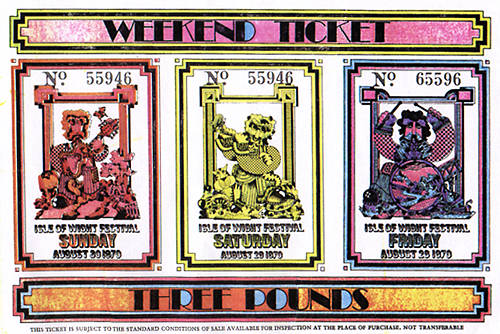
The Isle of Wight concert was the biggest ever festival to be held in the UK . Forty years on, its still not been topped, not by Knebworth , Live Aid , or Reading. No one has even come close to the 600,000 odd figure bandied about in some circles. At least half a million attended, maybe more. It was very badly organised in many respects, such as the relations between the organisers and the bands , the organisers and the audience as well as the actual site location chosen by the promoters.
Selecting a site overlooked by a commodious hill , which afforded non paying squatters a free view of the entire proceedings was not a good move, although we should also remember that this was not their first choice as a site. This fact alone was to give the promoters, the Foulk brothers, endless logistical headaches , as many who might have paid to get inside the arena sat on the hill for the entire week .
The preceding Isle of Wight Festivals, also promoted by the Foulks, had already gained a good reputation in 1968 and 1969 by featuring acts such as Jefferson Airplane, T. Rex, The Move, Pretty Things, Joe Cocker, The Who and Bob Dylan in his first performance since his 1966 motorcycle accident.
The 1970 version, following Wood in the previous year, set out to move one step forward and stockenlisted Jimi Hendrix. With Hendrix confirmed, artists such as Ten Years After, Chicago, The Doors, The Who and Free willingly took up the chance to play there. The event had a magnificent but impractical site, since the prevailing wind blew the sound sideways across the venue, and the sound system had to be augmented by Pink Floyd's PA.
Political and logistical difficulties resulted in the organisers eventually realising that the festival would not make a profit and declaring it to be "a free festival", although the majority of the audience had paid for tickets in advance, and the event was filmed contemporaneously. However, at the time, the commercial failings of the festival ensured it would be the last event of its kind on the Isle of Wight for thirty-two years.
Many of the names on the bill were big, but time has shown that they were not the cream of the crop from the era. Highlights were performances by The Who , Joni Mitchell and Miles Davis . Free, Taste , Family and Jethro Tull were good, but there were also disappointing sets by artists that were not performing at their best , such as The Doors and , sadly, Jimi Hendrix . Most of the rest of the bill were artists that were unsuited for the big outdoors , such as Donovan, Leonard Cohen and Joan Baez, or simply second rate .
If one then adds the logistics of just getting around the arena , to visit the toilets , eat food and get a good view of the stage, it becomes evident that in reality many in the crowd did not see much , hear very well or have a particularly comfortable time.
Still, with such a huge number of attendees, a multitude of events happened that were peripheral to the event itself. A giant inflatable tent played host to a number of bands and provided a diversion for those who could not afford to get into the arena or who had no shelter . A short lived tent city sprang up on Desolation Hill and the great weather ensured that it was possible for hundreds to indulge in nude fun and games on the beach , much to the delight of prurient fleet street reporters who salivated over the prospect of titillating their readers with tales of mass debauchery and drug taking .
Also, on the plus side of things, the sound system was very good , the filming of the event was probably the most comprehensive coverage of any UK rock festival ever undertaken, the weather was unrelentingly and there was some very good music on occasions.
.
The second Atlanta International Pop Festival was a music festival held at the Middle Georgia Raceway in Byron, Georgia. Originally scheduled for July 3 to July 5, 1970, it did not finish until near dawn on the 6th. It was the only successor to the first Atlanta International Pop
Festival 1969. The event was promoted by Alex Cooley, who had organised the same event the
previous year, as well as the Texas International Pop Festival
Like the Woodstock festival the previous summer, the event was promoted as "three days of peace, love and music." Tickets for the festival were priced at $14. Also like Woodstock, it became an "open event" when the promoter threw open the gates after crowds outside began to tear down the plywood fence that had been erected around the site. An estimated 350,000 to
500,000 and possibly 600,000 people attended.
Performers included The Allman Brothers Band, Jethro Tull (scheduled but did not perform, citing laryngitis), Terry Reid, B.B. King, Procol Harum, Jimi Hendrix, Chambers Brothers, Poco, Grand Funk Railroad, Captain Beef heart, Ravi Shankar, Ten Years After, Johnny Winter, John Sebastian, Mountain, and Spirit. Jimi Hendrix played his rendition of the Star Spangled Banner for the fireworks around midnight on the Fourth of July. Local Atlanta bands Radar
and the Hampton Grease Band also performed.
.
The following is a first hand account of the festival thanks to Terrell Davis, LaVergne, TN
Remembers...
I had gone to the first Atlanta Festival in Hampton, so I invited a couple of friends, Pat Jaros and Barb Dill, to ride along with me to Bryron.

When we got to the festival there were people everywhere. We parked and walked a long, long way but it was so cool because w
e talked with so many people on our way into the area. I remember one area being like a drug supermarket, but there weren't any hassle from cops. We made our way down to a lake, striped and jumped in for a cool splash. When we left, I decided not to put my jeans and shirt on. So, I, along with lots of other people, walked down the road naked. The locals trying to use the road were having a large time gawking at everyone, but no one, including the locals, seemed to care. In fact a Georgia State Trooper came by and offered us a ride on his car. It sounded like a good idea until I sat on the hood. Man was it hot. When I said I got my ass fried at the festival, I wasn't kidding.
I was taking a nap on a blanket in the middle of thousands of people who were listening to music, when Pat woke me and said, "You're gonna want to see this." It was the beginning of the Hendrix set, complete with fireworks. I think it was a little past midnight. I remember there were a few hassles coming from middle Tennessee and a few more going back, but while we were at the festival, we were in another world, and certainly, another time
I had a great time and I consider it one of the best times of my life....and I've had some great times!

For more accounts of this festival, see the following website
.
This three LP set 'The First Great Rock Festivals of the Seventies' was released by Columbia in 1971 - and is a combination of the Isle of Wight Festival and the Atlanta Pop Festival.
The rip was taken from my vinyl copy which is in very good condition, however there are the occasional crackle and pop at times which only adds to the atmosphere in my opinion.
The post consists of mp3 's ripped at 320kps and includes full album artwork. I have chosen to combine tracks (by the same band) when they run together, to retain the continuity of the live atmosphere. I have also provided CD artwork and amended the track listing accordingly, as the CD release chose to separate all tracks.
For more information on the Isle Of Wight Festival see Isle of Wight Festival and uk rock festivals
.
Track Listing
CD 1: Atlanta Pop Festival

01. Whipping Post - The Allman Brothers (5:06)

02. Stormy Monday - Mountain (19:34)

03. Mean Mistreater - Johnny Winter And (5:50)

04. Kind Woman - Poco (5:16)

05. Grand Junction - Poco (2:28)

06. Love, Peace And Happiness - The Chambers Brothers
(4:20)
07. Statesboro Blues - The Allman Brothers (4:19)

Isle of Wight

08. Stand - Sly & The Family Stone (4:11)

09. You Can Make It If You Try - Sly & The Family Stone (6:04)

10. No Need To Worry
- Cactus (5:09)
11. Parchman Farm - Cactus (4:28)
12. Mr. Bojangles - David Bromberg (5:44)

CD 2: Isle of Wight

01. I Can‘t Keep From Cryin‘ Sometimes - Ten Years After (19:09)

02. Salty Dog - Procol Harum (4:58)

03. Tonight Will Be Fine - Leonard Cohen (6:48)

04. Message To Love - Jimi Hendrix (6:53)

05. Midnight Lightning - Jimi Hendrix (4:07)

06. Foxy Lady - Jimi Hendrix (4:12)

07. Blame It On The Stones - Kris Kristofferson (4:01)

08. The Pilgrim – Chapter 33 - Kris Kristofferson (2:47)

09. Call It Anythin‘ - Miles Davis (17:31)

.
Great Rock Festivals CD1 (156Mb) New Link 16/11/2024
.
Great Rock Festivals CD2 (with Artwork) (164Mb) New Link 16/11/2024
.

Tuesday, May 31, 2011

W.O.C.K On Vinyl - Weird Al Yankovic: Like A Surgeon (1985)

.
Before things get too serious here at Rock On Vinyl, I thought it might be fun to post a song at the end of each month, that could be categorized as being either Weird, Obscure, Crazy or just plain Korny.

.
.
Alfred Matthew "Weird Al" Yankovic, born October 23, 1959 is an American singer-songwriter, music producer, actor, comedian, satirist, and a parodist. Yankovic is known for his humorous songs that make light of popular culture and that often parody specific songs by contemporary musical acts. Since his first-aired comedy song in 1976, he has sold more than 12 million albums—more than any other comedy act in history—recorded more than 150 parody and original songs,and has performed more than 1,000 live shows.

Yankovic's success comes in part from his effective use of music video to further parody popular culture, the song's original artist, and the original music videos themselves, scene-for-scene in some cases.
Although Yankovic refuses to use parody ideas from other people, Madonna is partly responsible for "Like a Surgeon". Madonna asked one of her friends how long it would take until Yankovic satirized her song "Like a Virgin" as "Like a Surgeon". This friend was a mutual friend of Al's manager, Jay Levey. When word got back to Yankovic, he decided it was a good idea and wrote the song. This is the only known time that Yankovic has gotten a parody idea directly from the original artist.

"Like A Surgeon" is the first song on his "Dare To Be Stupid" album, released in 1985. It reached #19 on the Australian charts and #47 on the Us Billboard charts and like most of his singles, coincided with a Video Clip release which is also included in this post.


For those of you who love a bit of trivia, here is some tip bits straight from his very own website..How did Weird Al Yankovic get his start in the music business? As a teenager, Al began sending homemade tapes of his songs to Dr. Demento, a nationally syndicated disc jockey known for playing comedy and novelty music. Demento found a certain charm in the accordion-powered ditties that Al recorded on a cheap cassette player in his own bedroom, and gave him his first airplay. By the time Al graduated from college, he not only had a modest cult following from the good Doctor's radio show, but he also had a couple of nationally-released singles ("My Bologna" and "Another One Rides The Bus")

In 1982 he signed a deal with Scotti Bros. Records, who went on to release all of his albums through to Bad Hair Day (1996). Volcano Records eventually bought Scotti Bros. Records, issuing 'Running With Scissors' and 'Poodle Hat', and re-releasing Al's entire back catalog. .
.
What instruments does Weird Al Yankovic play?

Although he can play other keyboard instruments, the accordion has always been Al's main "axe," and he continues to play it on record as well as in concert. His first lesson was on the day before his 7th birthday. After three years of accordion lessons, he quit, deciding to continue learning on his own.
.
.
How did Weird Al Yankovic get the name "Weird Al"?

Although he seems to remember people calling him "Weird Al" during his freshman year in the Cal Poly dorms, it didn't become official until Al started doing shifts as a DJ at his campus radio station, KCPR. He gave himself the air-name of "Weird Al" because of his penchant for playing music that was, well, kind of weird? and the nickname just kind of stuck.

.
So there you have it, his name says it all so I hope you enjoy this very Weird and very funny parody from 85'. One final thing to note is
the 'Madonna lookalike' nurse in the video clip and on the single cover - an absolute dead ringer!

The following tracks are on the single:
A - "Like a Surgeon" – 3:27
B - "Slime Creatures from Outer Space" – 4:23
.
Like A Surgeon Link (27Mb)
New Link 07/08/2024

Tuesday, May 24, 2011

Pink Floyd - Festival Hall, Melbourne (1971) Bootleg

(U.K 1965 - 1996, 2005)
.
As part of their 'Atom Heart Mother World Tour', Pink Floyd first performed in Australia on Friday 13th August 1971, at Melbourne Festival Hall, and then on Sunday 15th August at Randwick Racecourse in Sydney.

Pink Floyd’s first shows in Australia were originally announced in June of 1971 to the music press as taking place at the Dallas Brooks Hall in Melbourne on August 21st and 22nd, but reduced to a single performance less than a month later in the new advertisements for August 13th.
According to the magazine Go-Set, “the promoters spent so much time and energy publicising their Rock Concert Club that there was very little mention of the concert actually at hand, the amazing Pink Floyd.
The result was a not very full Festival Hall that really didn’t do justice to the occasion at all.”
[extract from collectors music reviews]

They arrived in Australia on 11th August 1971, and at Melbourne Airport they were interviewed by Gary Mac for Go-Set (a 24 page music newspaper). Australian journalists, not realising that the Floyd disliked talking about the music, actually received a couple of decent interviews with all the members of the band. Mac's interview plus a review of the Melbourne concert appeared in the Saturday, 28th August 1971 edition of Go-Set (volume 6, number 35).

The Rock Concert Club of Australia was responsible for bringing Pink Floyd down under on this occasion, but their promotion left a lot to be desired. The resulting audiences put Floyd off coming here again. At each gig, the Rock Concert Club put 10" round, purple leaflets on every seat, telling the audience that if they were members of the club they could have seen the band for free. I am sure that the Floyd were unimpressed by this.
The Melbourne Festival Hall is renowned for its poor sound, but the Floyd along with their quad sound were able to overcome the hall's shortcomings. The hall was only about half full owing to almost non-existent promotion. At both concerts Pink Floyd were supported by other bands, a very rare occurrence indeed! Pirana came on first and played for one hour followed by Lindsay Bourke. Both bands were somewhat below the Floyd standard of extreme freeform improvisation.

After a ten minute break (9:30pm approx), Pink Floyd came on stage and Roger announced "Good evening. This is called Atom Heart Mother". They then went into a sixteen minute non-orchestrated performance of the piece. After a minute or so of tuning up, Roger announced, "We're just going to retune then we're going to do two things together. The first of which is a song from the soundtrack from the film More, which I hear was banned over here, and it's called Green Is The Colour. And the second is an instrumental called Careful With That Axe, Eugene". Both songs together lasted fourteen and a half minutes. This was either the last, or the penultimate, performance of Green Is The Colour (I'm not sure if it was played in Sydney).
After that, Roger said "This next thing is a new piece, and it's called Echoes. And it's going to take us a minute or two to get it together because one of our lenses has burnt out". This was the first time it was announced as "Echoes" (and lasted twenty two minutes), but it still had the alternate lyrics for the first verse and chorus, and the quick ending without the multi-tracked choir as at the Montreux 1971 gig.

The band then played a twelve and a half minute Set The Controls For The Heart Of The Sun without announcing it. They then played an eleven minute Cymbaline before Roger proclaimed "Okay. This is going to be our last tune. Thank you all for coming. It's called A Saucerful Of Secrets and we'll see you again some time". Apparently this exists in bootleg form (as posted here), unfortunately the original tape ran out after five and a half minutes into Saucerful. The show was recorded about fifty yards from the stage using a Sony TC80 mono portable cassette recorder, smuggled in a schoolbag, and a normal position BASF cassette (chrome wasn't available in 1971).
.
With the Melbourne concert out of the way, Pink Floyd made their way to Sydney for an afternoon performance at Randwick Racecourse. Before they went on stage, they were interviewed for the GTK (Get To Know) programme in one of the rooms at Randwick (see last track). The GTK programme was a short (five to ten minute) music show that was screened weeknights before the 6pm news. The Floyd interview lasted for nearly nine minutes. This is the only interview on film that features all four members talking together!
As yet, no audio recording of the Sydney concert has surfaced, but the GTK programme aired a two minute, fifteen second film with audio taken from the Ummagumma version of Careful With That Axe, Eugene. This showed the band surrounded by the audience with the cameraman at the top of the stands, achieving good closeups of the band, stage, and audience. It is not known how much of the concert was filmed, but this segment is all that has survived. The third part of the GTK show was a two and a half minute clip for Set The Controls using the Saucerful album version. It featured three girls running around in the desert and is an Australian only promo. This was broadcast after the band left Australia on Tuesday 17th August 1971 [report by Gary Hughes]
.
Now, what of the actual sound quality? The fact is this release is essentially comparable to many of the other recordings from this era; it’s rather well-balanced, with all of the instrumentation and vocals perfectly audible. The recording is actually quite loud, and as a result there is a mild amount of distortion in places, but it doesn’t overpower the music. No hiss is audible and the audience is primarily quiet throughout the performances, however there is a bit of phase shifting at times, which in truth, works for this era of Floyd !

The rip was originally sourced from tape and then converted to FLAC, however, this post consists of 320kps MP3's. Full album artwork is provided along with an alternate covers for the Godfather's release entitled 'Pink Floyd First Australian Show' (see pictured below).
.
Track Listing
01. Atom Heart Mother (18:22)

02. Green Is The Colour (3:31)

03. Careful With That Axe, Eugene (12:17)

04. Set The Controls For The Heart Of The Sun (13:54)

05. Echoes (22:28)

06. Cymbaline (12:38)

07. A Saucerful Of Secrets (5:39)

08. Interview August 15, 1971 (4:05)
.
Band Members:
David Gilmour (Guitar, Vocals)

Roger Waters (Bass, Vocals)

Richard Wright (Keyboards, Vocals)

Nick Mason (Drums, Percussion)

.
Pink Floyd Link (134Mb) New Link 30/12/2023
.

Wednesday, May 18, 2011

Robin Trower - For Earth Below (1975) + Bonus Tracks

(U.K 1981-82, 2008 - Present)
.
Born March 9, 1945, Robin Trower was member of Southend, England, based R&B group 'The Paramounts' which metamorphosed into Procol Harum via a somewhat devious route. Trower played guitar with that band up to 1971 'Broken Barricades' album, long before which his frustrations within Procols had been apparent.
On departure, first attempted to form new band, Jude, with ex Jethro Tull drummer Clive Bunker, singer Frankie Miller and ex Stone The Crows bassist Jim Dewar. This proved abortive, and Trower pursued solo career in cahoots with Dewar mid-1972.

Released first solo album Twice Removed From Yesterday in 1973, first incarnation of Robin Trower Band comprising himself on guitar, Dewar on bass and vocals, and Reg Isadore on drums. Trower's undoubtedly Jimi Hendrix-influenced guitar playing was and remains dominant factor, and it was as nascent guitar hero that second set, 'Bridge Of Sighs' (1974), became considerable American hit.
Early efforts were, in fact, concentrated on U.S. market, backed by heavy tours, with belated British recognition arriving largely as result of Stateside status. Before For Earth Below (1975) Isadore was replaced by ex-Sly Stone drummer Bill Lordan, and that and 1976 Robin Trower Live were again top U.S. sellers.
.
Review
The man who saw a void following the death of Jimi Hendrix and filled it in his own way with some fine guitar work and the excellent vocals of James Dewar is back. Usual mix of rock/blues from the ex-Procol Harum man, and for the huge legion of fans Trower has built with his trio, this is exactly what they expect and want. Star of course is Trower's excellent guitar work, fine blues rifts predominating. Cuts that allow him long solos are best. Not a replica of Hendrix, but certainly the best in this genre and the one who has showed the most originality. Expect immediate FM action here. Best cuts: "Gonna Be More Suspicious," "For Earth Below," "Shame The Devil," "Confessin' Midnight." [Billboard 1975]
.
'For Earth Below', Trower's third solo album, is heavily induced with a blues-rock formula that withstands the duration of the eight tracks and adequately displays his slick guitar mastery. His subtle yet dominant fusion of blues and hard rock styles not only inflicts character throughout each song, but also demonstrates how effective an instrument the guitar can become when the proper techniques are applied. Much like 'Twice Removed From Yesterday' but not as diverse as 'Bridge of Sighs', this album has Trower sounding a tad more velvety around the edges, with the blues element sometimes governing the entire piece, an asset to the album's complete texture. The opening "Shame the Devil" and "A Tale Untold" best exemplify his distilled playing style, while a song like "Gonna Be More Suspicious" represents how focused a musician he really is, making each chord pour into the next so that the sound becomes totally viscous.

James Dewar, who plays bass and sings vocals, contributes aptly to the low end of the music, filling in where needed, while drummer Bill Lordan helps out on percussion. Finishing off with the sultry but dimensioned aura of "For Earth Below," the album wraps up with a wholehearted satisfactory feel.
The two numbers that somehow stand out from the general wah-wah Hendrix-style on the album are the ones taken at a slow tempo, namely, 'It's Only Money' and the title track. Unsurprisingly, they also turn out to be the best compositions on the record. Thus, 'Money' is distinguished by a weird 'dripping' guitar sound that adds some delicate poignancy and even a certain mystical flavour to the proceedings.
The title track is the highlight track here; pushing that 'dripping' sound still further, and adding 'psychedelic' percussion noises. Trower transforms the song into an atmospheric, dreamy chant that is finally able to raise an eye or two. When that relaxing, yet at the same time disturbing sound suddenly comes on at the end of the record to caress your ears, it's like being saved from eternal damnation - finally, Robin gives us something unusual.
..
I don't even care that there are no interesting solos in the song; it's not supposed to be a polygon for solos. On the other hand, listen carefully to the lengthy, hypnotic fade-out, when Dewar slowly keeps repeating 'for earth below... for earth below... for earth below...', the percussion noises slowly transform into deep sighs, and Robin emits these creepy little wails out of his guitar.
No, it's not ambient or anything, and the track is even hardly experimental; such 'half-psychedelic' numbers are quite common among seasoned rockers (cf. 'Dreams' by the Allman Brothers Band, for instance - except that 'For Earth Below' is a much better song). But it's the number's distinguished position on here that really attracts one's attention - further proof that the order of songs on an album does matter a lot.
The albums that followed 'For Earth Below' began to stray slowly from being blues-influenced to a sound that contained a mainstream feel, with fragments of bright rock adding a sheen to his raw guitar repertoire.
.
Trower's Guitar
Trower has been a long time proponent of the Fender Stratocaster. He currently uses his custom built Strat (made by the Fender Custom Shop) which comes in Black, Arctic White and Midnight Wine Burst. The guitar is equipped with a 1950s reissue pickup in the neck position, a 1960s reissue in the middle position, and a Texas Special at the bridge. Other features included a custom C-shaped maple neck featuring a large headstock with a Bullet truss-rod system, locking machine heads and a maple fingerboard with narrow-spaced abalone dot position inlays and 21 frets. The Strats he plays live are an exact model of his signature guitar, which is entirely unmodified. During live performances, his guitar is tuned a full step down, to a DGCFAD tuning, instead of the "standard" EADGBE tuning.

Trower is known to use anywhere from one to three 100-Watt Marshall heads with four to six cabinets on stage. Usually two JCM 800s, and a JCM 900. But, has also been known to link 100-Watt Marshall Plexi heads. It is not uncommon for Trower to play at very high volume levels through his rigs, even in relatively small venues, to achieve his desired tone. In studio sessions, Trower uses a mix of amplifiers, such as Fender Deville and Cornell Plexi Amplifers models to acquire different tonality.
He has recently been using Fulltone pedals and effects. He favors the OCD, Distortion Pro, Fat Boost, CLYDE Deluxe Wah, Deja Vibe 2, Soul-Bender, and a BOSS Chromatic Tuner. He runs his Deja Vibe into his distortion pedal to get his famous tone. He was given his own signature Fulltone Robin Trower Overdrive in late 2008.
.
This post includes a rip from CD (320kps) and includes full album artwork. I have also included bonus tracks recorded during the rehearsal sessions for this album, which gives the listener an insight into how some of the tracks evolved. This is one of my favourite Trower albums and in my opinion an amazing sequel to his legendary 'Bridges of Sighs' album. I was lucky enough to see Trower play at Festival Hall, in Melbourne in 1975, when he toured Australia with his 'For Earth Below' show. I remember being totally blown away with his solos and can honestly say it was one of the best concerts I've ever been to (from a music point of view).
.
.
Track Listing

01 - Shame The Devil
02 - It's Only Money

03 - Confessin' Midnight

04 - Fine Day

05 - Alethea

06 - A Tale Untold

07 - Gonna Be More Suspicious

08 - For Earth Below

Bonus Rehearsals

09 - Gonna Be Suspicious (Early Version Instrumental Jam)

10 - Fine Day (Instrumental Jam #1)

11 - Fine Day (Instrumental Jam #2)

12 - A Tale Untold (R&B Jam)

13 - For Earth Below (Slow Keyboard Blues)

14 - Fine Day (Early Rough Vocal Run Through)

.
Band Members:
Robin Trower (Guitar)

James Dewar (Vocals, Bass)

Bill Lordan (Drums)

.
Robin Trower Link (146Mb) New Link 21/01/2026
.

Saturday, May 14, 2011

Madder Lake - Live in Studio 620 ABC Perth

(Australia 1971–1976, 1978–1979, 1982, 1996–current)
.
Madder Lake was one of the most original and distinctive of the "new wave" of Australian groups that emerged around 1970. They were also an important and popular part of the of the Melbourne music scene. It's unfortunate that they're only known for their extant recordings -- their two excellent 1970s Albums 'Still Point and Butterfly Farm' and a "Best Of.." compilation -- because they are prolific writers, and according to Mick they have "literally hundreds of songs" stockpiled, waiting to see the light of day.
Madder Lake was formed when two parallel friendships combined. Brenden Mason and Kerry McKenna who meet at high school in 1965. Michael Fettes and Jac Kreemers who formed their friendship approximately the same time.

All four shared an artistic background and an undeniable love for music. It was at Tech school they all meet and immediately bonded with music. John McKinnon was a friend of Jac’s, who was welcomed by the four as a fifth member. Initially the band starting performing under the name San Sebastian, and the song list consisted of various covers the band liked as opposed to the run of the mill tunes. All songs that were performed were arranged and modified to the absolute max. Nearly to the point of unrecognisable. It was the light bulb flashed and the band came to the realisation that all this work that was being channelled into covers should be focused on original material. Hence the name change to Madder Lake, re-equipping with new gear and starting the adventure of an original band.
.
(A very early Madder Lake playing at the Coburg Hall in 1972)

By 1971 Madder Lake had started gigging, describing the band was difficult and finding gigs was proving just as difficult. The band approached Consolidated Rock an agency that was one of the main players at that time. A luke warm reception was given on the request for work. Thru sheer persistence the Madders began gigs at privately run functions, to the point of work was becoming reasonably regular and a following started to develop. Word got around and Consolidated Rock took another look. It was at this point Michael Gudinski became the managing influence on the band. The band started performing at higher profile gigs supporting headline acts :John Mayal and the Bluesbreakers, Manfred Mann and the Rolling Stones.

.Their first featured big gig was the first official act at the 1972 Sunbury pop festival and subsequent festivals. By 1973, the band had compiled enough material to produce an LP. From these recordings a single was the debut release. "Goodbye Lollypop" was the bands statement of good bye to the commercial rubbish most bands were playing and an introduction to the bands own brand of experimental music. Following the single was the release of 'Stillpoint', an album that original was conceived as one musical piece, but was later edited in the conventional track by track format. 'Stillpoint' went Gold nearly completely on Victorian sales only. At that stage a national profile wasn’t held by many artists.

1974 saw a change in members with replacement of John McKinnon with Andy Cowan. This impacted on the band material and direction changed. With this line-up 'Butterfly Farm' was produced, an album in a new direction, but unfortunately didn’t outsell 'Stillpoint'. Consequently this had an effect on the machine that was promoting us. In 1974 the band parted company with Mushroom and worked with various agents and independently.It was at this time that the band connected with Classical and pop conductor David Measham, and the concept of band and orchestra was touted. Madder Lake composed a piece based on Brave New World. The project still lies dormant, partly due to the death of David Measham (extract from Madder Lake's Website)
..
Interview with Madder Lake in 1978, Juke Magazine (reported by Allan Webster)
.
In the rock world, bands come and bands go - and once they're gone they rarely surface again. Madder lake intend to be an exception. One of Australia's top bands back in the early '70s, Madder Lake slowly degenerated through line-up changes and lack of continued commercial success to the point where they existed in name only.To explain the various changes would take several pages. But briefly, Madder Lake had two albums — Stillpoint and Butterfly Farm, the first released in 1973.
The band really began to take off after an appearance at the legendary Sunbury '72 pop festival on the outskirts of Melbourne. At the same festival the following year, they all but stole the show, taking three encores from an ecstatic crowd.

Madder Lake were one of the original artists on the Mushroom label and they enjoyed success with singles like "12-pound Toothbrush", "Goodbye Lollypop" and "The Bumper Bar Song"
The band now in its 10th year, was an amalgam of rock and
"spacey" music. Lyrically they were often amusing and indeed varied — dealing with subjects such as a 22-stone rapist, groupies, the moon, booze and cars.
A focal point of the band was vocalist Micky F
ettes — a demented-looking soul whose voice jnd stage antics possessed a lot of character. About five years ago Mick left Madder Lake, to pursue interests which included promoting, jingle writing and recording an album with local group 'Bandicoot'. It was a fine Oz rock album. Good songs and some excellent performances, but due to record company problems and other factors too numerous to mention, it never took off. Neither did the band, and it melted back into the Oz rock stockpot (see previous post).
.
While Mick was busy, the remaining members of Madder Lake plugged away. They went through various changes, retaining a core membership of drummer Jack Kreemers, guitarist Brendan Mason and bassist Kerry McKenna.
In 1976, in a bid to re-establish the band, they released the
single "I Get High" which did reasonably well in Melbourne. But not well enough to keep the band together.
The singer at that time, Tony Lake, split to Sydney and Kerry McKenna, who'd earlier gone overseas, returned. The band's original keyboard player John McKinnon returned and they kept at it. It got to the point last year where Madder Lake existed in name but rarely performed.
It was at one of these rare performances that Mick Fettes, who'd kept in close contact with the band, got up on stage to sing a few songs. Crowd reaction was such that they all agreed to reform the original Madder Lake and attempt to elevate the name to its former lofty heights.
I have many fond memories of Madder Lake. Steamy summer nights spent cramped in the tiny cavern that was Melbourne's Garrison rock nightclub, bouncing off the silver walls to old favorites like "Down The River" and "Slack Alice". Lying in a drunken stupor on the floor while the band raged onstage.
So here I am, years later, sitting in the offic
es of Mushroom Records (certainly in a more sober state) talking with Micky Fettes and Kerry McKenna about the reformation of Madder Lake.

It feels like the five or six years were merely weeks. Neither appear to have changed much. "It's been about five years since we played together," says Micky through a wide smile. For some inexplicable reason he and Kerry seem to have
permanent grins. Perhaps the sort of smug expression that comes of knowing that you've got something special.
"It's quite freaky," explains Micky. "The first night we rehearsed it just started to happen.
"The musical rapport is just amazing ... the creative flair is even
stronger than before.
"Just getting the chemistry is like winning Tattslotto. At rehearsals we just end up laughing it's so good".
Naturally, people who remember Madder Lake will be
expecting to hear some of those old tunes — and the band is obviously aware. "About two-thirds of the show is stuff like Stillpoint and Butterfly Farm," says Micky."We've got an obligation to people because they'll be expecting to hear those songs — and the thing is we'll have a good time doing them".
"It's amazing that even after five years they still sound good," says Kerry. "There's the same original feel but a lot more finesse — smoother." Obviously the years have taught Madder Lake a lot, as musicians and in their ability to work within the industry.
"I think everyone has grown up a lot," says Micky, "and so has the industry."
As a result of their reformation, Mushroom Records is to release a "Best Of Madder Lake" album and at the same time are helping the band get back on the road.
"The songs don't seem to have dated at all — I think they're still really relevant," says Kerry. "They don't sound old at all, and they're still very unusual songs." Of course, the band will be playing a selection of new songs written by individual members over the years, and they have many others they hope to introduce later.
Initially the band is only looking ahead a few weeks. "At this stage we're just going on the road for a month to see how it goes then we'll take it from there," says Micky. "The whole thing has been professionally put together and we feel confident because all that side of it is together... now it just comes down to whether people like it." (Juke 1978, Issue #156, page 13)
 
.

This post is a recording made in the mid 70's by Madder Lake in Studio 620 ABC Perth, just before the band disbanded. It is my suspicion that because this live broadcast was made at Studio 620 ABC Perth, the band was probably in the middle of recording their uncompleted Brave New World project. To read more about this this project, see Milesago.
The rip (320kps) was probably taken from a tape of the broadcast and includes full album artwork (thanks to the original uploader Woodynet for the rip and artwork). I have also included a scan of the Juke magazine article for those historians out there. Thanks to Greg Noakes for the Madder Lake photo (see above)
And for the collectors there are some previously unreleased tracks here - Miracle Day, Higher-Higher-Higher, Money Honey and Do What You Do.
. 
Track Listing
01 - Down The River

02 - Miracle Day

03 - Higher Higher Higher

04 - Money Honey

05 - Slack Alice

06 - Booze Blues

07 - Listen To The Morning Sunshine

08 - Do What You Do

09 - It's all In Your Head

10 - Song for Little Ernest

11 - 12lb Toothbrush

.
Band Members:
Mick Fettes (Vocals and Na Na Na's)

Kerry McKenna (Bass, Vocals)

Brendon Mason (Lead Guitar)

Jack Kreemers (Percussion)

Andy Cowan (Keyboards)

.
Madder Lake Link (100Mb)

Tuesday, May 10, 2011

Lovin' Spoonful - The Very Best Of (1972) + Bonus Tracks

(U.S 1965–1969, 1980, 1991–present)
.
Formed by John Sebastian and Zal Yanovsky when their previous band The Mugwumps, which originally featured Mama Cass, split into The Lovin' Spoonful and The Mamas and the Papas. The two founders were apparently watching The Beatles US TV debut in 1964 when the idea for one of the most underrated pop groups of the 60s took shape.
Often compared to The Monkees (they were passed over for the original TV series) and The Beatles, they had a mischievous image and were known as America's moptops from Manhattan.
The name 'Lovin' Spoonful' came from a line in Mississippi John Hurt's song 'Coffee Blues' and had a sexual reference rather than a drug connection, as many believed at the time.

The original duo of John Sebastian (born in New York March 17 1944, vocals, guitar and harmonica) and Zal Yanovsky (born 19 December 1944 Toronto, guitar and vocals) were joined by Steve Boone (bass and vocals) and Joe Butler (drums and vocals).
They began to rehearse in the basement of the rundown Albert Hotel and gained a residency at the Night Owl in Greenwich Village. Working on Sebastian's innovative songs with producer Erik Jacobsen, after tentative interest from Phil Spector came to nothing, the group secured a deal with the Kama Sutra label in 1965.
The impossibly optimistic and infectious celebration of rock'n'roll - "Do You Believe In Magic?", was released as their debut single, entering the top 40 in the US in October 1965. Between 1965 and 1967 the group enjoyed a string of seven US top 10 singles all displaying their characteristic bright, stirring, melodic charm.
The second single was the evocative "You Didn't Have To Be So Nice", a hit in early 1966, quickly followed by the languidly beautiful singalong "Daydream" which was to be the group's biggest hit in the UK climbing to number two in April of the same year. Also a hit in 1996 was the frivolous pop ditty "Did You Ever Have To Make Up Your Mind?" (apparently written in a cab on the way to the studio) which reached number two in the US.

Oh course, the group's best known track was the classic hit "Summer In The City" and was also their biggest hit in the USA storming to number one in August 1966 and breaking into the top ten in the UK during the month before. This timeless, atmospheric tribute to New York with it's unmistakable use of traffic and street noise sound effects was also notable for it's distinctive drum sounds (engineered by Roy Halee who later went on to work with Simon And Garfunkel).
Further hits followed with the yearning, romantic ballad "Rain On The Roof" and "Nashville Cats", another fond look at the world of music.

Throughout this period The Lovin' Spoonful recorded four original studio albums, featuring many other pop gems from the pen of John Sebastian. They also released soundtrack albums for Woody Alien's 'What's Up Tiger Lily' in 1966 and 'You're A Big Boy Now' for Francis Ford Coppola in 1967.

Above - Portrait of 1960s American rock band 'The Lovin' Spoonful' as they pose on a street, mid to late 1960s. Clockwise from bottom: drummer Joe Butler, bassist Steve Boone, co-founder and lead guitarist Zal Yanovsky (1945 - 2002), and co-founder and singer John Sebastian. Yanovsky crosses his arms and makes an unusual facial expression while Sebastian smokes a cigarette.

In June 1967, Zal Yanovsky left the band following a drugs bust in California when it was alleged that he implicated his supplier and therefore alienated the band from the flourishing hippy counterculture. John Sebastian tried to continue, but the band had lost it's original spark and in October 1968 he also quit summing up their career as "two glorious years and a tedious one".
Sebastian's first solo project was writing songs for a Broadway play starring Dustin Hoffman followed by an appearance at the Woodstock festival in 1969. His debut solo album, 'John B. Sebastian' was released, to critic acclaim, in 1970.

A new line-up of Lovin' Spoonful struggled on briefly but without the two rounders of the group there was limited success. The four original members reunited briefly in 1 980 for a cameo appearance in Paul Simon's movie 'One Trick Pony'. Sebastian continued to tour regularly and write for film and TV projects while Yanovs gave up music altogether and opened a restaurant.
So here is an early collection of The Lovin' Spoonful, a group whose songwriter often approached the genius of Brian Wilson and who left a short-lived but outstanding musical legacy of effervescent, wistful and infectious pop songs that found a natural home on the radios of teenage sixties America.
..
This album was Kama Sutra's attempt to replace its two 12-track Best Of albums with a single 12-track album compiling The Lovin' Spoonful's hits. It does contain eight of the group's ten Top Ten hits, missing only "Nashville Cats" and "She Is Still a Mystery," though oddly it also includes "Till I Run with You" and "Never Going Back," two songs from the group's final, inferior phase. Still, upon release, it featured more Spoonful hits on a single album than had ever appeared before.
The album was ripped to mp3 (320kps) from my pristine vinyl copy and includes full album artwork. I have chosen to add 4 bonus tracks (ripped from CD) which I believe belong in this early compilation - "Younger Generation" (a classic Sebastian solo), "Lonely (aka Amy's Theme)", "Voodoo In My Basement" and "Boredom" - which I don't believe will be the case when you listen to this great hits collection. Of course, "Summer In the City" is my favourite track and is probably the one song that originally got be interested in music from the sixties.
.
Track Listing
01 - Younger Girl

02 - Didn't Want To Have To Do It

03 - Daydream

04 - You Didn't Have To Be So Nice

05 - Did You Ever Have To Make Up Your Mind?

06 - Do You Believe In Magic?

07 - Summer In The City

08 - Rain On The Roof

09 - Six O'Clock

10 - Darling Be Home Soon

11 - Till I Run With You

12 - Never Going Back

Bonus Tracks

13 - Younger Generation

14 - Lonely (Amy's Theme)

15 - Boredom

16 - Voodoo In My Basement

.
Band Members:
John Sebastian (Vocals, Guitar, Harmonica)
Zal Yanovsky (Guitar, Vocals)
Steve Boone (Bass, Vocals)
John Butler (Drums, Vocals)

.
Lovin' Spoonful Link (86Mb) New Link 13/11/2024
.