Showing posts with label Pirana. Show all posts

Tuesday, June 25, 2024

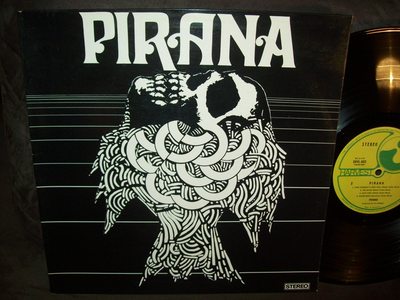
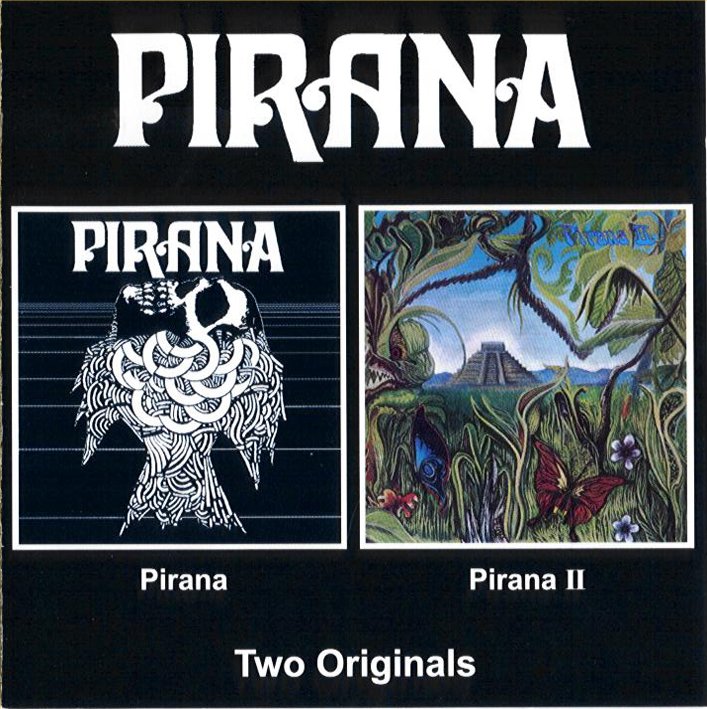
REPOST: Pirana - Pirana I & II (1971-72)

(Australian 1970-74)
.
For anyone who is hopelessly hooked on progressive and classic rock of the 70s, Pirana is simply a must. "Pirana" was a short-lived act from the early 70s, which was one of the major driving forces and attractions in Australian music scene in these years who released two really nice albums of pure progressive rock with some strong Santana influences.
Australia’s Pirana had a relatively short life but within the 3 years at its height the band played over 600 gigs covering the whole country, including tours with major overseas artists, stellar performances at rock festivals and leaving us with two fabulous albums with memorable tracks. Their live performances had explosive intensity. The rise of Pirana paralleled the rise of bands such as Spectrum, Country Radio, The Aztecs, Taman Shud, Company Caine, Mackenzie Theory and the La De Da’s. These were break out groups who turned their backs on the pop tradition of the previous decades and bought a new creativity, energy and great musicianship onto the live and recording landscapes in this country. A band whose music stands up on it’s own to this day.
.
The Pirana story starts with the recruitment of Stan White in mid 1970 ending with the departure of Graeme Thomson in 1974. However, I will endeavour to fit in the whole history as well as fill in some of the gaps. Graeme Thomson and Jim Duke Yonge who provided the powerhouse rhythm section of Sydney Pop and Scream band The Nomads, together with Tony Hamilton were looking for a keyboard player/singer to perform night after night at Sydney’s Hawaiian Eye. This was a venue run by the infamous John Harrigan. They were about to lose keyboard player and guitarist John Millyard (ex Nomads) and were told to check out a keyboard player from New Zealand called Stan White.
Stan, originally from Lake Tekapo, South Island played with a group in Christchurch called the “Chapta” a very successful recording group, before moving to Sydney where he ended up playing with a group called Multiple Balloon who were playing in a downstairs cellar at the bottom of William Street, Sydney. After checking him out that night there was no question of Stan not being perfect as a replacement for John.
Stan bought with him a flare for writing and arrangement complementing Tony’s thirst for writing.
.
Pirana used their residency at the Hawaiian Eye in Castlereagh Street in the city to provide a great opportunity and space to map out the group’s future. Stan and Tony took the songwriting bit between their teeth, both highly creative and both with a passion for the new fusion between Progressive Rock and Latin Percussion. Stan with the perfect high register voice and flowing Hammond countered by Tony whose guitar could strip paint off any back wall, with vocals to match.
Jim, one of the most innovative and progressive drummers this country had seen, took the rhythms apart, invoking the gods of the drum. Graeme for his part remained the soul of quiet musical discretion, commanding the FEEL like a general, always steady playing the bass guitar as well as percussion. He made it so easy for the others to ride on his powerful pulse.

 Michael Barclay, the then newly appointed A & R Manager for E.M.I. and formally the A & R Manager of Decca Records U.K, showed no hesitation in signing Pirana (the first Australian Band on this label) to a long term contract to the newly created Harvest Label. Michael was formally the A & R Manager with Decca Records U.K. and had signed the Moody Blues to that label. Pirana began in earnest to put together a set of songs for the album and for the live stage performances. Just before their recording the group played a wild set at Wallacia, this was a one-day festival west of Sydney.
.
.
This was the perfect time to test the new material out on a large gathering. They played along side another newcomer to the festival stage and to the Harvest Label, Greg Quill and Country Radio.
The day was a roaring success and the well-known rock magazine “Go Set” was there who advertised the event and were highly impressed with Pirana’s performance. David Woodley Page and John Taylor engineered the first album, co produced by myself, with invaluable contributions from all four-band members, was recorded at E.M.I.’s 301 Sydney. In what seemed like whirlwind sessions it was finished and although done in what now would seem a minimum of time, the band members proved that the group were passionate and inventive.

I remember Tony directing the engineer Martin Benge of “Lady Madnona Fame”, the engineer for the second LP, where to place several mics around the edge of  the room to get the best live sound from his guitar solos. The finished album with cover notes supplied by Howard Page (Clair Bros. USA) who has toured with bands like INXS and Paul McCartney provided the group with the perfect platform to launch themselves onto the national stage.
.
On Stage At Randwick Racecourse, Sydney 1971
Just after the completion of the album in late 1971, Pirana went searching for greener pastures,  a new audience and the lure of a bigger circuit plus a wider fan base, the group moved to Melbourne. Melbourne was then and still is the city with more gigs. Berties, Sebastians, Thumping Tum, a host of suburban pubs, the Unis and RMIT, not yet a uni but always a great venue for live bands at lunchtime, these were some of the places we played. There were always three gigs on any Saturday night and we played seven to eight gigs per week. Our booking agency, Sunrise, run by mercurial Michael Chugg, kept the work coming in. Also Ray Evans and Michael Gudunski, Consolidated Rock and AEE were a great help with the workflow.

On the Deep Purple/Free/Manfred Mann tour by the time the caravan reached Adelaide tempers were getting a little frayed. Graeme Thomson remembers at one point Sammy Lee the tour promoter, wielded a gun at Bob Jones who was Manfred Mann’s manager in the lobby of the Adelaide Hotel after a dispute over non payment of monies as well as the order regarding who head lined the programme. Needless to say in the end no harm was done and everybody got paid when the tour completed. Another big highlight of that year was the “Pink Floyd” concert at Randwick Racecourse with over 50,000 in attendance.
Randwick Racecourse, 1971
For most of their Melbourne life the group stayed at the Majestic Hotel, St Kilda Road St Kilda. Next door, Graeme remembers the Café’ Banff whose cook could rustle up great home cooked meals at all times of the night and day. The kindly Majestic doorman was a guy with a clubfoot called Tiger and he ensured hotel safety, security and easy hotel access for the group when they returned from late gigs every night. This was a necessary part of St Kilda in those days.
Sunbury 1972, the first of their three Sunbury’s, with Stan still in the Hammond seat was a great experience on all levels except one. Pirana did their original set and finished with an encore of Soul Sacrifice. The whole set was recorded by E.M.I. Unfortunately, when the composite album was finally released only Soul Sacrifice (the Santana cover and the only cover they played) appeared and it had been edited very badly. The group was bitterly disappointed. Headlining at Sunbury that year were Queen but even they were overshadowed by the local contingent lead by Billy Thorpe and the Aztecs. Stan White left the group on February 1972 but left a legacy of two songs released before the second album. “I Hope You don’t Mind” and “Funny Games”. He had an offer to join a studio group called the Going Thing, which was originally bought together as a promotional vehicle for the Ford Motor Company. This group was about to take off for the U.K. for a tour and recording commitments. The seamless transition came about with Keith Greig. Keith was a fan of the band and came from the group called the “Cryin’ Shame” who were located in Dubbo NSW. Keith played a Hammond organ, which was by now one of the quintessential sounds of Pirana. Within weeks the group was back on the rock trail.

.By May 1972 the group was back into the studio and recording their second album, Pirana II with the ethereal “Thinking of You”as an example. From this second album the single “Love More Today” was released with moderate success reaching N0. 10 in different parts of the country. But to this day Pirana will be remembered for not so much for their “commercial” success but for their “live” sets at many a concert across the country. Another single released from this album was “Here it Comes Again” written by Tony Hamilton. Bill Page, now A & R for Mushroom Publishing and then program  manager for Adelaide station 5AD will tell you that this song was the top ten Australian track played to this day. Although played on radio in every capital city, Adelaide was the only place where it made Top 10, this in spite of the success of the national tour with Manfred Mann, Free and Deep Purple and also at a later date touring with Pink Floyd and Rod Stewart.
.
Advert 'Go Set Mag' May 1st, 1971
The single, which features Tony’s incredibly powerful guitar, remains at the forefront of any iconic singles list from the 70’s. The punters flocked to every performance of the group but radio by at  large was not listening to Pirana and the new heartbeat of music by them and other groups was ignored. Subsequently the single fell through the cracks. To think that all of this happened and “Here it Comes Again” turned up on several Hit Compilations of the day. Tony left in late 1972, moving to the Gold Coast and was replaced by Richard McEwen.
Sunbury 1973 was once again a major event for Pirana drawing encores for their pounding Latin/Progressive Rock originals. In May 1973, the band performed at  the Sidney Myer Music Bowl with the Victorian Youth Symphony Orchestra. They performed two songs both written by Keith Greig who wrote them especially for this occasion and for the next twelve months they ground out a musical living. Eventually Keith Greig called it a day in October 1973. Life on the road does not equate with anywhere near a normal family environment. Andy James replaced him and Andy played the last Sunbury in 1974. Soon after this Graeme Thomson left as well, Phil Hitckcock, the percussionist and back up vocalist from the second album that switched to bass replaced him. [as told by Gus McNeil, 2006 at piranamusic.com]

On Stage At The Sidney Myer Music Bowl, Melbourne. 1973
.This post consists of FLACs ripped from a CD release (2002) which featured both albums, and was sourced from the Midoztouch website with thanks. Full album artwork and band photos are also included. Original vinyl copies of these albums fetch a small fortune on eBay these days; a copy of their second album recently sold for $240.
I really enjoy Pirana's progressive keyboard and percussion sound and Hamilton's guitar licks are as good as the master himself - Carlos Santana.  If you like Santana, then you are really going to like these two classic albums.

New Improved RIP
.
Track Listing
Pirana I
01 - Elation
02 - Sermonette
03 - Time Is Now
04 - Find Yourself A New Girl
05 - The River
06 - Easy Ride
07 - Stand Back
Pirana II
08 - Pirana
09 - Then Came The Light
10 - I've Seen Sad Days
11 - Persuasive Percussion
12 - I've Got To Learn To Love More Today
13 - Jimbo's Blow
14 - Thinking Of You
15 - Here It Comes Again
16 - Move To The Country
.
Pirana were:
Graeme Thomson  (Bass, vocals, percussion)
Jim Duke Yonge     (Drums, percussion and vocals)
Tony Hamilton       (Guitar and vocals)
Stan White              (Keyboard and vocals)
Keith Greig             (Hammond Organ and vocals)
Phil Hitchcock        (Percussion and backing vocal, later to replace Graeme Thomson as bass player)
Richard McEwen     (Guitar and vocals, later replacing Tony Hamilton)
Andy James              (Keyboards, later replacing Keith Greig)

.
Pirana I&II Link (501Mb) New Link 10/09/2025
.

Saturday, August 24, 2019

Pirana - Live On GTK

(Australian 1970-74)
.
Today music shows on T.V are as common as bread and butter. But in 1969 the ABC made music and pop culture history with a groundbreaking, revolutionary music show called GTK that had never been seen before on T.V   Here for the first time for your enjoyment are the selected performance recordings of Sydney band 'Pirana'.
To those reliving the time of their lives I hope this brings back a flood of good food memories. To those who have discovered Pirana for the first time, enjoy the tracks and think of the absolute joy having your ears lead you to the front of the stage to experience the magic and explosive energy of one of Australia's premier group's from the 70's.
.
The Pirana Story
The rise of Pirana paralleled the rise of bands such as Spectrum, Country Radio, The Aztecs, Taman Shud, Company Caine, Mackenzie Theory and the La De Da's. These were break out groups who turned their backs on the pop tradition of the previous decades and bought a new creativity, energy and great musicianship onto the live and recording landscapes in this country.


The Pirana story starts with the recruitment of Stan White In mid 1970 ending with the departure of Graeme Thomson in 1974. However, I will endeavour to fit in the whole history as well as fill In some of the gaps.

Graeme Thomson and Jim Duke Yonge who provided the powerhouse rhythm section of Sydney Pop and Scream band The Nomads, together with Tony Hamilton were looking for a keyboard player/singer to perform night after night at Sydney's Hawiian Eye. This was a venue run by the infamous John Harrigan. They were about to lose keyboard player and guitarist John Millyard (ex Nomads) and were told to check out a keyboard player from New Zealand called Stan White.
Stan, originally from Lake Tekapo, South Island played with a group in Christchurch called the "Chapta" a very successful recording group, before moving to Sydney where he ended up playing. Stan bought with him a flare for writing and arrangement complementing Tony's thirst for writing.

Pirana used their residency at the Hawaiian Eye in Castlereagh Street in the city to provide a great opportunity and space to map out the group's future.
Stan and Tony took the songwriting bit between their teeth, both highly creative and both with a passion for the new fusion between Progressive Rock and Latin Percussion. Stan with the perfect high register voice and flowing Hammond countered by Tony whose guitar could strip paint off any back wall, with vocals to match. Jim, one of the most innovative and progressive drummers this country had seen, took the rhythms apart, invoking the gods of the drum.

EMI Publicity Shot For First Album
Graeme for his part remained the soul of quiet musical discretion, commanding the FEEL like a general, always steady playing the bass guitar as well as percussion. He made it so easy for the others to ride on his powerful pulse.

Michael Barclay, the then newly appointed A & R Manager for E.M.I. and formally the A & R Manager of Decca Records U.K, showed no hesitation in signing Pirana (the first Australian Band on this label) to a long term contract to the newly created Harvest Label. Michael was formally the A & R Manager with Decca Records U.K. and had signed the Moody Blues to that label. Pirana began in
earnest to put together a set of songs for the album and for the live stage performances. Just before their recording the group played a wild set at Wallacia, this was a one-day festival west of Sydney.

This was the perfect time to test the new material out on a large gathering. They played along side another newcomer to the festival stage and to the Harvest Label, Greg Quill and Country Radio. The day was a roaring success and the well-known rock magazine "Go Set" was there who advertised the event and were highly impressed with Pirana's performance.

David Woodley Page and John Taylor engineered the first album, co produced by myself, with invaluable contributions from all four-band members, was recorded at E.M.I.'s 301 Sydney. In what seemed like whirlwind sessions it was finished and although done in what now would seem a minimum of time, the band members proved that the group were passionate and inventive.

I remember Tony directing the engineer Martin Benge of "Lady Madnona Fame", the engineer for the second LP, where to place several mics around the edge of the room to get the best live sound from his guitar solos. The finished album with cover notes supplied by Howard Page (Clair Bros. USA) who has toured with bands like INXS and. Paul McCartney provided the group with the perfect platform to launch themselves onto the national stage.

On Stage at Randwick Racecourse 1972
Just after the completion of the album in late 1971, Pirana went searching for greener pastures a new audience and the lure of a bigger circuit plus a wider fan base, the group moved to Melbourne. Melbourne was then and still is the city with more gigs.
Berties, Sebastians, Thumping Turn, a host of suburban pubs, the Unis and RMIT, not yet a uni but always a great venue for live bands at lunchtime, these were some of the places we played. There were always three gigs on any Saturday night and we played seven to eight gigs per week. Our booking agency, Sunrise, run by mercurial Michael Chugg, kept the work coming in.

On the Deep Purple/Free/Manfred Mann tour by the time the caravan reached Adelaide tempers were getting a little frayed. Graeme Thomson remembers at one point Sammy Lee the tour promoter, wielded a gun at Bob Jones who was Manfred Mann's manager in the lobby of the Adelaide Hotel after a dispute over non payment of monies as well as the order regarding who head lined the programme. Needless to say in the end no harm was done and everybody got paid when the tour completed. Another big highlight of that year was the "Pink Floyd" concert at Randwick Racecourse with over 50,000 in attendance.

On Stage at Randwick Racecourse 1972
For most of their Melbourne life the group stayed at the Majestic Hotel, St Kilda Road St Kilda. Next door, Graeme remembers the Cafe' Banff whose cook could rustle up great home cooked meals at all times of the night and day. The kindly Majestic doorman was a guy with a clubfoot called Tiger and he ensured hotel safety, security and easy hotel access for the group when they returned from late gigs every night. This was a necessary part of St Kilda in those days.

Sunbury 1972, the first of their three Sunbury's, with Stan still in the Hammond seat was a great experience on all levels except one. Pirana did their original set and finished with an encore of Soul Sacrifice. The whole set was recorded by E.M.I. Unfortunately, when the composite album was finally released only Soul Sacrifice (the Santana cover and the only cover they played) appeared and it had been edited very badly. The group was bitterly disappointed. Headlining at Sunbury that year were Queen but even they were overshadowed by the local contingent lead by Billy Thorpe and the Aztecs.


Stan White left the group on February 1972 but left a legacy of two songs released before the second album. "I Hope You don't Mind" and "Funny Games". He had an offer to join a studio group called the Going Thing, which was originally bought together as a promotional vehicle for the Ford Motor Company. This group was about to take off for the U.K. for a tour and recording commitments.
The seamless transition came about with Keith Greig. Keith was a fan of the band and came from the group called the "Cryin' Shame" who were located in Dubbo NSW. Keith played a Hammond organ, which was by now one of the quintessential sounds of Pirana. Within weeks the group was back on the rock trail.


By May 1972 the group was back into the studio and recording their second album, Pirana 11 with the ethereal "Thinking of You" as an example. From this second album the single "Love More Today" was released with moderate success reaching #10 in different parts of the country. But to this day Pirana will be remembered for not so much for their "commercial" success but for their "live" sets at
many a concert across the country.

Another single released from this album was "Here it Comes Again" written by Tony Hamilton. Bill Page, now A & R for Mushroom Publishing and then program manager for Adelaide station SAD will tell you that this song was the top ten Australian track played to this day. Although played on radio in every capital city, Adelaide was the only place where it made Top 10, this in spite of the success of the national tour with Manfred Mann, free and Deep Purple and also at a later date touring with Pink Floyd and Rod Stewart.


The single, which features Tony's incredibly powerful guitar, remains at the forefront of any iconic singles list from the 70's. The punters flocked to every performance of the group but radio by at large was not listening to Pirana and the new heartbeat of musk: by them and other groups was ignored. Subsequently the single fell through the cracks. To think that all of this happened and "Here it Comes Again" turned up on several Hit Compilations of the day.

Tony left in late 1972, moving to the Gold Coast and was replaced by Richard McEwen.

 1973 was once again a major event for Pirana drawing encores for their pounding Latin/Progressive Rock originals. In May 1973 the band performed at the Myer Music Bowl with the Victorian Youth Symphony Orchestra. They performed two songs both written by Keith Greig who wrote them especially for this occasion and for the next twelve months they ground out a musical living.

Eventually Keith Greig called it a day in October 1973. Life on the road does not equate with anywhere near a normal family environment. Andy James replaced him and Andy played the last Sunbury in 1974. Soon after this Graeme Thomson left as well, Phil Hitckcock, the percussionist and back up vocalist from the second album that switched to bass replaced him. Keith Greig left the band
in October 1973 and was replaced by Andy James along with new bass player Phil Hitchcock replacing Graeme Thomson. They played on until the band's natural end. [Liner Notes]
.
The enclosed MP3's (320kps) were sourced from a now defunct blog called 'Friday On My Mind' (thanks to Deutros) and I am unsure if these recordings were ripped directly from YouTube clips or came from some other video source. Irrespective, the quality of the recordings are great and full album artwork is included, along with the above band biography and photos.
Pirana were always seen to be Australia's answer to Santana, and to some extent they were on par with their mentors but they also brought other sounds and melodies to the table that made them unique.  With only 2 albums under their belt, it is a shame that their output wasn't captured more in the studios, especially the later encapsulation of the band  So, I guess this post fills part of the gap that exists with this legendary Australian band.
.
Track Listing
01 - Soul Sacrifice
02 - I'm A Man
03 - Elation
04 - I've Seen Sad Days
05 - Thinking Of You
06 - Gassing
07 - Pirana interview 1971
08 - Now
09 - Instrumental
10 - Dukes Mountain
11 - Standback
12 - Spirit Of Zambezi

Pirana were:
Graeme Thomson - Bass, Vocals, Percussion
Jim Duke Jonge - Drums, Percussion and vocals
Tom Hamilton - Guitar and Vocals
Stan White - Keyboard and Vocals
Keith Greig - Hammond Organ and Vocals
Phil Hitchcock - Percussion and vocals (for 2nd album)
Richard McEwan - Guitar and Vocals (fot 2nd album)
Andy James - Keyboards (for 2nd album)
.
Pirana Live On GTK Link (155Mb)
.

Sunday, July 20, 2014

Various Artists - Sunbury (1972)

(Various Australian Artists 1972)
.
Though not the first major music festival in Australia, the Sunbury Music Festival was the first to turn a profit and to run consecutively for several years. For 4 years from 1972, the festival was held on the Australia Day long weekend at a private farm on the outskirts of Sunbury near Melbourne, attracting around 35,000 punters of pop. Likened at the time to Woodstock, today Sunbury can be seen as a forerunner to big festivals like Big Day Out, Falls and Splendor in the Grass. Line-ups included home-grown acts such as Skyhooks, Billy Thorpe and the Aztecs, Sherbet, Daddy Cool and Captain Matchbox; with international guests like Queen and Deep Purple headlining in later festivals. However, it was Deep Purple who tolled the death knell for the Sunbury festival in 1975. Operating at a loss, organisers paid out the UK rock stars at the expense of the local acts who went home penniless.


Sunbury 72
 David Hill (a youthful ABC journalist) reported the pioneer festival culture at Sunbury '72 as a mix of hippies, yobbos, organic food stalls and makeshift tents and swags. The first Sunbury concert was held over the Long Weekend period from 29th to 31st January, 1972.
Tickets cost $6 for the 3 days and there was an estimated 35-40,000 in attendance. Gerry Humphreys (of the The Loves Ones) was the MC and the festival sported the largest number of bands of all the Sunbury concerts.  Bands playing at the festival were:

The Bushwackers and Bullockys Bush Band
Captain Matchbox Whoopee Band

Glenn Cardier
Carson
Chain
Company Caine
Friends
Healing Force
The La De Das
Mackenzie Theory
Phil Manning
Max Merritt and the Meteors
Pilgrimage
Pirana
Wendy Saddington
SCRA
Spectrum
Tamam Shud
Billy Thorpe & The Aztecs
Total Fire Band
The Wild Cherries
Greg Quill & Country Radio
Highway
Indelible Murtceps
The La De Das
Mulga Bill's Bicycle Band

Blackfeather
Barry McCaskill & The Levi Smith Clefs

Because the site of Sunbury Music Festival was closer to Diggers Rest than Sunbury itself, many patrons travelling by train to the festival would get off at Diggers Rest station. However, the "Diggers Rest Pop Festival" just didn’t have the same zing to it. While the inaugural concert of 1972 is usually remember as being an all-Australian event, many of the performers actually hailed from New Zealand. But as we do, we’ll turn a blind eye to that and claim them as our own, especially Thorpie.
Sunbury '72 also exemplifies the male domination of the popular music scene at that time, although photographs indicate that the audience seems to have been fairly evenly split in gender terms, almost all the performers were male. Wendy Saddington was the only female headliner on the bill, and only one other band, Mackenzie Theory, featured a female member (violist Cleis Pearce).
The festival was organised in late 1971, when a company called Odessa Promotions was formed in Melbourne. Its principals were, according to Adrian Rawlins, "industry people" from the Melbourne television scene, including several TV floor managers and directors; it is likely that several had worked on Melbourne pop TV like Uptight. The principal of the company was John Fowler.
By this stage, five other major festivals had already been mounted, and the oft-repeated claim that Sunbury was Australia's first rock festival is quite untrue. Unfortunately, none of these earlier festivals was financially successful. Undeterred, Odessa Promotions organised and promoted a major rock festival with an all-Australasian line-up, although it's important to note that we don't know for sure whether this was a deliberate decision (or one merely dictated by financing) or whether or not Odessa considered bringing in overseas acts (or not).
.

 .
The evidence suggests that Sunbury's success was a mixture of good luck and good timing, rather than careful planning and good organisation. Like Woodstock, Sunbury almost didn't take place, when they began looking for a site, the organisers discovered that few landowners were willing to allow their property to be used for a three-day rock festival that would attract tens of thousands. Fortunately, the festival was saved by a local landowner who offered Odessa the use of part of his property at Glencoe, just outside the township of Sunbury, about 35 km north-west of the city. The farmer, Mr George Duncan, was reportedly motivated to make the offer because he "believed in young people".


Opinions vary greatly about Sunbury's significance. Most commentators claim that it was a turning point in Australian rock, a symbolic coming-of-age for youth culture, and the birthplace of the pub-rock scene. These theses have been prosecuted by rock historian Ian McFarlane and the writers of  'Long Way To The Top', among others. As a result, the assertion that Sunbury was a defining moment in Australian music history has been accepted virtually without question, and without reference to any other evidence, and much of the information about it remains unconfirmed and anecdotal. As far as we know, no-one as yet has undertaken the tasks of recording a comprehensive oral history that includes performers, organisers and patrons.
However, the website used in the above account of Sunbury 72, probably boasts the most extensive accounts and photos of the four Sunbury concerts, and is worthwhile visiting.
.

Sunbury 72 (extract from The Real Thing)
According to Billy Thorpe, 'Australia was always about two years behind the States. They had Woodstock in 1969 and we had Sunbury in 1972.' Billy continues: 'I went to Sunbury for five days with my wife and we got a tent backstage and lived there while they built the site. It was a real community. And the vibe was just extraordinary.'
The first day of the Sunbury pop festival, 28 January 1972, marked the beginning of the modern era for Australian rock & roll. Held over three days on a 300-acre site just outside Melbourne, Sunbury was the biggest single rock event to be staged in Australia. The bill was largely home-grown and, as Thorpe points out, all the architects of the Successes  of the '70s  were  at that  festival— Michael  Browning, Michael  Chugg, Michael Gudinski, Sam Righi and Roger Davies. The acts were even more crucial. Max Merritt and The Meteors flew back to Australia from the UK for the gig, which also featured every major Australian artist with the exception of Daddy Cool. As with Woodstock (the film of which had recently been shown across Australia and which had done more to propagate the myth of the rock festival  than the event itself), Sunbury was  a celebration of youth culture.

Max Merritt And The Meteors

The Acacia River was the inevitable site for skinny-dippers, coverage of which was the most interesting phenomenon for the mass media. Two young men were arrested for public indecency after having sex with a sixteen-year-old girl, two babies were born, and the kids behaved well.
Nudity notwithstanding, the show really belonged to Thorpie. The Aztecs were then at their absolute prime and they blew the heads off most of the music fans with a two-hour set of relentless boogie. By the time they rocked into 'Most People I Know Think That I'm Crazy' it was clear that Thorpie was king and that the country had a new national anthem.


By early 1975 Billy Thorpe and The Aztes had become the loudest and heaviest band in the country. Their appearance at Sunbury '72 cemented their popularity with the yob crowd and resulted in the Live at Sunbury album. Also in 1972 the band released the single 'Most People I Know Think That I'm Crazy' which became Billy Thorpe's first Top 10 hit in seven years. The album More Arse Than Class followed in 1974 which found favour with the 'Suck More Piss' crowd. [extract from 'The Real Thing (1957-Now)', Toby Creswell & Martin Fabinyi, Random House 1999, p58-59]
.

This post consists of MP3 (320kps) and FLACs ripped from my treasured double vinyl set, which I acquired some years ago at a garage sale (and let it be known that the early bird does catch the worm).  I couldn't believe my luck when I found this gem tucked away in amongst some throw away titles and happily paid the $2 price tag.  When I discovered its immaculate condition, I knew it was the find of the century.
So here it is folks, in all its glory. No pops or crackles to be heard and full album artwork for both LP and CD are included (thanks to Micko for the CD Artwork).  I have also chosen to include the full rendition of Mamma (by Billy Thorpe And The Aztecs) released on their own Live At Subury album, which is 2 minutes longer than this release.  In addition, the bonus Sunbury 72 recording " I Wanna Make Love To You" by SCRA is also included to help fill out this resulting 2 CD set.
I would also like to acknowledge the use of photos sourced from the National Australian Library and others taken by Soc Hedditch.

Update: I've just added a tribute track by Max Merritt entitled "Sunbury" which was released on his 2020 album 'I Can Dream', a song he wrote about the 1972 Sunbury Concert.  RIP Max - we miss you mate.
.

Track Listing
01 - Morning Good Morning (The La De Das)
02 - Roundabout (The La De Das)

03 - Gonna See My Baby Tonight (The La De Das)
04 - Soul Sacrifice (Pirana)
05 - Some Good Advice (Spectrum)

06 - I'll Be Gone (Spectrum)
07 - We Are Indelible (The Indelible Murtceps)
08 - Be My Honey (The Indelible Murtceps)
09 - But That's Alright (The Indelible Murtceps)
10 - Try A Little Tenderness (Max Merritt And The Meteors)
11 - Fanny Mae (Max Merritt And The Meteors)
12 - You Touch Me (Max Merritt And The Meteors)
13 - Roly Poly (SCRA)
14 - Mamma (Billy Thorpe And The Aztecs)

Bonus Tracks
14 - Mamma (Billy Thorpe And The Aztecs - Full Version) *
15 - I Wanna Make Love To You (SCRA - Bonus Track) +

* Taken from The Aztecs Live At Sunbury
+ Sourced from YouTube

.
Sunbury 72 Link (MP3) New Links 21/10/2015
.
Sunbury 72 Part 1 (FLAC) New Link 12/11/2016
.
Sunbury 72 Part 2 (FLAC)

Max Merritt - Sunbury (FLAC)  New Link 05/05/2021


.

Saturday, June 22, 2013

Various Australian Artists - The GTK Tapes Vol 1 & 2 (1994)

(Various Australian Artists 1969-75)
.
"GTK is a pleasant little island in an ocean of A B.C" declared former This Day Tonight production assistant Ric Birch when he became, in August 1969 the youngest producer of a national television program in Australia. It was more than pleasant - it was truly revolutionary. In a country where 'pop music1 was dismissed by the mass media as a sort of teen disease useful only for scandal headlines, this perfectly positioned ten minute stab - at 6 30pm, just before Bellbird, four nights a week -abruptly introduced middle Australia to an emerging rock counter-culture, without a screaming girl in sight.
GTK did not dispense the hits of the day, nor. with any great frequency, the hit acts. Certainly the nightly viewers -always devoted and dismayed in equal parts - were served up the readily familiar likes of Zoot, Axiom, Doug Parkinson In Focus, Autumn, Jeff St John, Sherbet, Country Radio, the La De Das, Blackfeather, Billy Thorpe, Chain, Hush, Max Merritt & The Meteors, Russell Morris, Daddy Cool, Spectrum, and Flake, but they were also exposed to new, challenging contemporary acts such as Company Caine, Captain Matchbox, Pirana, Tamam Shud, Bakery, Sun, Third Union Band, Syrius, Glenn Cardier, Kahvas Jute. Band of Talabene No Sweat, Gungan Dim; Mother Earth, Human Instinct, Langford Lever, Duck, Jeannie Lewis, Friends, Wendy Saddington (RIP 21-06-2013), Wild Cherries, Band of Light, Gary Young's Hot Dog, Moonstone, Mighty Kong, Home, Buffalo, King Harvest, Headband and Carson
And the music was just part of it. In between the exploratory sounds were interviews, reports and, sometimes, just meandering snatches which brought long haired freaky people into the nations lounge rooms - dancers, poets, film makers, photographers, fashion designers, painters, actors and suffers.
It has to be said that there was a deathly seriousness about much of it. A rock-is-art stance which set itself in opposition to the bubblegum, teen idol face of the 'pop scene1 The counter-culture was too young and too self-conscious to trust itself with levity, so a certain ponderous tone was inevitable
If you make allowance for that, the GTK years - to late 1970 under Birch and from January 1971 to November 1975 under producer Bernie Cannon, with odd episodes produced by Bruce Wilson, Albie Thorns and Bernard Eddy -constitute the most precious and astonishing repository of rare (often pncelessly so) Australian rock recordings by the most important OZ Rock acts of an era when a once totally derivative music scene took a bold leap into the unknown.
"I lived the whole thing" recalls Cannon "It wasn't a job it was a way of life and I think that the people who watched it every night understood that it had the strongest impact upon country kids because it was really their only contact with what was going on. Under Cannon, GTK continued to offer the unexpected and the imaginative and the store of rare performances grew. There wasn't a rule that you couldn't come on and plug your new hit but my policy I suppose like Ric's, was if you couldn't cut it live you couldn't appear. We tended to get more serious bands and they often played things from their sets that they didn't have to hassle with at eight o'clock on Monday morning when most musicians can't talk let alone play. I think that most of the bands we used really appreciated the freedom to let loose a bit and do things they certainly couldn't do on happening '71. I suppose they were also aware that television at that time didn't have the technical capacity to reproduce them to record standard and maybe some of them didn't want to risk playing their swish new single live for us!"
Tony Romeril, leader of often-used GTK band Autumn concurs "Bernie always wanted to be one step ahead to be original and give the bands and the song some space. But, no it wasn't always easy when you were in your van going off to the Gore Hill studios at 7AM after finishing your last set at Whisky Au Go Go at 3 AM'"
The first two volumes of The GTK Tapes contain a wonderfully diverse array of repertoire - experimental blows, convenient covers, works in embryo, fave raves and songs that would have been recorded if the band had managed to stay together. The common factor is that none of the tracks (save Doug Parkinson In Focus' Do Not Go Gentle, which turned up on the Stone film soundtrack performed quite differently by Doug) are songs officially recorded by those acts. They all would have been welcome recordings at the time had they eventuated but almost a quarter of a century down the line they are still valid and fascinating representations of Oz Rock in between the screams and international recognition
[Linear notes by Glen. A Baker]
.
Review From Rolling Stone magazine - December, 1994
by Bruce Elder 
ONE OF THE MOST CHALLENGING questions about rock releases is: "Does history have any inherent interest or merit, or should all music be evaluated on the quality of songs and musical performances
There is, for example, no doubt that these two releases are important historical documents, GTK (which stood for "Getting to Know") pre-dated Countdown and was a brief, nationwide, 10-minute spot at 630pm, four nights a week. It was positioned just before the ABC soapie Bellbird and lasted from 1969 to 1975. Because it tended to feature alternative acts, and because it often recorded performances, the GTK Tapes have become a fascinating social document of the outer reaches of pop and rock in those years.
The question in 1994 is — does anybody really care? Glenn A. Baker can write sleeve notes declaring that the GTK Tapes "constitute the most precious and astonishing repository of rate (often pricelessly so) Australian rock recordings ever uncovered , but this begs the questions: Priceless to whom? and precious to whom? Mr Baker may feel that the Zoot performing Lennon and McCartney's I'm Only Sleeping is beyond his financial resources, but it is hard to imagine many others in Australia who would bid such an item into some imaginary financial stratosphere
It is true that, if you are interested in rock musk in Australia between 1969 and 1975, these two CDs are valuable documents. That, however, presupposes that in 1994, you think lots of basic blues and R&B, cover versions of the Beatles and the Rolling Stones (there are six on the two CDs) and believe extended guitar and drum solos are relevant and interesting.
This was not a great period for music It was too self-consciously arty, the clothes were immeasurably silly (bell bottoms et al), the uniform was long hair and beards, and, disturbingly, few of the musicians from the era have any kind of career left in 1994.

It is hard to find genuinely exciting and extraordinary performances on these two CDs. Most of the covers sound like very mediocre versions of the originals. The La De Das version of Chuck Berry's "Around and Around" is pedestrian and a shadow of the Rolling Stones' incomparable version, which they are clearly trying to imitate. Blackfeather's version of "Gimme Shelter" is more impressive. Autumn's version of Neil Young's "The Loner" is surprisingly good.
Some of the originals are obviously derivative of overseas styles. The Tamam Shud track, "America", sounds so much like early Jethro Tull it is almost uncanny. It's just missing the flute. Similarly, the end of Wind Cherries' "God (Guitar Overdose)" sounds like something Pink Floyd rejected around the Saucerful of Secrets period.
Of the others, who but a philistine locked in a terminal timewarp would really want to hear Doug Parkinson crucifying Dylan Thomas' beautiful "Do Not Go Gentle", with a raucous rock/R&B version of the poem, which culminates in a truly awful drum solo. And does anyone really need six versions of the GTK theme?
For many people, rock musk is the soundtrack to their adolescence. This music was the soundtrack for an awful lot of rather hip, plugged-in baby-boomers. To those outside the demographic, these recordings will only have them scratching their heads in disbelief and saying, "That's what those old hippies meant when they said you had to be there.

.
When I came across this review in Rolling Stone, I was outraged. Mr. Elder may write for Rolling Stone, but his review clearly shows an immature lack of appreciation of earlier periods of music and fashion. I would guess that he was probably a young journalist who couldn't see past his nose let alone two decades.
I would suggest that you have a listen to these historical recordings and I like Glenn A Baker think that they are priceless gems which truly document the roots of our wonderful Aussie Rock.
The post itself was sourced from the Midoztouch website (with thanks to the original uploader) and are MP3 rips (320kps) taken from CD.  Full album artwork and booklets are included.along with scans of the offending magazine article. If you enjoy these recordings and want more, then you can grab the next two volumes (Vol.3&Vol.4) on my blog also.

Vol 1. Track Listing
01 - GTK Theme (Sherbet)
02 - I'm Only Sleeping (The Zoot)
03 - Do Not Go Gentle (Doug Parkinson In Focus)
04 - Sweet Little Angel (Carson)
05 - 1967 (Company Caine)
06 - GTK Theme / America (Tamam Shud)
07 - GOD / Guitar Overdose (Wild Cherries)
08 - GTK Theme / Country Lady (Freshwater)
09 - Gimme Shelter (Blackfeather)
10 - Around And Around (La De Das)

11 - My Boogie (Healing Force)
12 - Over The Ocean (Ticket)
13 - Gassin'/ GTK Theme (Pirana)


GTK Tapes Vol 1 Link (143Mb)

Vol 2. Track Listing
01 - GTK Theme (Sherbet)
02 - The Loner (Autumn)
03 - Midnight Train (Flake)
04 - Celest Atlantis (Flying Circus)
05 - Same Old Country Song (Axiom)
06 - Honky Tonk Women (The Cleves)
07 - GTK-Theme-Strawberry Fields (Syrius)
08 - Tomorrow Never Knows (Blackfeather)
09 - Bye Bye Blackbird (MsAskills Marauders)
10 - Flip Flop and Fly (Company Caine)
11 - Caroline-GTK Theme (Doug parkinson and Focus)


GTK Tapes Vol 2 Link (150Mb)