The late 60's and early 70's was an era when rock came of age. This album features a collection of all time rock classics emphasising the strong influence of British and European musicians.
From Hendrix to Status Quo...the Who's Who of Rock's golden era are featured on this highly sort after compilation.
I have always considered this compilation (and it's follow up Vol.2 release) to be the best rock sampler albums to be released on Vinyl, representing the pinnacles of 60 and 70's rock. The only 'legendary' band not represented here are the Beatles, but then how many compilations have you seen with a Beatles track - none? Featured singles are:
The Crazy World Of Arthur Brown - Fire Written by: Arthur Brown/Vincent Crane
Release Date: June, 1968
Highest Chart Position: #1 UK
Album Track: The Crazy World Of Arthur Brown
B-Side Single: Rest Cure
During live performances and in the black and white promotional television clip, Brown performed the song wearing a burning helmet. The helmet was improvised with a leather skull cap onto which was bolted a metal dish that held lighter fluid or petrol. As the cap was not insulated, the heat from the burning fuel quickly conducted through the fixing bolt to the top of Brown's head, causing him considerable pain. The song is an example of the psychedelic rock of the period, though its lack of guitars or bass guitar distinguished it from many of its contemporaries. The lead instrument in this case was Vincent Crane's Hammond organ, augmented by an orchestral section featuring prominent brass.
Written by: Pete Townshend
Release Date: March, 1969
Highest Chart Position: #4 UK
Album Track: Tommy
B-Side Single: Dogs part Two
In the first week of March 1969, Track released the first sampler from Tommy, a riveting new Townshend song entitled 'Pinball Wizard'. The song had actually been written for Nik Cohn, a journalist who was both a pinball fanatic and a close friend of Pete, Kit Lambert and Chris Stamp. It was by far The Who's best single release since 'I Can See For Miles' eighteen months earlier. "Pinball Wizard" opened with what is perhaps the best guitar part that Pete Townsend has ever written; following a slow, tension-filled build up through a series of unusual, rather melancholy chords, the rhythmic balance is secured with some furious strumming on acoustic guitar down an eight note sequence, each change enhanced by the deep cannon of John's bass guitar.
If there was any doubt that Pete Townsend is the finest rhythm guitarist in the whole of rock, 'Pinball Wizard' sets the record straight. The B-Side incidentally, was Keith Moon's jokey 'Dogs Part II', a throw away track with composition credited to 'Moon, Towser and Jason'. Towser was Pete's pet spaniel and Jason was John's favourite deerhound.
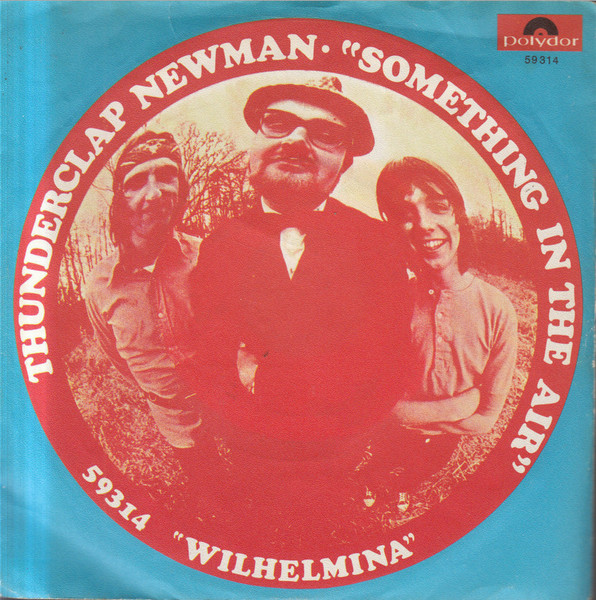
Thunderclap Newman - Something In The Air Written by: Speedy Keen
Release Date: May, 1969
Highest Chart Position: #1 UK
Album Track: Hollywood Dream
B-Side Single: Wilhelmina
In 1969, Pete Townshend, The Who's guitarist, was the catalyst behind the formation of the band. The concept was to create a band to perform songs written by drummer and singer Speedy Keen, who had written "Armenia City in the Sky", the first track on The Who Sell Out. Townshend recruited jazz pianist Andy "Thunderclap" Newman (a friend from art college), and 15-year-old Glaswegian guitarist Jimmy McCulloch, who subsequently played lead guitar in Paul McCartney and Wings. Keen played the drums and sang the lead.
Written by: Billy Roberts
Release Date: Dec, 1966 in UK
Highest Chart Position: #6 UK
Album Track: Are You Experienced?
B-Side: Stone Free (U.K), 51st Anniversary (US)
The lyrics tell of a man who is on the run and planning to head to Mexico after shooting his unfaithful wife.
Listed at No. 201 on Rolling Stone magazine's The 500 Greatest Songs of All Time in 2010.
"Hey Joe" was the last song Hendrix performed at the Woodstock festival in 1969 and as such, it was also the final song of the whole festival. The song was performed after the crowd, comprising the 80,000 who had not yet left the festival, cheered for an encore
Derek And The Dominos - Layla Written by: Eric Clapton/Jim Gordon
Release Date: March, 1971
Highest Chart Position: #7 UK
Album Track: Layla And Other Assorted Love Songs
B-Side Single: Bell Bottom Blues
Clapton originally wrote "Layla" as a ballad, with lyrics describing his unrequited love for Boyd, but the song became a "rocker" when, according to Clapton, Allman composed the song's signature riff. The song's length (7:04) proved prohibitive for radio airplay. As a result, a shortened version of the song, consisting of the first 2:43 of Part I, was released as a single in March 1971 by Atco Records in the United States. This version peaked at number 51 on the Billboard Hot 100 singles chart.
Written by: Rod Stewart/Mark Quittenton
Release Date: July, 1971
Highest Chart Position: #1 UK/US
Album Track: Every Picture Tells A Story
B-Side Single: Reason To Believe
Maggie May expresses the ambivalence and contradictory emotions of a boy involved in a relationship with an older woman and was written from Stewart's own experience. The song was released as the B-side of the single "Reason to Believe", but soon radio stations began playing the B-side and "Maggie May" became the more popular side. The song was Stewart's first substantial hit as a solo performer and launched his solo career.
Eric Burdon And The Animals - Sky Pilot Written by: Burdon/Briggs/Welder/Jenkins/McCulloch
Release Date: Jan, 1968
Highest Chart Position: #14 US
Album Track: The Twain Shall Meet
B-Side Single: Sky Pilot Pt. 2
The sprawling single “Sky Pilot,” released at the dawn of that war-torn year, proved to be a game changer, one of rock’s first cinematic songs. At more than seven minutes, the number annexed both sides of the 45 record, its many sonic effects captured in true stereo. Even at that length, Eric Burdon’s song was a hit single, reaching No. 14 in the U.S. and remaining an FM radio staple over the decades. While the song’s subtle anti-war message surely concerned the Vietnam War, its shadowing invoked the two world wars.
The song is a balladic slice of life story about a chaplain who blesses a body of troops just before they set out on an overnight raid or patrol, and then retires to await their return.
Written by: Jack Bruce/Pete Brown
Release Date: Sept, 1968
Highest Chart Position: #6 US
Album Track: Wheels Of Fire
B-Side Single: Those Were Thee Days
Cream recorded White Room for the studio half of their 1968 double album Wheels of Fire. In September, a shorter US single edit (without the third verse) was released for AM radio stations, although album-oriented FM radio stations played the full album version. The subsequent UK single release in January 1969 used the full-length album version of the track.
Jack Bruce sang and played bass on the song, Eric Clapton overdubbed guitar parts, Ginger Baker played drums and timpani, and Felix Pappalardi – the group's producer – contributed violas. Clapton played his guitar through a wah-wah pedal to achieve a "talking-effect".
Written by: Thijs Van Leer/Jan Akkerman
Release Date: July, 1971
Highest Chart Position: #9 US/Dutch
Album Track: Moving Waves
B-Side Single: Janis
An edited version was released as a single (with "Janis" as the B-side) on the Imperial, Polydor and Blue Horizon labels in Europe in 1971, but failed to chart outside of the Netherlands. A faster re-recording of the song (titled "Hocus Pocus 2" or "Hocus Pocus II" in some markets) was released in Europe in 1972. When performing live, Focus would play "Hocus Pocus" even faster. Supposedly the song was a bit of a joke by its authors, but if so, it was a very successful million-selling joke.
Written by: Rick Parfitt
Release Date: Feb, 1976
Highest Chart Position: #7 UK
Album Track: Blue For You
B-Side Single: You Lost The Love
"Rain" was intended for Blue for You predecessor On the Level – but, at the time of the recording sessions, Parfitt had not completed the song and so it was held over. It in fact followed guitarist Francis Rossi's new introduction to speed; "That's why songs like 'Rain' were so edgy and fast," he explained.
Written by: John Mayall
Release Date: 1973
Highest Chart Position: #116 US
Album Track: Moving On
B-Side Single: Keep Our Country Green
The single was lifted from "Moving On", a live album recorded at the Whiskey AGoGo, Los Angeles on the 10th of July 1972 with the aid of Wally Heider's Mobile Recording Truck. For this album, he reshuffled personnel, choosing Mitchell, Solomon, Larry Taylor, Victor Gaskin, Hartley, Robinson, Watts, flautist Charles Owen and baritone and tenor saxophonist Fred Jackson. The album and single, Moving On, was released in January, 1973.
Golden Earring - Radar Love Written by: G.Kooyman/H.Hay
Release Date: Aug, 1973
Highest Chart Position: #10 US
Album Track: Moontan
B-Side Single: The Song Is Over
Radar Love is written from the point of view of a truck driver who says he has some sort of psychic connection with his girlfriend — "radar love". He senses that she urgently wants him to be with her, and it makes him reckless. His recklessness causes him to have a fatal accident, but even in the afterlife the song's narrator and his lover still have radar love.
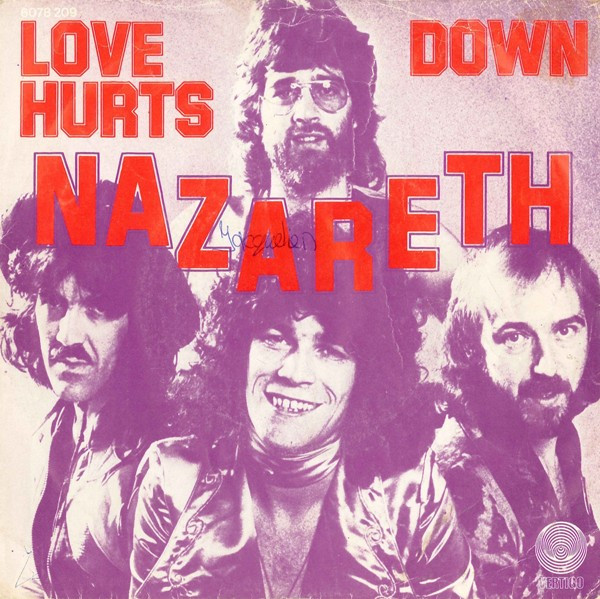
Written by: Boudleaux Bryant
Release Date: Nov, 1974
Highest Chart Position: #8 US
Album Track: Hair Of The Dog
B-Side Single: Down
Performed as a power ballad, the Nazareth version is the most popular version of the song and the only rendition of "Love Hurts" to become a hit single in the United States, reaching No. 8 on the Billboard Hot 100 in early 1976. Jim Capaladi released a 'more up beat' version of Love Hurts in early 1975 and at one stage both versions were on the same charts at the same time - I personally preferred Nazareth's version. The album version runs 3:52, with a guitar solo by Manny Charlton that is not on the 3:03 single. The lyrics of the song were changed for Nazareth's 1975 recording, where the original line "love is like a stove/it burns you when it's hot" was changed to "love is like a flame/it burns you when it's hot".
Oh, by the way, did you know that Nazareth got their name from the first line of the Band's "The Weight" - "I pulled into Nazareth..."
Eric Clapton - I Shot The Sheriff Written by: Bob Marley
Release Date: 1974
Highest Chart Position: #1 US
Album Track: 46 Ocean Boulevard
B-Side Single: Give Me Strength
With respect to the song title, Marley has explained his intention as "I wanted to say 'I shot the police' but the government would have made a fuss, so I said 'I shot the sheriff' instead… but it's the same idea: justice. Clapton kept the underlying reggae beat from Marley's original, but made it more of a rock song, with prominent organ and guitar. In America, reggae was big around this time - in 1972, "I Can See Clearly Now" by Johnny Nash became the first song of that genre to hit #1 in the States. For listeners craving just a touch of reggae with their rock, Clapton's "I Shot The Sheriff" hit the sweet spot.
💿💿💿💿💿💿💿💿💿💿💿💿💿
Various Artists - Immortal Rock Vol.2 (1979)
In the tradition of the first Immortal Rock album (Polystar 2475 517) this collection features further examples of all time rock classics from the 60's and 70's.
From Chuck Berry to Roger Daltrey....the Who's Who (no punn intended) of Rock's Golden era are featured on this 2nd compilation.
Singles featured on this compilation are:
Jimi Hendrix - All Along The Watchtower Written by: Bob Dylan
Release Date: Sept, 1968
Highest Chart Position: #20
Album Track: Electric Ladyland
B-Side Single: Long Hot Summer Night
Hendrix had been working on and off with the members of the band Traffic as he recorded Electric Ladyland. Traffic guitarist Dave Mason caught Hendrix at a party and the two discussed Bob Dylan's newest album, John Wesley Harding, containing "All Along The Watchtower." Hendrix, long fascinated with Dylan, decided to cover the song on the album. On the resulting track, Mason plays rhythm on a 12-string acoustic guitar.
Written by: Rare Bird
Release Date: Feb 1970
Highest Chart Position: #27 UK
Album Track: Rare Bird
B-Side Single: Devil's High Concern
"Sympathy" is a song by the English progressive rock band Rare Bird. It became the band's only UK chart entry when it peaked at number 27 in the UK Singles Chart in 1970. The song reached No. 1 in Italy and in France, selling 500,000 copies in France and over one million globally.
Hollies - He Ain't Heavy, He's My Brother Written by: Bob Russell/Bobby Scott
Release Date: Sept, 1969
Highest Chart Position: #3 UK
Album Track: Non-album Single
B-Side Single: 'Cos You Like to Love Me
The Hollies' recorded the song in June 1969 at the Abbey Road Studios, with Allan Clarke on lead vocals. Elton John, who was still called 'Reg' at the time and was working as a session musician at the time, played piano on the song. He got paid 12 pounds for his trouble.
In the Guardian newspaper of February 24, 2006, Hollies guitarist Tony Hicks said: "In the 1960s when we were short of songs I used to hang around publishers in Denmark Street. One afternoon, I'd been there ages and wanted to get going but this bloke said: 'Well there's one more song. It's probably not for you.' He played me the demo by the writers [Bobby Scott and Bob Russell]. It sounded like a 45rpm record played at 33rpm, the singer was slurring, like he was drunk. But it had something about it. There were frowns when I took it to the band but we speeded it up and added an orchestra. The only things left recognizable were the lyrics.
Rod Stewart - Mandolin Wind Written by: Rod Stewart
Release Date: June, 1971
Highest Chart Position: #66 Aust
Album Track: Every Picture Tell's A Story
B-Side Single: (I Know) I'm Losing You
"Mandolin Wind" was first released on Stewart's 1971 album Every Picture Tells a Story and later as the b-side of a single from that album, his version of "(I Know) I'm Losing You.
"Mandolin Wind" has been highly praised by music critics. In his review of Every Picture Tells a Story in Rolling Stone, John Mendelsohn refers to the song as being "nearly as good" as the #1 single off the album, "Maggie May."
The identity of the mandolin player on "Mandolin Wind" is unclear. The liner notes state that "the mandolin was played by the mandolin player in Lindisfarne" but that Rod Stewart had forgotten his name. In 2003, Ray Jackson claimed to be the mandolin player on the album, at least for the song "Maggie May." Jackson is the mandolin player from English folk-rock band Lindisfarne.
Allman Brothers - Ramblin' Man Written by: Dickey Betts
Release Date: Aug, 1973 in US
Highest Chart Position: #2 US
Album Track: Brothers and Sisters
B-Side: Pony Boy
It was one of the first songs, alongside "Wasted Words", recorded for Brothers and Sisters (1973). They went to the studio to record a demo of the song to send to a friend, which is where the long guitar jam near the finale of the song was created. It is considerably more inspired by country music than other Allman Brothers Band compositions, which made the group reluctant to record it initially.
James Brown - It's A Man's, Man's, Man's World Written by: James Brown/Betty Jean Newsome
Release Date: April, 1966
Highest Chart Position: #1 US
Album Track: It's A Man's Man's Man's World
B-Side Single: Is It Yes or Is It No?
The song's title is a word play on the 1963 comedy film It's a Mad, Mad, Mad, Mad World. Brown's co-writer and onetime girlfriend, Betty Jean Newsome, wrote the lyrics based on her own observations of the relations between the sexes. Newsome claimed in later years that Brown did not write any part of the song, and she argued in court that he sometimes forgot to pay her royalties. Australian musician Renée Geyer recorded a version in 1974. The song was released in November 1974 as the second single from her second studio album, It's a Man's Man's World. The song peaked at number 44 on the Australian Kent Music Report, becoming her first Australian top 50 single.
Roger Daltrey - Walking The Dog Written by: Rufus Thomas
Release Date: June, 1975
Highest Chart Position: #52 UK
Album Track: Ride A Rock Horse
B-Side Single: Proud
Walking The Dog was recorded during Daltrey's filming commitments for Ken Russell's film Lisztomania. Daltrey’s version of the regularly rendered song basically sticks to the original blueprint, with the exception of a rather hauntingly repetitious tone slipped into the stew. It is quite baffling that the album from which this single was taken from, Ride a Rock Horse drew mixed responses when initially released. No doubt expectations simply ran too high for the Who celeberity, as this is certainly a potent piece of work. Daltrey’s amazing vocals, combined with sympathetic and inspired instrumentation anchor each number. Had Daltrey been an unknown entity and Ride a Rock Horse marked his maiden vinyl voyage, critics would have probably penned rapturous reviews. Those who wrote this album off the first time around should seriously give it another listen, while those just being introduced to Ride a Rock Horse will be suitably impressed.
Bachman Turner Overdrive - You Ain't Seen Nothing Yet Written by: Randy Bachman
Release Date: Sept, 1974
Highest Chart Position: #1 US
Album Track: Not Fragile
B-Side Single: Free Wheelin'
The chorus of the song includes the song's famous stutter, and speaks of a devil woman looking at a man with big brown eyes and saying, "You ain't seen nothin' yet. B-b-b-baby, you just ain't seen na-na-nothin' yet. Here's somethin' that you're never gonna forget. B-b-b-baby, you just ain't seen na-na-nothin' yet.
Randy Bachman insists that the song was performed as a joke for his brother, Gary, who had a stutter, with no intention of sounding like the Who's "My Generation" which featured a stuttered lyric. They only intended to record it once with the stutter and send the only recording to Gary.
Cream - Sunshine Of Your Love Written by: Jack Bruce/Pete Brown/Eric Clapton
Release Date: Dec, 1967
Highest Chart Position:
Album Track: Disraeli Gears
B-Side Single: SWLABR
With elements of hard rock, psychedelia, and pop, this song is one of Cream's best known and most popular songs. Cream bassist and vocalist Jack Bruce based it on a distinctive bass riff he developed after attending a Jimi Hendrix concert. Guitarist Eric Clapton and lyricist Pete Brown later contributed to the song and drummer Ginger Baker plays a distinctive tom-tom drum rhythm.
Jon English - Turn The Page Written by: Bob Seger
Release Date: 1974
Highest Chart Position: #20 Aust
Album Track: It's All A Game
B-Side Single: Just the Way I Am
Turn The page is about life on the road, and the rigors musicians face when they're touring. It presents the other side of fame which the public doesn't see - the loneliness and aggravation.
Lovin' Spoonful - Summer In The City Written by: John & Mark Sebastian
Release Date: July, 1966
Highest Chart Position: #1 US
Album Track: Hums of the Lovin' Spoonful
B-Side Single: Butchie's Tune
The Lovin' Spoonful recorded "Summer in the City" in two sessions at Columbia Studios in New York in March 1966. The recording is an early instance in pop music of added sound effects, made up of car horns and a pneumatic drill to mimic city noises. The effects were among the first on a pop song to employ an overlapping crossfade, an effect that had typically only been used on comedy albums.
Eric Burdon & The Animals - Monterey Written by: Burdon/Briggs/Welder/Jenkins/McCulloch
Release Date: Dec, 1967
Highest Chart Position: #15 US
Album Track: The Twain Shall Meet
B-Side Single: Ain't That So
The song provides an oral account of the June 1967 Monterey Pop Festival, at which the Animals performed. Burdon namedrops several of the acts who performed at the festival such as The Byrds, Jefferson Airplane, the Who, the Grateful Dead, and Jimi Hendrix. Chart wise, the song reached number 9 in Australia and number 20 in New Zealand. It did not appear as a hit in the UK, where the image of the Monterey festival was not as strong.
Chuck Berry - No Particular Place To Go Written by: Chuck Berry
Release Date: May, 1964
Highest Chart Position: #3 UK
Album Track: St. Louis To Liverpool
B-Side Single: You Two
The song is a comical four verse story. In the first verse, the narrator is riding in his car as his girlfriend drives, and they kiss. In the second, they start to cuddle, and drive slow. In the third, they decide to park and take a walk, but are unable to release the seat belt. In the last verse, they drive home, defeated by said recalcitrant seat belt.
Slade - Get Down & Get With It Written by: Bobby Marchan
Release Date: May, 1971
Highest Chart Position: #16 UK
Album Track: Sladest
B-Side Single: Gospel According To Rasputin
Prior to recording the song in the studio, the band had established "Get Down and Get with It" as a popular number in their live-set, based on Little Richard's version.
Impressed by the general audience reception of the song, Chandler suggested recording the song as a single. The band entered Olympic Studios in Barnes to record it and Chandler told the band: "Just play it like you do on-stage. Blast it out like it's live, and pretend that there's an audience in there with you." Successfully recorded in a single take, the band included foot-stomping and hand-clapping in the recording to give the song a live feel.
💿💿💿💿💿💿💿💿💿💿💿💿💿
This post consists of FLACs ripped from my Vinyl copies of these two compilation albums. Quality of these records is excellent although some base enhancements have been made to some tracks.
Full album artwork and label scans are included for vinyl - as far as I can tell, neither of these compilations have been released on CD.
Tracklist - Immortal Rock (1977) A1 The Crazy World Of Arthur Brown – Fire
A2 The Who – Pinball Wizard
A3 Thunderclap Newman – Something In The Air
A4 Jimi Hendrix – Hey Joe
A5 Derek And The Dominos – Layla
A6 Rod Stewart – Maggie May
A7 Eric Burdon And The Animals – Sky Pilot
B1 Cream – White Room
B2 Focus – Hocus Pocus
B3 Status Quo – Rain
B4 John Mayall – Moving On
B5 Golden Earring – Radar Love
B6 Nazareth – Love Hurts
B7 Eric Clapton – I Shot The Sheriff
Tracklist - Immortal Rock Vol.2 (1979) A1 Jimi Hendrix – All Along the Watchtower
A2 Rare Bird – Sympathy
A3 The Hollies – He Ain't Heavy He's My Brother
A4 Rod Stewart – Mandolin Wind
A5 The Allman Brothers Band – Ramblin' Man
A6 James Brown – It's A Man's Man's Man's World
A7 Roger Daltrey – Walking The Dog
B1 Bachman-Turner Overdrive – You Ain't Seen Nothing Yet
B2 Cream – Sunshine Of Your Love
B3 Jon English – Turn The Page
B4 The Lovin' Spoonful – Summer In The City
B5 Eric Burdon & The Animals – Monterey
B6 Chuck Berry – No Particular Place To Go
B7 Slade – Get Down & Get With It





 Jon was always game to have a go at something, to put himself out there, risking very public failure, but usually succeeding beyond anyone’s expectations.
 The rich melodic backing on a number of tracks supplied by his old band Sebastian Hardy - is capable of dramatic emphasis and fills a smoothly complementary role which allows the singer and his songs to take the spotlight. lt is only on the final track, "Hail all hail to the revolution", which exhibits a wailing guitar and a rougher edge to the sound, that the music assumes a more dominant position.