Showing posts with label Jan Hammer. Show all posts

Wednesday, May 7, 2025

Mahavishnu Orchestra - I Love Contemporary Jazz (1986) + Bonus Track

(U.S 1971–1976, 1984–1987)

If the seventies fell flat by its middle years, it was at least ushered in with dynamic promise as evidenced by the music of John McLaughlin and the Mahavishnu Orchestra. They were a fire which was sparked by Miles Davis and kindled by the Tony Williams Lifetime.

By the time guitarist John McLaughlin emigrated from England to the United States, he had already become accomplished in the areas of r&b, blues, and rock and roll. He had worked with Georgie Fame and the late Graham Bond in his ground-breaking blues-rock organization. He explored avant-garde jazz with bassist Dave Holland and saxophonist John Surman, and he played rock and roll with Jack Bruce and Eric Clapton.

John McLaughlin
When, in 1969, drummer Tony Williams sent for John Mclaughlin, it was to realize his vision for a musical unit that fused rock and jazz. With McLaughlin and organist Larry Young, The Tony Williams Lifetime created and defined what came to be known as fusion. While exploring jazz-rock with The Lifetime, McLaughlin was also probing a more spatial, rhythmic kind of fusion with Miles Davis on his albums, 'In A Silent Way' and 'Bitches Brew'.

By 1971, McLaughlin, like any creative artist, was ready to shape his own ensemble and through his guru, Sri Chinmay, he took on the name of Mahavishnu and sought the best musicians to carry out his mission of creating a group that would mold all the elements fom his musical past and give birth to a new form of expression - The Mahavishnu Orchestra.

Band Members 1971 - 1973
He hired Rick Laird, a soft, spatial jazz-oriented bassist from Ireland and Jan Hammer, an evolving keyboardist from Czechoslovakia. Jerry Goodman, the young violinist from Chicago, was already incorporating jazz into his rock-based group, 'The Flock', and drummer Billy Cobham - through his work with Horace Silver, his own group 'Dreams', and recording with Miles - had the funkiness, the jazziness and the power. 

Albums 1971 - 1975
As evidenced by this collection which includes selections from their three albums, 'The Inner Mounting Flame', 'Birds af Fire' and 'Between Nothingness and Eternity', The Mahavishnu Orchestra created a sound that went inside your gut and turned it around. Despite your religious convictions or lack thereof, the music, McLaughlin's double barrel guitar, Hammer's overwhelming creations on the synthesizer and Cobham's driving and soul-gripping solos were spiritual and represented musical evalution on the highest order.

Band Members 1975
The closeness and intensity of a group of this kind carried naturally from their music to their personal relationships, and, after two years, the five original members went off in different directions to pursue their individual modes af expression. Under the leadership of McLaughlin, 'Apocalypse' and 'Visions of the Emerald Beyond' were recorded with considerably larger groups, and both are represented on this compilation. With this incarnation of the Mahavishnu Orchestra, McLaughlin was able to paint a wider pallet of textures and create a greater array of sounds. Noted violinist Jean-Luc Ponty and his bassist Ralphe Armstrong emerged from the Orchestra to begin their own form af Jazz- rock.

Jean-Luc Ponty
McLaughlin disbanded the Mahavishnu Orchestra in 1975. Like any evolutionary, he continues to explore a variety of musical paths. He formed the more acoustic Eastern-influenced 'Shakti', the more rhythmic one 'Truth Band', and recently performed in a variety af all-star settings including the 'Trio of Doom' with Jaco Pastorius and Tony Williams, and a guitar extravaganza with Paco DeLucia and Larry Coryell.

The collection on this record represents a high-energized powerful time in music, and its repercussions are still being felt and will be felt for a long time to come. Enjoy its timelessness. (Album Liner Notes - Lois Gilbert, NY)

This post consists of FLACs ripped from my pristine vinyl and includes full album artwork for both CD and vinyl media, along with label scans. It should be noted that this album was also released in 1980 under the title 'The Best Of The Mahavishnu Orchestra' (cover is shown below).
To sweeten the deal, I have also decided to include "Cosmic Strut" from their Visions of the Emerald Beyond LP as a bonus track, a personal favourite of mine.

Track List
01 Birds Of Fire 5:42
02 Open Country Joy 3:54
03 Wings Of Karma 6:10
04 Sister Andrea 8:45
05 The Dance Of The Maya 7:15
06 Meeting Of The Spirits 6:49
07 Lila's Dance 5:35
08 Be Happy 3:40
09 Cosmic Strut (Bonus Track)   3:29

Mahavishnu Orchestra members:
John McLaughlin, Vocals (guitar, sitar)
Rick Laird, Ralphe Armstrong (bass)
Bill Cobham, Narada Michael Walden (percussion)
Jan Hammer, Gayle Moran (keyboards)
Gerry Goodman, Jean-Luc Ponty (violin)

Mahavishnu Orchestra Link (305Mb) Updated Link

Friday, January 13, 2023

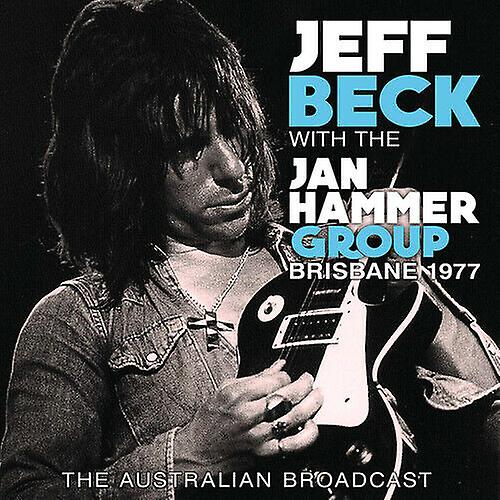
Jeff Beck - With Jan Hammer Group Live (1977)

 (U.K 1965 - 2023)

I was lucky enough to see their performance at Festival Hall in Melbourne, Australia on Feb 1st, 1977. I was literally Blow by Blown away! This album is a good representation of what I heard on stage and I was in total awe throughout the whole concert.

Jeff Beck with the Jan Hammer group LIVE is an astounding performance captured. It has a really good sound for a live recording, and a wonderful range of music. They seem to be having so much fun on stage together playing this music. My personal favorite is "Scatterbrain" on the B-side, followed by the powerful "Blue Wind". So wonderfully tight, hot, and full of nervous energy. I can only imagine what it felt like to be on stage playing together. Jeff Beck knows how to play as an ensemble player as well as a lead guitarist. This you will hear throughout the performance.


Jan Hammer's uncanny ability to simulate the pitch-bending qualities of an electric guitar on his Minimoog synthesizer made him an explosive duet partner with rock's Jeff Beck on this live album -- the third of Beck's successful flirtations with jazz-rock. While leaning toward the Mahavishnu Orchestra brand of jazz-rock, with the word "rock" heavily emphasized, this is a looser, less lock stepped variant. The song selection is split almost equally between Hammer and Beck's repertoires, with Hammer's remake of his techno/mechanized "Darkness/Earth In Search of a Sun" making the biggest splash.


No precise dates and locations are given for the live recordings. The 'Wired' tour began in June 1976 and ended in February 1977, with 117 shows performed in total.

A&R man Tom Werman suggested that the date at the Astor Theater in Reading, PA (31 August 1976) yielded the best performances, and was going to provide the bulk of the album at the time of his involvement in the project. Beck mixed this along with other recordings at Allen Toussaint's studio in New Orleans. Then Jan Hammer decided to mix the album himself, and did so with Dennis Weinreich at Scorpio Sound Studios in London, England.


The stereo spectrum of this album duplicates the stage set-up with guitar positioned center right, keyboards center left, violin right and drums and bass center.


RIP Jeff Beck  (10/01/2023)

Jeff Beck, one of the most skilled, admired and influential guitarists in rock history, died on Tuesday in a hospital near his home at Riverhall, a rural estate in southern England. He was 78. The cause was bacterial meningitis, Melissa Dragich, his publicist, said.

During the 1960s and ’70s, as either a member of the Yardbirds or as leader of his own bands, Mr. Beck brought a sense of adventure to his playing that helped make the recordings by those groups groundbreaking.

Jeff Beck married Sandra Cash in 2005, and she survives him.

To his fans, and to himself, Beck was so deeply identified with his guitar — particularly the Fender Stratocaster — that he seemed inseparable from it.

“My Strat is another arm,” he told Music Radar. “I’ve welded myself to that. Or it’s welded itself to me, one or the other.”

He once stated “It’s a tool of great inspiration and torture at the same time. It’s forever sitting there, challenging you to find something else in it. But it is there if you really search.”

Jeff Beck was a true legend, an amazingly talented guitarist, and one of a kind. Heartfelt condolences to the Beck family, so very sorry for your loss.


This post consists of FLACS ripped from CD and includes full album artwork for both vinyl and CD formats.  This album is one of my favourite jazz rock albums and was a clever release at the time as it complimented his Blow By Blow and Wired LP's.  It stands as a wonderful tribute to his amazing musical career and contribution to jazz / rock in general. Jeff will be sadly missed.

Tracklist
Freeway Jam   7:22
Earth (Still Our Only Home)    4:38
She's A Woman 4:26
Full Moon Boogie   6:10
Darkness/Earth In Search Of A Sun   7:52
Scatterbrain 7:26
Blue Wind 5:47

Personnel:
Jeff Beck - guitar, bass guitar, special effects
(The Jan Hammer Group)
Jan Hammer - Moog, Oberheim and Freeman string symphonizer
synthesizers, electric piano, timbales; lead vocal on "Earth (Still Our Only Home)"
Tony "Thunder" Smith - drums; lead vocal on "Full Moon Boogie"
Fernando Saunders - bass, harmony vocals; rhythm guitar on "She's A Woman"
Steve Kindler - violin; string synthesizer on "Darkness"; rhythm guitar on "Blue Wind"

 
Jeff Beck/Jan Hammer Live Link (286Mb) New Link 19/06/2025

Tuesday, October 5, 2021

Jan Hammer - Hammer (1979)

(Czech-American 1968-Present)

Prior to scoring Michael Mann’s groundbreaking show - Miami Vice, Jan Hammer was best known as the keyboardist from Mahavishnu Orchestra, John McLaughlin and Billy Cobham’s monumental Seventies jazz fusion project. Post-Mahavishnu, he led the suitably named prog-rock outfit Hammer, and released collaborative albums with Jeff Beck and Neal Schon. But it was Vice that made him a household name when the show’s theme song topped the Hot 100 in 1985 — the last instrumental recording to do so until 2013’s “Harlem Shuffle.” Hammer’s score compositions (including “Crockett’s Theme,” a No. 1 single across Europe) were also packaged with original songs licensed for the show (Phil Collins’ “In The Air Tonight,” Glenn Frey’s “You Belong To The City”) on a soundtrack album that hit No. 1 for an impressive 13 weeks in 1985 and 1986.

Hammer Strikes Out
Hammer's pedigree reads like a Who's Who of the modern jazz world. His first band, formed at school in Prague, was a trio that included Weather Report founder Miroslav Vitous. In 1966, Jan and Miroslav gained scholarships to the Berklee School of Music in Boston, and when Soviet tanks rolled into Czechoslovakia, Hammer decided to become a US citizen. Early in 1970 Hammer joined the Sarah Vaughan Trio as composer, arranger, conductor and keyboard player, and in 1971 he began to play in New York with John McLaughlin, Jerry Goodman, Billy Cobham and Rick Laird.

Eventually this group evolved into the phenomenon known as The Mahavishnu Orchestra, and it's interesting to note how each of the musicians involved in it experimented in stretching the boundaries of jazz, using electronics. British guitarist McLaughlin was one of the first musicians to use guitar synthesisers extensively, starting with the 360 Systems polyphonic unit (on 'Inner Worlds', for instance); Cobham experimented with electronic percussion and often modulated his drum sound through digital effects on his solo albums; and Goodman (who recently re-emerged on ex-Tangerine Dream man Peter Baumann's new American label) created some of the strangest sounds anyone has ever heard emanating from an electric violin.

Hammer's role in Mahavishnu was demanding — an up-front, often improvising lead synthesist with staggering technique, he developed a shoulder-slung keyboard to allow him to move around on stage. After two studio albums and a live release. Hammer left Mahavishnu to record the impressive Like Children album with Goodman, and then to form a new band, The Jan Hammer Group. At this stage, Hammer built the studio which has been the venue for all his recordings to date: Red Gate Studio, located in a farmhouse in upstate New York.


After a second JHG album, Oh Yeah, Hammer toured and recorded with guitarist Jeff Beck and went on to release Melodies, and then a solo effort — Black Sheep — on which he played keyboards, drums, guitar and an astonishing lead guitar synth patch.

A new band was formed for the self-titled album Hammer, after which the player went back to the guitar world for two collaborative LPs with Journey's Neal Schon. These albums, coupled with some film work, were profitable enough to help Hammer buy a Fairlight for his studio, and in 1982 he began a collaboration with guitarist Al DiMeola which resulted in the albums Electric Rendezvous, Tour de Force and Scenario.

But Hammer's recent history, as far as his climb to TV fame is concerned, begins in 1983 when he scored the films A Night In Heaven and Gimme An F. Although neither film was widely distributed, they did give Hammer an opportunity to express his feeling for the visual aspects of music, a discipline which comes to the fore in each style-soaked episode of Miami Vice, the TV Cop genre's answer to L'Uomo Vogue. 

Producing that quantity of carefully synchronised and stylised music every week for a whole season can't be easy, but Hammer says his Fairlight has been an enormous help.

'I first saw the Fairlight around 1981/82 and the price was prohibitive, but the movie soundtracks raised the money and it soon paid for itself. It allows you to work very quickly and to come up with all sorts of styles, from classical to old-fashioned jazz. Before that time I'd used an Oberheim DS1 digital sequencer and the Sequential Polysequencer, but this was something completely new. Obviously it took some time to learn how to use it — it didn't come easily — but I had a voracious appetite for the thing and there are really only a few major commands.'

Aside from his keyboard adventures, Hammer also has a long history as a drummer, and though he doesn't play acoustic drums much these days, his percussion sounds have some unique qualities. And many of them, it seems, start life in a perfectly standard LinnDrum.


Hammer's so-called 'new musical style', the searing synth guitar melodies, sequenced electro patterns and full-frontal drums package he developed for the Miami Vice series, is in fact no more than the latest extension of what he's been doing, in various bands, for the last 20 years [extract from Electronics & Music Maker - Feb 1986].

Hammer 
The quartet, with which he also performed live, included two multifunctional members such as bassist Colin Hodgkinson , a long-time collaborator of Alexis Korner (and who is currently part of a renewed Ten Years After !) And singer and guitarist Glenn Burtnick, that among countless projects you can place him as a member of Styx (in the '90s) and Dennis DeYoung's band .

Rockers like Goodbye or Pretty Woman (Roy Orbison's) are fine but too verbose and robotic I would say, although they will probably sound more polenta live.
The best without a doubt comes in the end.  Rainbow Day brings an irresistible tempo means while closing Side 2 is Sister Louisiana , a melody composed by Burtnick that sounds like an outtake from London Town of Wings.

This album was tragically forgotten in Jan Hammer's discography on Spotify, and at the time of its release the cover was censored in some countries due to protests from feminist organizations that considered it offensive. A precedent of repudiation of gender violence, when the term was not yet widely used nor was it on the covers of newspapers.

Not All Gig Reviews Are Great
Jan Hammer stood on the stage of the Bottom Line on Monday evening and pretended to play guitar. There are a lot of guitarists whose instrumental prowess is only pretense, but what made his performance unusual is that he is a noted jazz‐rock keyboard‐player. No more. Slung over his shoulder was an unwieldy keyboard contraption plugged into a battery of synthesizers that enabled him to mimic quite uncannily the sounds of an electric guitar. Mr. Hammer even aped the cliched gestures of a rock guitarist, writhing and grimacing to beat the band —which in this case bore his surname, Hammer.

After playing with John McLaughlin and Jeff Beck, perhaps Mr. Hammer feels that he has been a power behind the throne's of great guitarists for too long, and now he wants to grab a bit of that center‐stage glory for himself. But his performance at the Bottom Line was as pointless, obscene and inadvertently comic as the act of an inept but utterly straightfaced female impersonator. So what if he can imitate on a keyboard Jimi Hendrix's guitar riffs? Jim Bailey does a great Judy Garland.

Not only has Mr. Hammer traduced the tool of his trade, but he has also dropped the jazz from the jazz‐rock at which he used to excel. True to its name, his band hammered away witlessly. The rigid thwack of his new drummer, Gregg Carter, deprived Mr. Hammer's material of interesting rhythmic activity.

The stentorian tenor vocals of the “rhythm keyboardist” Bob Christianson seemed inspired by second‐rate rock groups such as Kansas. Only his bass‐player, Colin Hodgkinson, with his burly, rumbling tone, acquitted himself honorably, and even his sound seemed cheap when compared to its ringing innovativeness in the context of the pioneering British band, Back Door. That's the same door through which Mr. Hammer should beat an embarrassed retreat.
(Review from The New York Times, March 22, 1979, Section C, Page 16. By Ken Emerson)

Alternative Cover

I was in two minds whether I would include this gig review, mainly because I believe Mr Emerson was still stuck in the early seventies when music was all about music and stage presence was just an after thought. It is obvious to me that Hammer was tired of sitting back in the shadows of the Marshall stacks and playing 2nd fiddle to the lead singer and guitarist who dominated front stage. The 80's were only just around the corner and the stage act was now as important as the music.  Outrageous hairstyles, stage costumes and gimmicks were becoming the norm, so it's no wonder Hammer decided to step it up a notch and show off his talents on his astonishing lead guitar synth patch.  Why should the lead guitarist and vocalists have all the fun. 
It is obvious that Hammer was trying to reinvent himself and keep up with the times, something that Mr Emerson was incapable of realising.  It's not rocket science Ken, even Barbie could have seen it!
 
This post consists of FLACs ripped from my vinyl (which I purchased at a time when record covers were important to me, this one certainly caught my attention) and includes full album artwork. Of course label scans and reference articles are included, so I guess I've nailed it again. Now trust me -
you are really gonna enjoy this album - great songs, great lyrics and an excellent cover of Roy Orbison's "Pretty Woman".

Track Listing
01. Goodbye (Colin Hodgkinson, Jan Hammer) - 3:37
02. I Got You (Music: Colin Hodgkinson, Lyrics: Jan Hammer) - 5:50
03. Oh, Pretty Woman (Roy Orbinson, Bill Dees) - 3:41
04. One Day (Glen Burtnick, Ivona Reich) - 4:38
05. Vaporize Me (Music: Colin Hodgkinson, Lyrics: Jan Hammer) - 3:42
06. Nowhere To Go - 5:46
07. Forever Tonight (Colin Hodgkinson, Jan Hammer) - 4:46
08. Highway Made Of Glass (Ivona Reich, Jan Hammer) - 3:14
09. Rainbow Day - 5:38
10. Sister Louisiana (Colin Hodgkinson) - 3:14

Hammer is :
Colin Hodgkinson : Bass, 12 String Guitar & Vocals
Gregg Carter : Drums
Glen Burtnick : Lead & Background vocals, Acoustic & Rhythm Guitars, Tambourine
Jan Hammer : Keyboards, Lead & Rhythm Synthesizers, Vocals

Hammer Link (181Mb)

Thursday, December 31, 2020

Al Di Meola - Tour De Force - Live (1982)

 (U.S 1974 - Present)

Fusion guitarist extraordinaire     Al Di Meola has entertained audiences for decades since releasing his debut album Land of The Midnight Sun in 1976. From his work with John McLaughlin and Paco de Lucia, and the Rite of Strings trio with bassist Clarke and violinist Jean-Luc Ponty to his time with fusion supergroup Return to Forever, Al Di Meola’s brilliant technique on both acoustic and electric guitars has afforded him regal status among the hordes of fretboard fanatics worldwide.

Al Di Meola's "Tour De Force-Live" was recorded live at the Tower Theatre in Philadelphia on February 4, 1982, and was the first time that the musicians on the album had played together "live" in concert. "Tour De Force-Live" features Jan Hammer (Keyboards), Anthony Jackson (bass) and Steve Gadd (drums), among others, who all contribute to an outstanding version of "Elegant Gypsy Suite" and a superb take on "Crusin'".

I have both live albums by Al Di Meola, this one and 'Friday Night In San Francisco' (which is a collaboration between Di Meola and Paco De Lucia and John McLaughlin). The two albums are pretty much each others opposites. While Friday Night In San Francisco was all an acoustic album featuring only the three guitarists with no other musicians backing them up, Tour De Force is a full on band performance. This means lots of drums, percussion, keyboards and bass guitar, all excellently played. That alone makes this album a lot more progressive than the San Francisco album. However, a combination of the two - an album showing both the electric side and the acoustic side of Al Di Meola would have been far more interesting, giving us a full picture of the guitarists (early) career.

The running time of this whole album is only just above 39 minutes and I am certain it does not feature a full show. In fact, Friday Night In San Francisco was even shorter. I think this album should have been much longer and featured a full show (requiring a double album set I know). 


I have no idea what other songs featured in Di Meola's repertoire at that time, but I would have liked more material from Elegant Gypsy and Casino as well as something from Land Of Midnight Sun and maybe even a couple of Return To Forever cuts. 

To be fair it is probably not right to judge this album by what is missing. What actually is here is very good! The pieces chosen for this live album were taken from the studio albums Elegant Gypsy, Casino and Electric Rendezvous with two numbers not available on any of his studio albums - "Nena" and "Advantage". 


There are some passages in the Elegant Gypsy tracks that are radically different from the original versions and this is indeed interesting, but still these differences are primarily for Di Meola's fans to appreciate.

This live set has proved that Al Di Meola's virtuosity was not only writing and playing the music at the studio but that he can also deliver the music live with an excellent performance, with the help of his Tour De Force team.

This post consists of FLACs ripped from my Japanese vinyl pressing which was purchased from one of my regularly visited import shops in Melbourne.  Of course, full album artwork and label scans are included as usual.
I was lucky enough to see Al Di Meola play at the Melbourne Concert Hall when he toured Australia in 1983 with Paco de LucĂ­a and John McLaughlin. Although their sets were purely acoustic, I was totally blown away by his virtuoso and speed with his axe..  Content to have seen him play live, I regularly listen to the Tour De Force album to satisfy my desire to hear his live electric guitar work.
At this point in time, I believe this post is the only rip available in FLAC for this awesome release, so I suggest you grab it now while it's still hot.

Tracklist
01 Elegant Gypsy Suite 10:08
02 Nena 5:04
03 Advantage 4:55
04 Egyptian Danza 5:39
05 Race With Devil On Spanish Highway 7:28
06 Cruisin' 5:24

Credits
Guitar – Al Di Meola
Bass – Anthony Jackson
Drums – Steve Gadd
Keyboards – Jan Hammer
Keyboards [2nd] – Victor Godsey
Keyboards [Additional] – Phillippe Saisse (tracks: 1, 5)
Percussion – Mingo Lewis
Percussion [Additional] – Sammy Figueroa (tracks: 1 to 3)