Wednesday, May 7, 2025

Mahavishnu Orchestra - I Love Contemporary Jazz (1986) + Bonus Track

(U.S 1971–1976, 1984–1987)

If the seventies fell flat by its middle years, it was at least ushered in with dynamic promise as evidenced by the music of John McLaughlin and the Mahavishnu Orchestra. They were a fire which was sparked by Miles Davis and kindled by the Tony Williams Lifetime.

By the time guitarist John McLaughlin emigrated from England to the United States, he had already become accomplished in the areas of r&b, blues, and rock and roll. He had worked with Georgie Fame and the late Graham Bond in his ground-breaking blues-rock organization. He explored avant-garde jazz with bassist Dave Holland and saxophonist John Surman, and he played rock and roll with Jack Bruce and Eric Clapton.

John McLaughlin
When, in 1969, drummer Tony Williams sent for John Mclaughlin, it was to realize his vision for a musical unit that fused rock and jazz. With McLaughlin and organist Larry Young, The Tony Williams Lifetime created and defined what came to be known as fusion. While exploring jazz-rock with The Lifetime, McLaughlin was also probing a more spatial, rhythmic kind of fusion with Miles Davis on his albums, 'In A Silent Way' and 'Bitches Brew'.

By 1971, McLaughlin, like any creative artist, was ready to shape his own ensemble and through his guru, Sri Chinmay, he took on the name of Mahavishnu and sought the best musicians to carry out his mission of creating a group that would mold all the elements fom his musical past and give birth to a new form of expression - The Mahavishnu Orchestra.

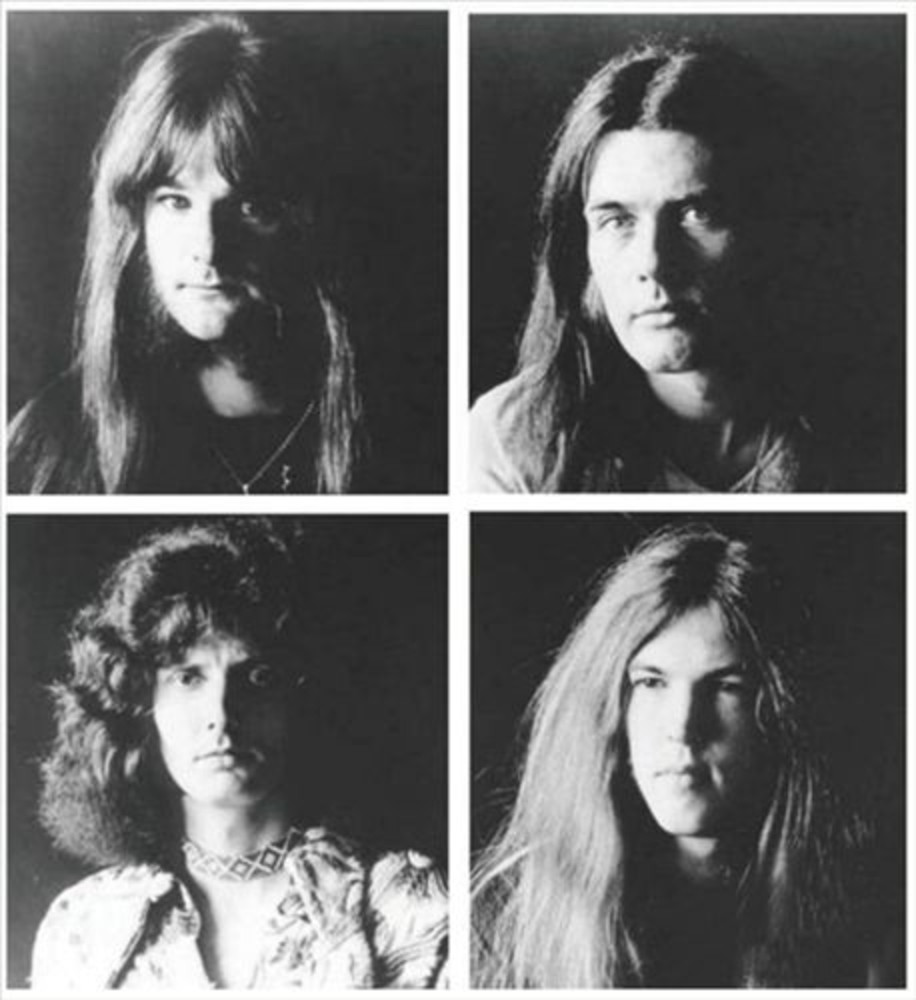
Band Members 1971 - 1973
He hired Rick Laird, a soft, spatial jazz-oriented bassist from Ireland and Jan Hammer, an evolving keyboardist from Czechoslovakia. Jerry Goodman, the young violinist from Chicago, was already incorporating jazz into his rock-based group, 'The Flock', and drummer Billy Cobham - through his work with Horace Silver, his own group 'Dreams', and recording with Miles - had the funkiness, the jazziness and the power. 

Albums 1971 - 1975
As evidenced by this collection which includes selections from their three albums, 'The Inner Mounting Flame', 'Birds af Fire' and 'Between Nothingness and Eternity', The Mahavishnu Orchestra created a sound that went inside your gut and turned it around. Despite your religious convictions or lack thereof, the music, McLaughlin's double barrel guitar, Hammer's overwhelming creations on the synthesizer and Cobham's driving and soul-gripping solos were spiritual and represented musical evalution on the highest order.

Band Members 1975
The closeness and intensity of a group of this kind carried naturally from their music to their personal relationships, and, after two years, the five original members went off in different directions to pursue their individual modes af expression. Under the leadership of McLaughlin, 'Apocalypse' and 'Visions of the Emerald Beyond' were recorded with considerably larger groups, and both are represented on this compilation. With this incarnation of the Mahavishnu Orchestra, McLaughlin was able to paint a wider pallet of textures and create a greater array of sounds. Noted violinist Jean-Luc Ponty and his bassist Ralphe Armstrong emerged from the Orchestra to begin their own form af Jazz- rock.

Jean-Luc Ponty
McLaughlin disbanded the Mahavishnu Orchestra in 1975. Like any evolutionary, he continues to explore a variety of musical paths. He formed the more acoustic Eastern-influenced 'Shakti', the more rhythmic one 'Truth Band', and recently performed in a variety af all-star settings including the 'Trio of Doom' with Jaco Pastorius and Tony Williams, and a guitar extravaganza with Paco DeLucia and Larry Coryell.

The collection on this record represents a high-energized powerful time in music, and its repercussions are still being felt and will be felt for a long time to come. Enjoy its timelessness. (Album Liner Notes - Lois Gilbert, NY)

This post consists of FLACs ripped from my pristine vinyl and includes full album artwork for both CD and vinyl media, along with label scans. It should be noted that this album was also released in 1980 under the title 'The Best Of The Mahavishnu Orchestra' (cover is shown below).
To sweeten the deal, I have also decided to include "Cosmic Strut" from their Visions of the Emerald Beyond LP as a bonus track, a personal favourite of mine.

Track List
01 Birds Of Fire 5:42
02 Open Country Joy 3:54
03 Wings Of Karma 6:10
04 Sister Andrea 8:45
05 The Dance Of The Maya 7:15
06 Meeting Of The Spirits 6:49
07 Lila's Dance 5:35
08 Be Happy 3:40
09 Cosmic Strut (Bonus Track)   3:29

Mahavishnu Orchestra members:
John McLaughlin, Vocals (guitar, sitar)
Rick Laird, Ralphe Armstrong (bass)
Bill Cobham, Narada Michael Walden (percussion)
Jan Hammer, Gayle Moran (keyboards)
Gerry Goodman, Jean-Luc Ponty (violin)

Mahavishnu Orchestra Link (305Mb) Updated Link

Sunday, May 4, 2025

REPOST: Jimi Hendrix - War Heroes (1972)

(U.S 1967-1970)
.
'War Heroes' was the third posthumous Hendrix Studio album to come out under Michael Jeffery's (Hendrix' manager) supervision.
Had it been tough for Eddie Kramer and Mitch Mitchell to complete the 2nd posthumous studio album 'Soundtrack of the film Rainbow Bridge" to a satisfying result, the compiling of 'War Heroes' was what Eddie Kramer called 'scraping the bottom of the barrel'.
With only two recordings that Hendrix had more or less approved during his life ("Izabella" & "Stepping Stone") and two older recordings which had not been released in the States yet ("Highway Chile" & "Stars That Play With Laughing's Sam's Dice" which would eventually turn up on 'Loose Ends' from 1973), Kramer -now fully assisted by John Jansen- once again went through all the tapes in the hopes to find useable pieces of music.
The collection they came up with did indeed not live up to the standard that was set with 'Cry of Love', 'Rainbow Bridge' & the live album 'In the West'. But for a more than average fan, 'War Heroes' does not disappoint. It has a few blistering instrumentals, that Hendrix may not have wanted to be released, but who demonstrate his fine talents on the guitar nonetheless. Only "3 Little Bears" and "Peter Gunn/Catastrophe" are throwaway's.

Apart from the fact that Kramer wanted to offer a glimpse of Hendrix working (and joking around) in the studio, he probably also had another motive for including these. Kramer realized that Michael Jeffrey and Warner Bros. would want him to compile more studio albums, and by using these two tracks he was able to back-up his argument that there simply were no quality studio recordings left in the vaults.
When Kramer delivered 'War Heroes' to Warner Brothers, he also made a silent statement by not delivering any background information on the songs for the sleeve. The gloomy front cover and the unexplained album title (was it supposed to be a link to 'Izabella') only added to the confusion.
The album sold a moderate 180,000 copies, and reached #48 in the US charts.
Together with 'Rainbow Bridge' & "In the West, "'War Heroes' was deleted from Warner's catalogue in 1975, after WB's chief Mo' Ostin decided that Alan Douglas was far more capable of maintaining the quality of Hendrix's posthumous discography than Michael Jeffrey and Eddie Kramer had been. A dumb and unnecessary move from Mo', as history has proven it.

The fact that nearly all Warner executives at the time hated Michael Jeffery (who died in 1973) may have played a role in this decision. The 'Rainbow Bridge' album had been excusively licensed to Warner Brothers, and has been out-of-print in the states ever since, although the German division of Reprise started re-pressing the album on vinyl during the 80's.
Fortunately, 'War Heroes' and 'In the West" remained in print in the rest of the world, thanks to Michael Jeffreys' clever 1967 contracts . Polydor did the CD release of the albums in the eighties in Europe & Japan. It was later re-pressed in Europe (1991/1992) with a different catalogue number and different mastering. The sound had noise reduction and limiting -though not as severe as we know it by today's standards - in order to make the CD louder and cleaner.
The re-presses can only be clearly identified with by its number: 847-262-2
The original West-German 1988 CD (which was mastered from the same digital master as the Japanese P20P and P33P series) doesn't have any of this and is the source used here.

.I purchased my vinyl copy of War Heroes from an import shop in the 70's, as the album was not officially released in Australia until the 80's. It is one of my prize possessions (a German pressing in mint condition) and was the first posthumous Hendrix LP that I bought. Of course, I now have all of them and can boast having 50+ Hendrix LP's in my collection.

Favourite tracks are the instrumentals "Midnight" and "Beginning" (it's riff almost identical to the Stones' "Bitch") which demonstrate Jimi's ability to change key and time signatures at the drop of a hat.

The rip provided was taken from my 'near mint' vinyl  in FLAC format and includes full album artwork for both vinyl and CD media.
.
Track Listing
01. Bleeding Heart

Recorded with the Band of Gypsys including Juma Sultan on percussion on 12 Decembe
r 1969 at the Record Plant Studio in New York City. Overdubs were added on 24 March 1970. Previously played by the Experience as a slow blues (a sublime rendition can be heard on Reprise's 'Concerts'), this version takes a more funky approach. Originally produced by Jimi Hendrix.

02. Highway Chile

Recorded with the Experience on 3 April 1967 at Olympic
Studios, London, UK. This song reflected on Hendrix' restless time as a traveling musician on the Chitlin' circuit. In Europe it became the B-side of the "Wind cries Mary' single (released: 5 May 1967 in the UK) and later appeared on the Track/Polydor version of 'Smash hits', but wasn't released in the States until 1972 when 'War heroes' came out. This track only existed in mono until 2000 when EH released a newly made (but disappointing, IMO) stereo mix on the box set. Engineered by Eddie Kramer. Produced by Chas Chandler.

03. Tax free

Recorded on 26 January 1968 at the Olympic Studios, London, UK and Record Plant, NYC, 1 May 1968. This was written by Sweden's Bo Hanssen and Janne Karlsson. Hendrix heard this instrumental while touring Sweden in 1967 and decided to record it. The Experience recorded five basic tracks, the fifth being successful. When production switched to over to the Record Plant Studio in New York, Hendrix worked on the track again there, trying to add some overdubs. The Experienc
e added Tax Free to their set list during early 1968 and continued to play it live until early 1969. A live version can be heard on the now out-of-print "Live at Winterland" album. Originally produced by Jimi Hendrix

04. Peter Gunn / Catastrophe
Recorded mid-summer of 1970 at the Electric Lady Studios, NYC. 'Peter Gunn' was the first song that Jimi learned to play during his Seattle childhood days. 'Catastrophe' is a take-off by Jimi of the song 'Jealousy' popularized by Frankie Laine in late 1951. During the improvisation of 'Catastrophe' Jimi invented his own lyrics. This little ditty was added to the album by Eddie Kramer just to give a little insight into Hendrix's sense of humor, and is without a doubt the weakest selection. Maybe even the weakest Hendrix studio performance ever officially released. Engineered by Eddie Kramer. Originally produced by Jimi Hendrix

05. Stepping Stone

Originally recorded on 18 December 1969 with the Band of Gypsys at the Record Plant, NYC, and Electric Lady Studios, NYC. 1970. This recording was rush-released as a single with 'Izabella' on the B-side (Reprise 0905, Rel: 13/04/70), and quickly withdrawn again. Only a few copies of this single leaked out, making it a ultra-rare item. According to Hendrix: "Some of the copies out there have no low-end on them. I had to go out somewhere and tell the guy to remix it but he didn't. Sure, it matters..." The single contained a mix with Buddy Miles on drums. Jimi -who was still working on the recording- later opted to erase Miles' drums from the multitracks to be replaced by Mitchell's. However, the drums were never fully completed to Hendrix's satisfaction during his life and therefore it's a pity that Kramer and Jansen did not use the original mix with Miles' drums for this album. While being a far more technically skilled drummer than Miles, Mitchell failed to lay down the steady beat that this track really needs. The original mix can be heard on the OOP compilation 'Cornerstones: 1967-1970' and the 2001 EH release 'Voodoo child; The JH Collection'. Engineered by Bob Hughes 1969 at the Record Plant and Eddie Kramer at Electric Land Studios 1970. Originally produced by 'Heaven Research Unlimited' (aka Jimi Hendrix).

06. Midnight
Recorded by the Experience during October 1968 at the TTG studio's, Los Angeles, CA. These October sessions were booked to record the fourth Experience studio album, which never materialized. Later on in early 1969, the group cut a similar instrumental called "Trashman", that was eventually released (with lots of overdubs & editing) on the inferior Alan Douglas' produced 'Midnight Lightning' album from 1975. Engineered by Angel Balestier. Originally produced by Jimi Hendrix.

07. Three Little Bears

Recorded on 2 May 1968 at the Record Plant, NY. Another left-over from the 'Electric Ladyland' sessions. The first half of this extended jam was released on 'War Heroes'. The U.S. lp version had parts of Hendrix' frustrated comments censored by wiping them out or mixing them down very low ("Oh, fuck me" and "stop that shit, stop it"). In 1999, EH released the Jimi Hendrix "Merry Christmas and happy new year" EP, which made "Three Little Bears" available again. The complete extended version is only available on bootlegs - 'The Mixdown Master Tapes Vol 1-3', for example. Originally produced by Jimi Hendrix

08. Beginning
Recorded on 16 June 1970 and on 1 July 1970 at Electric Lady Studios, NYC. This instrumental had previously been known as 'Jam back at the house' and was developed during the Woodstock rehearsal sessions in the summer of 1969. It first appeared as a strongly edited live version on the 'Woodstock 2' triple album in March 1971. It's not very likely that Mitch Mitchell actually composed this track. It seems more likely that Mitchell was given this credit in an attempt to compensate him financially for his tireless dedication over the 1967-1971 period. This version is slightly edited as well, and a complete version can be found on bootlegs (ie Gypsy, Sun and Rainbows: Shokan) Originally produced by Jimi Hendrix.

09. Izabella

Recorded on 28/29 August 1969 at the Hit Factory, NYC, and featured the "Gypsy suns and rainbows" line up with Mitchell being replaced by Miles. It was released first as a B-side on a quickly withdrawn single (see "Stepping Stone" details). However, unlike "Stepping Stone" this recording was not further overdubbed, and appears here in a slightly different mix. The original mix can be heard on EH's 2001 release 'Voodoo child: The JH Collection'. Originally produced by 'Heaven Research Unlimited' (aka Jimi Hendrix)

.
Band Members:
Jimi Hendrix (Vocals, Guitar)
Mitch Mitchell (Drums)
Billy Cox (Bass)
* Noel Redding plays bass on Highway Chile, Tax Free and Midnight

+ Buddy Miles plays drums on Izabella

NEW IMPROVED FLAC RIP !
..
War Heroes Link (201Mb) New Link 04/05/2025

Wednesday, April 30, 2025

W.O.C.K on Vinyl: Gerard Kennedy (with Sven Libaek) - Seasons of Love (1972)

  Before things get too serious here at Rock On Vinyl, I thought it might be fun to post a song / album at the end of each month, that could be categorized as being either Weird, Obscure, Crazy or just plain Korny.

Gerard Kennedy (8 March 1932 – 21 April 2025) was an Australian double Gold Logie award-winning actor.
Kennedy started his career in theatre, before going on to appear in early television series, primarily with Crawford Productions. 

He made a number of guest appearances in Crawford Productions' Homicide, which led to him gaining a role of enemy spy agent Kragg in Hunter. The series followed the adventures of special agent John Hunter tracking down espionage along the eastern coast of Australia.

His popularity in the series soon upstaged that of the show’s title character, John Hunter played by Tony Ward, and Kragg was soon to change sides in support of Hunter. He appeared in 65 episodes during the programme’s run between 1967 and 1969.

Gerard Kennedy (as Kragg) & Tony Ward (as John Hunter)
He shot to fame, however, starring with Ted Hamilton and Terence Donovan in the police procedural Division 4 as Senior Detective Frank Banner, which won him back-to-back Gold Logies. Kennedy also appeared in the cult series Prisoner and in crime series Underbelly and had numerous feature film roles during a career that spanned 50 years in the industry.

Senior Detective Frank Banner (Divison 4)
Later regular television series roles included the ABC's gold rush mini-series Rush in 1974, Tandarra in 1976, Bellbird in 1977, the miniseries Against the Wind in 1978, Skyways from 1979–1981, Golden Pennies in 1985, and The Flying Doctors between 1986 and 1989 (non-consecutive episodes).

Guest TV roles included appearances in Carson's Law, Prisoner, A Country Practice, Blue Heelers, City Homicide, The Saddle Club, and Neighbours. In 2008, he played Graham "The Munster" Kinniburgh in Underbelly and in Fat Tony & Co.

Kennedy's final credit was in the TV series Glitch in 2015.

Kennedy resided in a nursing care facility on the New South Wales, Central Coast, where he died on 21 April 2025, aged 93.

One distinct feature of Kennedy's personna was his deep, gravely, voice which was strangely calming to listen to. And so it was not surprising that someone in the entertainment business talked him into releasing an album of poetry (written by Warwick Randall) accompanied by the jazz music of Sven Libaek (an Australian composer, record producer and musician). The album was released by Festival records in 1972 and titled "Seasons Of Love".

It's not really my cup of tea folks, but I thought I'd bring this to the WOCK table in light of Kennedy's recent passing (Vale Gerard Kennedy), to pay tribute to his stellar and gargantuan acting career —from stage to screen.

As this is a WOCK posting, it ticks a few boxes - both Weird & Obscure; but coincidently it also ticks the K box (thanks Mr Kennedy for all the wonderful T.V entertainment you provided me during my teenage years).  Ripped from vinyl in MP3 (160kbs) format with limited artwork.

Poems:
A1a How Can A Memory Hope To Fade
A1b Undiscovered Fields 2:46
A2 Travel Broadens the Mine  2:42
A3 Drunken Butterfly  0:27
A4 Autumn 2:25
A5 When Sunlight Fades 1:03
A6 The Quiet Time of Reason  4:40
B1 I Am an Island 1:50
B2 Searching 1:25
B3 Four Letter Words  2:33
B4 Children  0:35
B5 Spring 2:52
B6 Your Quiet Smile  0:45
B7 Lonely People 1:28
B8a Waiting For Love
B8b Come Inside 3:24
B9 I Think I'll Build a Wall   0:36

Monday, April 28, 2025

REPOST: Budgie - Never Turn Your Back On A Friend (1973) + Bonus Tracks

(U.K 1967-1988, 1995-1996, 1999-2010)
.
OK - let's cut to the chase. Budgie are my favourite U.K (Welsh) band and this album is my all time favourite LP by far. I first discovered Budgie while skimming through the records racks at my local K-Mart store back in the early 70's. It was the eye catching album cover (by Rodger Dean) that first caught my attention, and then the photos of the band members found in the inner LP gatefold - in particular the energy and drive depicted by drummer Ray Phillips. I took a punt and made my purchase, then quickly made my way home. Headphones on and the volume cranked up high on my Onkyo stereo, I placed the needle on Side A of the record and layed back on my bed, eyes closed. After a short introductory narative by Sir Winston Churchill, Breadfan's guitar intro came bursting out into my left ear and screamed across to my right, and it was like being hit by a train. The magic of Budgie's music had suddenly entered by life, and I've never been the same since!

.Originally released in 1973 on MCA, Budgie's third record, Never Turn Your Back on a Friend, was another slab of the band's signature plodding metal sound. Although they were never more than a cult band in the Australia, Budgie's popularity flourished in their native England, yet their influence was eventually felt by many notable American bands (Metallica, Soundgarden, Alice in Chains). The mammoth riffs created by guitarist Tony Bourge are definitely on par with Black Sabbath riff master Tony Iommi, while vocalist/bassist Burke Shelley's voice is a cross between David Surkamp (Pavlov's Dog) and early Geddy Lee (Rush). Drummers came and went (this would be original member Ray Phillips' last recording), but you'd never guess there would be a defection soon, judging from the tightness and interplay displayed on this album. One of their best-known tracks, "Breadfan" (later covered by Metallica), kicks off the album with rapid, almost speed metal, however, Budgie deliver it all in true hard rock style, pacing the album nicely with two acoustic songs to break up the heavy metal bluster. I'll even forgive the one minute thirty eight second drum solo at the beginning of the fourth song as it's so short, sharp and heavy.

It's the final epic "Parents", which is a supersonic power rock ballad that elevates you through the stratosphere. A song very similar in structure to "Led Zeppelins" "Stairway To Heaven", Burke Shelley sings of the torment of turning from child to parent, hitting the heart fair and square with Mott who has a few puppies of his own. This song alone makes this album worth hunting down.
The parents tell their children, "Wash your hands & up to bed, mind your manners or you're dead, watch the cars `cos you got school on Monday". Haven't all parents at sometimes spoken in these jumbled spurts of love and warning? The group also became notorious for coming up with profound (yet lighthearted) song titles, such as "In the Grip of a Tyrefitter's Hand" and "You're the Biggest Thing Since Powdered Milk."
Though they never reached the dizzy heights of success like Deep Purple, Black Sabbath or Cream; Budgie did leave behind 10 hard rocking studio albums and one live release, along with a strong fan base who always yearned for more 

Recommended to anyone who finds solace in the metal forefathers (Sabbath, Zeppelin, Hendrix, etc.).  The rip included here was taken from CD in FLAC format and includes full album artwork for both vinyl and CD. This album should be played at full volume, as any other volume level is unacceptable !
Please note that this album is no longer available from Budgie's website (Out Of Print)
.
Track Listing
01 Breadfan
02 Baby Please Don't Go
03 You Know I'll Always Love You
04 You're the Biggest Thing Since Powdered Milk
05 In the Grip of a Tyrefitter's Hand
06 Riding My Nightmare
07 Parents
08 Breadfan (2003 version) Bonus track
09 Parents (2004 Acoustic version) Bonus track
10 Breadfan (Live 1973) Bonus track
11 Breadfan (Aust Vinyl release) Bonus Track
.
Band members:
Burke Shelley (Bass, Vocals)
Tony Bourge (Guitar)
Ray Phillips (Drums)

Never Turn Your Back On A Friend (435 Mb)  New Link 28/04/25
.
Note: It has been brought to my attention by a blog follower that the Australian vinyl pressing of this album features the introductory narrative spoken by Sir Winston Churchill at the start of Breadfan, which is not included on any of the CD remasters.
Therefore, I am making this track available below to Budgie fans who have the CD but have not heard this version before.   For me, the track would be not be the same without it !
.
Breadfan.FLAC
.

Thursday, April 24, 2025

ZZ Top - Fandango! (1975)

(U.S 1969-Present)

ZZ Top
is an American rock band formed in Houston, Texas, in 1969. For 51 years, it consisted of the vocalist-guitarist Billy Gibbons, the drummer Frank Beard and the bassist-vocalist Dusty Hill, until Hill's death in 2021. ZZ Top developed a signature sound based on Gibbons' blues style and Hill and Beard's rhythm section. They are known for their live performances, sly and humorous lyrics, and the matching appearances of Gibbons and Hill, who wore sunglasses, hats and long beards.

ZZ Top formed after Gibbons' band, Moving Sidewalks, disbanded in 1969. Within a year, they signed with London Records and released ZZ Top's First Album in 1971.

Fandango! is the fourth album by the American blues rock band ZZ Top, recorded April 12, 1974 (tracks 1–3) December 30, 1974 – March 23, 1975 and released April 18, 1975. The album's first side consists of selections from live shows, with the second side being new studio recordings.

Billy F Gibbons, Dusty Hill and Frank Beard were starting to ride the crest of fame that would catapult them to international stardom when they recorded Fandango in 1975. In hindsight, it seems as if all roads were leading to a convergence of sound, style, and notoriety that brought ZZ Top from local favourites to national (and later worldwide) attention.

That little ole band from Texas
A lot of this had to do with the nonstop touring schedule the Toppers had been following for the previous five years. Starting out of their regional base of Texas, Louisiana, and Mississippi, they had expanded to a brutal touring schedule that spread their live show all across America by the time Fandango was cut in 1975. From a touring perspective, Fandango falls between the cracks of their stripped-down stage show and what was to become the glorious excess of The Worldwide Texas Tour of 1976. This extravaganza made them the band to see as well as hear featuring a 35,000-square-foot Texas stage set complete with a longhorn steer, a buffalo, a glass dome containing rattlesnakes, and a buzzard perched stagefront.


While the tour was exhausting, somehow the fellas found time to sneak into the studio. Following on the successful heels of Tres Hombres, Fandango was ZZ Top's fourth album and became their second platinum release in a row. While Tres Hombres contained their first bona fide radio hit with "La Grange", Fandango served two purposes. The live tracks gave fans a dose of how potent this power trio was onstage, while the studio recordings rocked iust as hard, especially the incomparable two minutes
and change of Texas boogie called "Tush." This crowd-pleaser also became their second pop radio hit, reaching #20 on Billboardt Hot l00, but also getting huge airplay at FM rock stations around the U.S.

As Gibbons remembers, "We took a booking in Florence, Alabama, in 1974 or '75, in a dirt-floor arena. We were just warming up for sound check. I had been turned on to the flip side of a Roy Head single, which was an instrumental called 'Tush Hog.' I threw down this guitar rift, and it took all of three minutes for the three of us to create it right there." But back to Fandango, and the rather interesting concept of a half-live/ half-studio album. ZZ Top is a pretty unique band, and they were always looking for a different approach. No one had ever done a half-live/half-studio album before, and for ZZ Top that was the signal to give it a try.

So with some new material, a couple of covers, as well as live versions of an earlier studio favorite ("Backdoor Love Affair" from ZZ Top's First Album), the decision was made to record the live material at New Orleans' famed Warehouse. Why the Warehouse? "It was all wood and all good,' Billy laughs. The sound resonated as thick as the Gulf Coast air and gave the place a rich, deep sound. Between that and the fans, we knew that it was the perfect spot to do the live sides. lt was our favorite venue for recharging the batteries and refueling the blues."

A former cotton storage warehouse, the Warehouse was located on the corner of Tchoupitoulas Street and Felicity in the Waterfront district. As artist (Ant Farm member behind the famed Cadillac Ranch in Texas), New Orleans native, and musical historian Hudson Marquez remembers, 'There was no real rock'n' roll clubs in New Orleans, except in the French Quarter or the suburbs. Most of those joints featured frat-style bands. When the Warehouse first opened in late '69/early 1970 it was the ONLY place for touring bands to play.'

With the growth of AOR radio came venues in each maior market that supported the bands being pumped on the 'free-form' FM statiorn. And with New Orleans only a four-hour car ride from Houston, it quickly became ZZ Top's home away from home, with the Warehouse serving as musical headquarters.

"It seemed like the Allman Brothers or ZZ Top were playing there everymonth," Marquez recalls. 'Most of the buildings down there were constructed of wood and bricks made by slaves in the early 1800s. There was NO air-conditioning, and you can imagine how hot and sweaty it would get in the crowd. I can't imagine how the band performed some nights between the heat humidity, and the lights. . . it must have been at least 110 degrees onstage.'

ZZ Top on their Fandango Tour
You can tell it's gonna be a hot night when Fandango kicks off with a very excitable introduction of the band. And when they kick into "Thunderbird" with the opening lines 'Get high, everybody, get high,' you can tell the crowd needed little encouragement!'The front cover shows Billy and Dusty in their Nudie-suit-and-ten-gallon-hat phase . . .before the beards and the cheap sunglasses. Though the look may seem retro, the sound is definitely not. The power of Gibbons' stinging leads, Dusty's bass-thumping, and Frank's churning rhythms captured the excitement the band brought to the stage and spread the ZZ gospel to places that had yet to experience them firsthand.

The live sides also contain a rockin' version of "Jailhouse Rock." Elvis had always been Dusty's idol from back in the days when he was eight years old singing Elvis songs in a local coffee shop for nickels. Another live standout is a version of Little Walter's "Mellow Down Easy" sandwiched between "Backdoor Love Affair." "We always felt this was a great song," Gibbons says. "We loved Walter's original as well as Paul Butterfield's later version. We wanted to add some harp to it, but it's pretty difficult to play blues harp and guitar simultaneously, especially live!"

Once Fandango was released, the music press finally began paying attention to the group. lnstead of being dismissed as a typical Southern boogie band, ZZ Top was now being embraced by the rock cognoscenti. The results were a triangulation of events in the mid-'70s similar to what happened later in the 1980s. Instead of hot rods and MTV videos though, the first breakthrough for Billy, Frank, and Dusty came the old-school way of radio play coupled with tour, tour, and then tour some more.

While the live side of Fandango embraced ZZ's roots in New Orleans, the studio side was recorded at the other low-down and dirty musical mecca . . . Memphis, Tennessee. The band had started recording at the famed Ardent Studios in Memphis, and aside from the great barbeque, fine women, and bluesy nightlife, the whole vibe of Memphis melded perfectly with the band's musical intentions.

And if you're in Memphis, you can't talk about the town without a mention of its most famous citizen. One night Billy and Dusty were being driven back from a late-night session at Ardent. Cruising the streets near Five Way and McLean on the way to their hotel, their driver mentioned they should check out the car next to them at a stoplight. "Man, we looked over", Billy recollects in a hushed tone, "and there was a long, low black Lincoln with Elvis sitting there on the passenger side. He gave us a nod and then floored it through the red light. We waited for the light to change and then met up with him stopped at the next set of lights a couple of blocks up. He rolled down the window and said,'We're all goin' to jail, ya know.' Dusty and I were speechless, but I blurted out, 'Yeah, but we're gonna rock.' With that he floored it back into the Memphis night, and that was our one and only encounter with Elvis."

Dusty, Billy and Frank 1975
Their hotel home in Memphis was usually the Linden Hotel, where they would request to be booked on the back side of the joint, giving them a bird's-eye view of Beale Street the home of the blues. Nights would be spent toiling on tracks at Ardent but there was always a need for a food-and-beer break, and Billy, Frank, and Dusty became familiar faces at such Memphis eateries as Charles Vergos' rib joint, Giovanni's, Lupe and Bea's Texican, or Molly's La Casita'

The studio side contains a number of ZZ crowd-pleasers, most notably "Heard lt On The X" their tribute to the border radio stations from Mexico beaming blues, soul, and gospel all over the Southwest; and "Blue Jean Blues", a true-story song about Frank's girlfriend making off with his jeans and then showing up at a ZZ gig wearing them and a new boyfriend!

Though Fandango was released 50 years ago (18th April, 1975), it remains an incredible listening experience. For those of you who cherish the memories of seeing Billy, Frank, and Dusty light up a stage, this audio document will refresh those happy memories. And for those new to the ZZ gestalt, this album shows the culmination of hard roadwork, studio expertise, and incredible playing and songwriting that has become the calling card of that little ol' band from Texas! Play it loud!  [Extracts from CD Liner Notes]

This post consists of FLACs ripped from CD and includes full album artwork along with label scans. I was tempted to rip my treasured vinyl (my first ZZ Top record by the way) but because it had been played at one too many 'drunken parties', its sound resonance wasn't really up to scratch (literally).    
My favourite track on the album is Blue Jeans with Tush coming in a close 2nd.  The only thing missing on this album was a live rendition of   "La Grange" and I always thought it strange that they didn't include it on the live side. The single was HUGE in Australia.  I have decided to keep this album true to its original song listing (and not include bonus tracks) because some things shouldn't be tampered with. Hope you enjoy this offering from 'this little ol band from Texas' folks.

Track Listing:
[Live]
A1 Thunderbird 2:49
A2 Jailhouse Rock 1:56
A3a Backdoor Love Affair 1:09
A3b Mellow Down Easy 3:39
A3c Backdoor Love Affair No. 2 2:04
A3d Long Distance Boogie 2:31
[Studio]
B1 Nasty Dogs And Funky Kings 2:42
B2 Blue Jean Blues 4:42
B3 Balinese 2:37
B4 Mexican Blackbird 3:06
B5 Heard It On The X 2:23
B6 Tush 2:24

ZZ Top were:
Billy Gibbons - Lead Guitar, Slide Guitar, Harmonica, Vocals
Dusty Hill - Bass and Vocals
Frank Beard - Drums


Sunday, April 20, 2025

Repost: Captain Beyond - Lost & Found 1972-1973 (2017)

(U.S 1971-79, 1998-2003)
.
Wow!… That is what I have to say. Wow!  
A collector's dream come true - vintage demo tracks, never heard before, from the space rock super group Captain Beyond including one unreleased song not found anywhere else!
The first Captain Beyond record is an all time classic and this companion release is a great find. 
The A side of this album opens with the totally unreleased and cool song called "Uranus" from the first recording sessions. Then you have a 20 min suite, which made up bands first demo, in a more raw in your face version. Side B starts with "Icarus" which appeared on the 3rd album but this is the demo version with Rod Evans on vocals! Then you have a more raw and aggressive version of "Raging River of Fear" that includes a slide solo not on the original version. The companion album ends with "Dancing Madly Backwards".  This is great stuff. The LP has a nice printed inner sleeve with the whole story and a lot of old pictures of the band and you get a card with the number of your LP. Limited to 1000 copies on vinyl but also available on CD [extract from writingaboutmusic]
.

Liner Notes:
The Music In This Collection Has Changed The World

If you're already a fan of Captain Beyond, you've been waiting to hear this for more than four decades. And if you're new to the band, then congratulations! You're not simply getting in on the ground floor of one of the early seventies' most legendary bands, you are hearing the self-same tape that so impressed the Allman Brothers when they first heard it that they demanded their manager sign its makers on the spot.

Not that Captain Beyond were ever likely to have any shortage of suitors. "'Supergroup" is not a particularly fashionable term these day - too many not-so-super groups have hopelessly devalued it over the years. Back in the early 1970s, though, it felt like every one-was waiting to be wowed by the next one, and Captain Beyond met every expectation.

Vocalist Rod Evans had been the frontman in the original Deep Purple, leading them through the first three albums that made the rest of I the band's career even feasible. Bassist Lee Dorman and guitarist Larry "Rhino" Reinhardt flew with the almighty Iron Butterfly, and drummer Bobby Caldwell had most recently been sighted with the Johnny Winter Group, at a lime when— as Bobby puts it— "we were one of the biggest concert groups in the world, maybe not in terms of selling records, but live, we were huge."

He wasn't even sure whether he wanted to join a new group. When a telegram arrived from Dorman and Reinhardt, "saying Iron Butterfly is about to cave in and they'd like to do something with me" he simply laid it to one side.

"I wasn't about to quit what I was doing because it was as big as you could get. But then Johnny decided all of a sudden that he was going to take some time off, and I thought 'well, how long is this going to be? And nobody could give us an answer, so I went out to meet Lee and Rhino, and they had already contacted Rod and that's what happened. We were starting to put this band together"

What you are holding in your hand now is the story of what happened next.

"All of these tapes have been in my possession for a long lime, and for the Captain Beyond die-hard fans, they've never heard any of this before," says Bobby of the songs that make up this collection. I've been sitting on these songs for many years, and they go right back to the start, and the original demo that we made out at Rhino's house when we first got together.
"We recorded this twenty minute demo at Rhino's house on a four track Scully machine. He had this whole set up in his house, and we recorded this twenty minutes worth of music, which was the whole 'I Can't Feel Nothing" grouping of songs.


"I don't call it a medley or a suite or anything, but it's something. It's a group of songs— 'I Can't Feel Nothing Part1', 'As the Moon Speaks', 'Astral Lady', 'As the Moon Speaks {Return)' and 'I Can't Feel Nothing. Part2'— which we recorded, and this was the demo that we were going to use to get a deal.
Nobody's realty heard it. We took it and shopped it around to a number of people, but then, one fateful evening, I went over to meet with Duane and Greg Allman while they were in town, and I played it for them. Rhino and Lee were with me, and Duane and Greg flipped out. They totally freaked out.

"Duane, he just jumped out of his chair, 'man I've got to call Phil' — Phil Walden, the Allmans' manager—and he called him from the hotel that night, 'You've got to hear these people and this music.' In Duane's words, it was something along the lines of 'unbelievable".

Walden was already aware of Bobby and Rhino; in fact, Bobby describes himself as the Allmans' "third noisemaker," occasionally sitting in on shows to add further drums and percussion to the group's already formidable line-up.

"He knew me because I'd been playing with the Allman Brothers when I was with Johnny Winter, and he knew Rhino because he'd been hanging out with them in Macon. So he asked us to come down the next day and meet with him, then he signed us to his label, Capricorn, and it became this big energy vortex around everything. And that's what happened on that."
Twice the length of the version that would be recorded for Captain Beyond's self-titled debut album in 1972, "I Can't Feel Nothing" is the sound of the band at its most ambitious, and most impressive. In fact, across the board, Bobby admits, "the demos, I believe, are better than what we did on the album." And to prove "I Can't Feel Nothing"" was no fluke, he directs your ears to 'Raging River of Fear'.


"Raging River of Fear" is another demo that is a burning version, a blistering version. And it's very different to the one that's on our first album. If you listen, Rhino is playing slide guitar in the song, and that's not a part of the version we eventually recorded."

Released in 1972, Captain Beyond's self titled debut album remains one of the foundation stones of American prog, pointing out directions that the likes of Journey and Rush would later transform into FM radio gold but which, at this time, truly were the province of the British underground. Captain Beyond was the sound of the music crossing the ocean and firmly embedding itself into the American heartland. Who knows what might have happened had the band stayed together?

But the original Captain Beyond line-up fell apart following the first album, as Bobby headed off to join Rick Derringer. He rejoined for the tour that followed the release of the band's second album, 'Sufficiently Breathless', but then Rod Evans departed, and it would be four more years before the Captain returned for one final LP, 'Dawn Explosion'.


That's where this collection's, opening number, "Icarus" originally appeared. But, says Bobby, the song itself had been around for a long time before then, and here's the proof. "This is the original "Icarus" that we recorded, at the beginning, with Rod singing. And nobody has heard it.

"Yes, we later recorded it later on, when we were with Warners and Rod had left the band. Willy Daffern was the new singer. But this is the original version, the original demo, and it's an outstanding vocal. Rod wrote the lyrics to it and it's done very well."

So far as Bobby is concerned, however, the album's real find is a song that "nobody has heard outside of the band, and that's "Uranus Expressway". The other songs have been heard in different versions on record, but this is one that no-one has ever heard, period." He doesn't recall why it was never used, probably they just ran out of time on the records. But here it is in all its glory and it's magnificent.

Bobby himself is both proud, and thrilled, that these performances are finally seeing the light of day. Demos, after all, are rarely made for anybody's ears but the band and their record company; few musicians ever imagined a day when they might be asked to release them in their own right.


"But I had to play these for myself, just to listen to them, and they sound so great, especially as demos. The historic part of it is that they've never been heard, but musically, they hold up so well."

"Songs always turn out different from one lime to another, depending on all sorts of circumstances. But there's places on these recordings that I think are — and I'm the worst critic Of anything I do — they're really quite good and a lot better, in some places, than the album versions".

Listen, and you might well find yourself agreeing with him. — by Dave Thompson
.
This post consists of FLACs ripped from a CD copy and includes full album artwork for both vinyl & CD releases.  From what I can gather, vinyl releases are in either red or purple - very cool indeed. 
I've said it before in previous Captain Beyond posts that this group blew me away when I first heard their debut album, and to now hear these demo's and unheard material from their 1972 era has left me, well, speechless. Absolutely mind blowing folks. I think I've died and gone to heaven folks!

        New Improved Rip !
.
Tracklist
01. Uranus Expressway
02. I Can’t Feel Nothing, Pt. 1 
03. As the Moon Speaks (To the Waves of the Sea)
04. Astral Lady
05. As the Moon Speaks (Return)
06. I Can’t Feel Nothing, Pt. 2
07. Icarus
08. Raging River of Fear
09. Dancing Madly Backwards (On a Sea of Air)
10. Myopic Void 
.
Credits:
Bass – Lee Dorman
Drums, Vocals – Bobby Caldwell
Guitar – Rhino
Lead Vocals – Rod Evans
.
Captain Beyond Demo's Link (196Mb) New Link 20/04/2025

Wednesday, April 16, 2025

Jimi Hendrix - Cosmic Turnaround [Nutmeg Records] (1981) - Bootleg

(U.S 1963 - 1970)

Cosmic Turnaround: a classic find of rare Hendrix tapes never before released on an album, spins you back to the time when Rock ruled and Guitar was King. When you talk about Rock and Guitar only one name can come to mind, Jimi Hendrix. Stratocasters, Marshallamps, Feedback and Slinky Strings, that was the Hendrix sound.
Jimi loved to jam with friends and fellow musicians. This album contains unreleased live jams, and studio sessions.

Cosmic Turnaround begins with "No Such Animal" which was produced by Curtis Knight whom he had been working with prior to the Jimi Hendrix Experience. They collaborated together on an album released in 1967 called "Get That Feeling." We see Hendrix forming his own totally distinctive style on this cut-straight ahead guitar, drum, bass.

[Note: "No Such Animal" has also been released under the name of Jimmy James and His Blue Flames]

Jimi then slides into a live jam "Tomorrow", recorded during the era of The Jimi Hendrix Experience. What's notable about this cut is the way Hendrix sets up his own unique bluesy riff, so that the rhythm guitar could fall into the groove. The slinky strings give Jimi the ability to stretch notes farther than any guitarist before or after him. Towards the end of this jam, Jimi breaks into Cream's smash hit of 1967, "Sunshine Of Your Love." 

[This jam was recorded at the Scene Club (NY) on the 13th March, 1968 and featured Jim Morrison on vocals and harmonica, Johnny Winter on Rhythm guitar, Randy Hobbs on bass and Buddy Miles on drums.  The track is really called "Tomorrow Never Knows" and actually first  appeared on the bootleg "Woke Up This Morning And Found Myself Dead" which was released in 1980. So Nutmeg's claim that the album contained Previously Unreleased Material is misleading]


Opening Side Two we see the seeds of The Hendrix Sound growing. "Come On Baby Parts 1 & 2" was written by Hendrix and Lonnie Youngblood. Youngblood was another one of Jimi's associates before forming The Experience. What's interesting about this cut is that this is one of the few times where we find Hendrix sharing lead riffs with saxophonist Youngblood.

["Come On Baby Part 1 & 2, otherwise known as "Wipe The Sweat 1 & 2" had also been previously released, first appearing on the Springboard International Records release called "Roots Of Hendrix" in 1971 and a compilation called "Two Great Experiences - Together", also released in 1971]


"l Love My Baby" is a blues cut. The bass and drummer keep the sound together so that Jimi can let loose. Jimi then goes low-down on "Down Now." The vocal phrasing on this cut correlates with his guitar playing. The album closes with sweet "Louisville" - a real change of pace for Jimi, smooth and straight ahead.

The Hendrix Sound is as new-today as it was in the late 1960's. Rock fans, young and old, are discovering and re-discovering that special Hendrix sound. Jimi might be gone, but his music will always live. 
[Album Liner Notes by John Veranes & Len Lovallo]

Stop Press:  The last three tracks on this album are not Hendrix recordings, and Jimi did not play guitar on them.  These tracks are referred to as FAKE Hendrix recordings, as reported below.

And don't believe everything you see also !

Fake Hendrix Tracks

There are tracks that have appeared on various albums claiming to be Jimi Hendrix or Youngblood / Hendrix -material, but in reality did not involve Hendrix in any way. Nor do they feature Lonnie Youngblood but as these fake tracks have often been included on releases containing genuine Youngblood / Hendrix recordings they too have become known among collectors as fake Lonnie Youngblood recordings even though that really isn't the case...

In a testimony given by [Lonnie] Youngblood in a 1986 court hearing during the case Ed Chalpin vs. Audiofidelity he identified the guitar player on "I Love My Baby" (aka "Bring My Baby Back") was an imitator named "Mike" from Baltimore (the LP incorrectly transcribed as Cosmic Cloud is in fact the LP Cosmic Turnaround):

Q. Now, still looking at the Cosmic Cloud record on the Nutmeg label distributed by Audio Fidelity, which was marked as Exhibit 6, have you ever heard, "I love my baby"?
A. I don't know.
Q. On side two?
A. I couldn't say unless I heard it.
Q. Okay. This is the third cut on side two that I am now playing entitled on the label, "I love my baby."
(Record played)
Q. What can you tell us about that one?
A. It is a track with an imitator on it.
Q. You say an imitator?
A. Yes
Q. How do you know that?
A. Because I know it is not Hendrix.
I know who the imitator is.
Q. Who is the imitator?
A. A young kid out of Baltimore named Mike. I don't know his last name.
Q. Why do you know it's Mike?
A. I know how Mike plays, I know his flavours. I am [next page of the transcript is missing]

If "Mike" does play on the track in question he probably plays on several (or all) of the Hitson tracks as most of these clearly feature the same guitar player. Could he also have played on other fakes or provided overdubs to the material on "Two Great Experiences - Together"? 
Lonnie does not appear on the Hitson tracks so he might have worked with "Mike" on other occasions (since he says that he is familiar with his style). Until someone comes up with his full name, "Mike" remains a mystery missing person. 

LONNIE YOUNGBLOOD, THE ICEMEN, JIMMY NORMAN, BILLY LAMONT, LENNY HOWARD, GEORGE SCOTT Recordings:

Most of the material released on these albums does not involve Jimi at all. The songs that do contain Hendrix performances were recorded in an uncertain studio, probably Abtone Studios or Allegro Sound Studios, New York, NY, in early to mid 1966, with Lonnie Youngblood (sax, vo). Other tracks feature The Icemen or Jimmy Norman on vocals; these tracks were originally released as singles under their names. Several other artists also used backing tracks from these sessions for their own later releases. The other musicians are uncertain.

The first six 45RPM singles were released before Jimi died, and did not advertise his participation. All releases starting with the LP "Two Great Experiences Together" in 1971 mentioned him prominently, usually (but not always) also mentioning Youngblood. The other musicians were generally not acknowledged, although a few releases do so.

Since posthumous releases usually contain mixes of tracks by these artists, they are all grouped together in these listings.
The following is a list of tracks not involving Hendrix, and probably many do not involve Youngblood either. Many of these tracks are associated with Herman Hitson (g) and Lee Moses (g). Timings vary slightly from release to release due to slightly different mastering speeds.

These can be grouped into three categories. The first consists of essentially the tracks released on "Moods"; these are characterized by a resonant guitar sound, almost a fuzz guitar. Most of these also appear to have been tampered with. See Niko's site for a much more thorough coverage of all of these tracks.

All Alone / Two and One Goes (i) 2:28
Every Little Bit Hurts / Gotta Find Someone (i) 3:19
Feel That Soul (i) 2:11
From This Day On / She's So Fine (i) 2:25
Get Down / Git Down / Down Now 2:35
Girl So Fine / Let Me Go (i) 2:44
Human Heart version 1 / Let Me Go (i) 2:41
Human Heart version 2 / Louisville (i) 3:04
Miracle Worker (i) 2:51
A Mumblin' Word / Funky 2:18
So Called Friend / Backroom Lady 2:24
You Say You Love Me / Freedom and You 2:20

The second category also have a similar guitar sound; this is a straight wailing electric guitar, in many instances with slight echo added. These appear to be Herman Hitson songs, without alterations.

Bring My Baby Back / I Love My Baby 6:27
Free Spirit 5:40
Good Feeling (except for intro edit by Jimi) 4:08
Good Time(s) / Let Me Thrill Your Soul 6:00
Hey LeRoy 4:46
Hot Trigger / Not Trigger / Walking with Bessie (i) 4:01
House of the Rising Sun (i) 5:35
Let the God Sing 11:21
Something You Got 4:52
Suspicious / I Love My Baby 3:53
Voice in the Wind / Voices 5:27

This post consists of  FLACs ripped from my almost virgin 'shrink wrapped' vinyl, along with full album artwork and label scans.  As mentioned above, it's buyer (downloader) beware - this bootleg contains material which has been pre-released on other 'Hendrix Bootlegs' and contains 3 fake Hendrix tracks.   But for the collectors, it is still highly desirable.  

Official Track Listing


Track Listing:
A1 No Such Animal Part 1  (2:25)
A2 Tomorrow (10:10)
A3 No Such Animal Part 2   (2:35)
B1 Come On Baby I (2:50)
B2 Come On Baby II   (3:28)
B3 I Love My Baby (6:25)
B4 Down Now (2:35)
B5 Louisville (2:20)