Saturday, November 20, 2010

Doug Ashdown - Winter In America (1974)

(Australian 1965-Present)
.
Doug Ashdown was born 1942 in Adelaide, South Australia, at the age of 17 he travelled to England to play in a rock band. In 1961 he was back in Adelaide and played guitar alongside Bobby Bright as vocalist in The Bowmen. By 1965, as a solo singer-songwriter, he released his first album, This Is Doug Ashdown. His 1960s popular singles were "Something Strange" in 1968, and in 1969, "Whole Lotta Shakin' Goin On" (cover of the Jerry Lee Lewis' hit).
In 1970 he signed with the independent label, Sweet Peach, and issued "The Saddest Song of All" in August which peaked at No. 53 on the Australian Go-Set Singles Chart. The song was written by Ashdown and Jim Stewart, who became his long-term producer and co-writer. The associated album, The Age of Mouse, was the first double LP album of original material released by an Australian. Ashdown and Stewart relocated to the United States, living in Nashville. While in Nashville, the pair co-wrote "Just Thank Me", for David Rogers, who released it in 1973—it peaked at No. 17 on the US Country Music Singles Chart. They also co-wrote "Leave Love Enough Alone" which Ashdown released in 1974 upon relocation to Sydney. He had a minor hit with it when it was renamed as "Winter in America" and released in 1976, it peaked at No. 14 in Melbourne and No. 30 in Sydney. In 1977, his album, Trees won the TV Week, an Australian television entertainment magazine, King of Pop Award for 'Best Album Cover'. He continued to release singles and albums and had minor chart success into the 1980s. As from April 2010, his most recent album was The Folk Centre Concert in 2007 [extract from wikipedia].
For a more extensive coverage of Ashdown's musical career see both his website and Milesago.
To hear Doug talk about his early day's and recordings and his writing of country songs, and a song written for Marty Robbins, have a listen to the following podcast
.
This album is one of my favourties although I also like 'Trees' and consider these two albums as a pigeon pair. From what I can gather, Ashdown writes the music while Jim Stewart provides the lyrics - a partnership not unlike that of Elton John and Bernie Taupin, where the lyricist stays very much in the background but provides just as an important role as the musician who delivers the goods.
The rip provided here was taken from Vinyl at 320kps and includes full album artwork and lyrics.
.
Track Listing
01 - Leave Love Enough Alone (Winter In America) (4:08)
02 - Willie's Shades (4:14)

03 - (I Know You) You're The Song (2:40)

04 - Love Ain't Worth The Livin' When It Dies (2:45)

05 -The Flowers And The Wine (2:10)

06 - Skid Row (2:29)

07 - Sally Broome (3:36)

08 - You Are All I Need To Know Of Love (2:54)
09 - Jeannie (3:10)

10 - They Always Seem To Look Like Marianne (2:28)

11 - Tomorrow Is The Last Time (4:13)

12 - No Other Words (2:41 )

13 - Winter In America Reprise (2:00)

14 - The Saddest Song Of All (Bonus Track) (7:43)
.
Band Members:
Acoustic Guitar - Troy Seals

Acoustic Guitar, Vocals, Producer - Doug Ashdown

Backing Vocals - David Cooper , Norma Stoneman

Bass - Joe Allan , Tim Partridge

Drums - Laurie London , Russell Dunlop

Electric Guitar - Mark Punch

Keyboards, Arranged By [Strings] - Wayne Findlay

Mellotron - Roy Ritchie

Percussion - Ian Bloxsom

Piano - David Briggs

Saxophone, Flute - Tony Buchanan
Steel Guitar - Pee Wee Clark , Stu Baseore
Producer - Jim Stewart
.
.Doug Ashdown Link (99Mb) New Link 03/9/2015
.

Tuesday, November 16, 2010

Jimi Hendrix - Cornerstones (1967-1970)

(U.S 1967-1970)
.
Jimi Hendrix's early British recordings with Mitch Mitchell on drums and Noel Redding on bass apply super magnified tones to a mixture of musical styles never before heard. England's best rock musicians marveled at the novel effects of these songs.
In I968 Jimi's performances spanned a spectrum of genres which is probably the broadest reach in popular music for any guitarist/singer. His "Electric Ladyland' album encompassed rock, blues, tool, funk, R&B, folk-rock, psychedelic, ballads, heavy metal, as well as jazz and even a sci-fi symphony.

Throughout 1969 Jimi's songs expressed his determination to experiment and evolve. With Billy Cox providing throbbing funk bass backing, Mitch Michell and Buddy Miles take turns at the drum kit.
The 1970 songs feature highly concise and detailed arrangements with the Mitchell/Cox rhythm section. At the close of his career Jimi continued to draw freely and seemingly effortlessly from perhaps the widest array of musical styles and human emotions ever synthesized by a single Instrumentalist. [Michael Fairchild, 1990]

.HEY JOE - Recorded in London on 4-tracks at Kingsway Studios on 23rd October 1966. The Jimi Hendrix Experience formed on 6th October 1966 and the following week they were off on a four-date tour of France opening for pop singer Johnny Halliday. Five days after returning from France, Jimi, along with drummer Mitch Mitchell and bassist Noel Redding began making records at Kingsway Studios. HEY JOE reached No. 4 in the British charts on 4th February 1967.
.
PURPLE HAZE - Recorded by the JHE in London on 4-tracks at CBS and Olympic Studios. Chas Chandler, producer of Jimi's first two albums, reports that PURPLE HAZE was written in the dressing room of the "Upper Cut" on Boxing Day (26th December) 1966. On 25th November 1966, Jimi was introduced to electronics wizard Roger Mayer. After a gig at the Bag O'Nails on 11th January 1967, Jimi invited Mayer to bring his sound effects devices to the first recording session for PURPLE HAZE. Recording continued at Olympic Studios on 3rd February. This became the second single from the JHE. Released on 18th March 1967, Purple Haze reached No. 4 in the British charts.
.
THE WIND CRIES MARY - Recorded in London on 4-tracks at Olympic Studios on 3rd February, 1967. THE WIND CRIES MARY was actually intended as a quick demo take squeezed into the 20 minutes left over from the PURPLE HAZE sessions. But after a few guitar overdubs the Experience had their third hit single in the can. THE WIND CRIES MARY was released on 5th May 1967 and reached No. 6 in the British Charts.
.
FOXY LADY - When the Jimi Hendrix Experience arrived at London's Olympic Studios on 3rd February 1967 their first single, HEY JOE, had just reached No. 4 in the British charts. The 3rd February Olympic session was the band's first as genuine stars. It was followed up with two more sessions at London's De Lane Lea Studios on 7th and 8th February.
This inspired recording cluster yielded a string of Experience classics, including PURPLE HAZE, FIRE, THE WIND CRIES MARY playing and FOXY LADY. Jimi later recalled, "On FOXY LADY we just started playing actually, and set up a microphone, and I had these words (laughs)". Although it was never released as a single during his lifetime, FOXY LADY became one of Jimi's most popular songs. In later concerts, where serious playing replaced the wild stage act, Jimi still reserved FOXY LADY as a showcase for his famous gyration. This song was also the opener for the JHE albumin Britain, ARE YOU EXPERIENCED?, which reached No.2 in the charts during June 1967.

.CROSSTOWN TRAFFIC was recorded by the JHE in London on 4-tracks at Olympic Studios on the 20th December, 1967. Additional tracks and overdubs were recorded in 1968 on 12-tracks at the Record Plant in New York. Dave Mason (of Traffic) joined Noel and Mitch for a "Crosstown Traffic" background chorus and Jimi is heard playing the piano overdubs. CROSSSTOWN TRAFFIC was included on the ELECTRIC LADYLAND album and it was released as the sixth JHE single in April, 1969.
.
ALL ALONG THE WATCHTOWER - The basic tracks were recorded in London on 4-tracks at Olympic Studios on 20th January 1968. Additional tracks and sound effects were later recorded on 12-tracks at the Record Plant in New York. Jimi played bass for this cut and Dave Mason (of Traffic) played the 12 string acoustic guitar. ALL ALONG THE WATCHTOWER was the fifth JHE single. It reached No.6 in Britain and No.20 in the U.S in November 1968.
.
VOODOO CHILE (SLIGHT RETURN) - Recorded by the JHE in New York on 12-tracks at the Record Plant on 3rd May, 1968. This cut was the last of eight takes performed before a camera crew. VOODOO CHILE (SLIGHT RETURN) closed the ELECTRIC LADYLAND album. It was also released in England as a posthumous single in October 1970 and remains the only Hendrix single to reach No. 1 in the charts.
.
HAVE YOU EVER BEEN (TO ELECTRIC LADYLAND) - Recorded on 12-tracks at the Record Plant in New York on 14th June 1968. Jimi also played bass on this title track for his third album. Impressed with the results during the playback of Have You Ever Been Jimi exclaimed: "I can sing! I can sing!" The ELECTRIC LADYLAND album was released in late September 1968 and reached No. 1 in the U.S. during November.
.
STAR SPANGLED BANNER - Recorded by Jimi playing multiple guitar parts on 16-tracks at the Record Plant on 18th March 1969. Along with 1983 (A Merman I should turn to be), the STAR SPANGLED BANNER is Jimi's most complex studio recording. It appeared on the second posthumous Hendrix album, RAINBOW BRIDGE, released on October 1971.
.
STEPPING STONE - Recorded in New York on 16-tracks at the Record Plant on 15th September and 23rd September 1969 with Mitch Mitchell on drums and Billy Cox on bass. An unfinished version of STEPPING STONE was rush released as a single in March 197O to coincide with Jimi's "Cry of Love" tour. The record did not chart and was quickly withdrawn. STEPPING STONE was later re-mixed and it appeared on the fourth posthumous Hendrix album, WAR HEROES, released in September 1972.
.
FULL OF MIRRORS - Recorded on 16-tracks at the Record Plant on 17th November 1969 with the Band of Gypsies - Buddy Miles on drums and Billy Cox on bass. ROOM FULL Of MiRRORS appeared on the posthumous RAINBOW BRIDGE album in October 1971 Along with ALL ALONG THE WATCHTOWER and MAY THIS BE LOVE, it is the only other Hendrix release to feature his bottleneck slide guitar playing, however, when recording ROOM FULL OF MIRRORS Jimi did not have a slide handy so he removed a ring from his finger and used that!
.
EZY RYDER - Recorded on 16-tracks at the Record Plant on 18th December 1969 with the Band of Gypsies - Buddy Miles on drums and Billy Cox on bass. Steve Winwood and Chris Wood (both former members of Traffic) later overdubbed the vibe tracks. EZY RYDER appeared on the first posthumous Hendrix album THE CRY QF LOVE, released in February 1971.

FREEDOM - Recorded in New York on 16-tracks at Electric Lady Studios during sessions on 15th May, 18th June and 25th June 1970. FREEDOM was among the firts songs recorded by the Cry Of Love Band (Jimi, Mitch Mitchell and Billy Cox) in Jimi's new studio - 'Electric Lady'. The Ghetto Fighters, Arthur and Albert Allen, sang backing vocals. FREEDOM appeared as the opener for the first posthumous Hendrix album THE CRY OF LOVE
.
DRIFTING - Recorded with the Cry Of Love Band at Electric Lady Studios on 16-tracks on 25th June and 23rd July 1970. After Jimi's death, Mitch Mitchell invited Buzzy Linhart to overdub the vibe tracks. DRIFTING was released on THE CRY OF LOVE album.
.
IN FROM THE STORM - Recorded with the Cry Of Love Band on 16-tracks at Electric Lady Studios on 21st-22nd July 1970. IN FROM THE STORM was among the last three songs (along with DOLLY DAGGER and MIDNIGHT LIGHTNING) that Jimi added to his concert repertoire during the summer of 1970. It was featured as the conclusion of a near two-hour set at the Isle of Wight in England, one of Jimi's last high-profile appearances. IN FROM THE STORM, with Emeretta Marks providing backing vocals, is another highlight of Jimi's CRY OF LOVE album.
.
ANGEL - Recorded with the Cry Of Love Band on 16-tracks at Electric Lady Studios on 23rd July 1970. According to one account, Jimi wrote this song in January 1968 while awaiting trial for damaging a hotel in Sweden. Another source reports that ANGEL was inspired by a dream Jimi had about his mother. After Jimi's death Mitch Mitchell re-did the drum parts using a drum kit he had given Jimi for use in Electric Lady Studios. According to Mitch, ANGEL was "the most difficult and jigsaw-like track to put together and yet it became the most covered of Jimi's songs". It appeared on THE CRY OF LOVE album.
.
FIRE (Live) - Recorded with the Cry of Love Band on 8-tracks at the Atlanta Pop Festival on July 4, 1970. Jimi appeared before the largest audience of his career at the Atlanta Pop Festival during a heatwave on the 4th July 1970. His performance at past festivals were always climactic events, but during this summer of revolutionary zeal, with the Woodstock movie and album topping the charts, along with the BAND OF GYPSY'S album. Jimi sounding the keynote for Atlanta Pop. His set commenced with this hot and humid FIRE.
.
STONE FREE (Live) - Recorded with the Cry Of Love Band on 8-tracks at the Atlanta Pop Festival on July 4, 1970. Billy Cox played bass with Jimi in the south while they were in the Army. He provided the deep throb and stable swing that Jimi craved. There is no doubt that much of the inspired rejuvenation heard during the Cry Of Love tour was in response to Billy's solid accompaniment. Over 400,000 people were present when Jimi, Mitch and Billy peaked Atlanta Pop's three days of music on Saturday night. STONE FREE was the first of four encores from the band that night.
.
The rip was taken from CD (now out of print) at 320kps and includes full album artwork along with inner booklet and select photos. This is not a bad compilation, although it does lack one essential track that belongs in every Hendrix collection - Redhouse, which could have been easily added to the CD release.
.
Track Listing
01. - Hey Joe
02. - Purple Haze

03. - The Wind Cries Mary
04.
- Foxy Lady
05. - Crosstown Traffic

06. - All Along The Watchtower

07. - Voodoo Chile (Slight Return)

08. - Have You Ever Been (To Electric
Ladyland)

09. - Star Spangled Banner

10. - Stepping Stone
11. - Room Full Of Mirrors

12. - Ezy Ryder

13. - Freedom

14. - Drifting

15. - In From The Storm

16. - Angel

17. - Fire (Live) CD release only

18. - Stone Free (Live) CD Release only

.
Producers:
Chas Chandler (tracks: 1 to 4) ,

Eddie Kramer (tracks: 12 to 16) ,
Jimi Hendrix (tracks: 5 to 9, 11 to 16) ,
John Jansen (tracks: 9 to 11)

Tracks 17 & 18 from the Atlanta Pop Festival (live)
.

Cornerstones Link (131Mb) New Link 14/07/2026

.

Sunday, November 7, 2010

Brainbox - Selftitled (1969) + Bonus Tracks

(Dutch 1968-1972)
.
Brainbox was a Dutch rock group from the late 1960s / early 1970s. It was founded in Amsterdam by guitarist Jan Akkerman, drummer Pierre van der Linden and singer Kazimir Lux (Kaz). Their debut single was "Down Man", which established their progressive blues sound. They had several hit singles in the Netherlands, including "Between Alpha and Omega", "Doomsday Train", Reason to Believe and "Smile". Soon after they released their first album, Akkerman and van der Linden left the group to join Focus. After van der linden and Akkerman left, Brainbox bass player Cyril Havermans also followed to join Focus, replacing the original Focus bass player. They were replaced by guitarists Herman Meyer and Rudie de Quelijoe and drummer Frans Smit. Meyer was later replaced by John Schuursma. After Kaz Lux left the group in 1971, their popularity waned and they split up in 1972. In 2004, Kaz Lux reassembled the band (though without Jan Akkerman) and they performed in the Netherlands.

.The music of Brainbox is best described as progressive blues rock with a psychedelic vibe. The main attraction is of course the guitar playing of Jan Akkerman, but the soulful vocals of Kaz Lux are very distinctive for the music as well. Added with the powerful bass of Andre Reynen and the creative, jazzy drumming of Pierre van der Linden this is a great album.

It opens with one of their most progressive tracks, "Dark Rose". This is a sort of proto-Hocus Pocus (the Focus hit). There are some very fast and furious guitar breaks by Akkerman and a wonderful flute solo played by Solution member Tom Barlage. It takes some time to recover from this one, so the next song is a not so interesting cover of a Tim Hardin song. This is followed by a nice blues tune with some typical Akkerman chords. The adaptation of Scarborough Fair has again a progressive flavour. Akkerman plays acoustic guitar and Barlage again adds his beautiful flute. On the album is also a version of the classic Summertime. This is one of the better versions, with again a brilliant guitar solo. Sinner's Prayer is another typical blues song. The b-side of the album is occupied by the psychedelic Sea of Delight with long guitar, bass and drum solos. It starts and ends as an ordinary rock song, but the long middle part is truly a psychedelic trip. The best moments are occupied by Akkerman's guitar work, but there a also some tedious moments with the inevitable drum and bass solos. Overall a good track though.

On the CD release you can also find the a- and b-sides of their first two 45s. "Down Man" is a good original song, "Woman's Gone" is a sad blues song with the piano played by Rob Hoeke and bass by Akkerman, because at that time they didn't have a bass player. The second single is an edit of the long "Sea of Delight", paired with a rock song with a wah-wah drenched guitar.

I have also included a shorter version of "Dark Rose" which they released as a single and it is a more up beat version to the one found on the LP. In fact, it has an uncanny similarity to something that ZZTop would produce and therefore makes me wonder if this is where ZZTop got their sound.
.
The rip provided was taken from CD at 192kps and includes full album artwork along with the additional bonus "Dark Rose" single track.
.
Track Listing
01. Dark rose [5:20]
02. Reason to believe [2:23]
03. Baby, what you want me to do [2:36]
04. Scarborough fair [6:26]
05. Summertime [4:22]
06. Sinner's prayer [2:31]
07. Sea of delight [16:58]
Bonus Tracks
08. Down man [2:38]
09. Woman's gone [4:14]
10. Sea of delight (Try out) [1:05]
11. Sea of delight (Take 1) [2:51]
12. Amsterdam, the first days [3:11
]13. Dark Rose (Single version) [2:53]

.
Band Members:
Jan Akkerman - Guitar, organ, vibes, bass guitar (track 9)
Andre Reynen - Bass guitar
Pierre van der Linden - Drums
Kazimir Lux (Kaz) - Lead vocals, percussion
Guests:
Tom Barlage - Flute (tracks 1 & 4)
Rob Hoeke - Piano (track 9)
.
Brainbox Link (82Mb) New Link 03/09/2025
.

Tuesday, November 2, 2010

Stevie Wright - Black Eyed Bruiser (1975) + Bonus Live Track

(Australian 1964 - 1992)
.
This is a good pop album. It has flash, it doesn't take itself seriously, the songs are strong, the production doesn't hide under a blanket. Mostly it stars one Stevie Weight, ex-Easybeat and sometime rock and roll vagabond — but producers / songwriters / guitarists Harry Vanda and George Young always make their presence felt and sometimes they step out and take right over.
The album has a theme to it: young Stevie is cast in the role of rock and roll fighter, struggling through the ranks of pop punkdom to some kind of Nirvana via attainment of big money and popularity.

The concept lays it on the line really. Vanda and Young and Wright aren't interested in layers of internal meaning, they're vitally concerned to make an immediate impact and they keep their riffs solid and memorable. They also recycle a lot. The Kink's "You Really Got Me" comes in for some revisiting on the title track "Black Eyed Bruiser". Fats Domino s "BlueBerry Hill" is re-serviced and refitted into "Twenty Dollar Bill", and so it goes on. But the re-conversion process happens with some taste and nothing is so blatant as to be embarrassing.

Stevie's voice holds up well throughout the album. His high notes are more and more sounding like strangled screams, but his range has deepened and he can get some awesome inflexions into his vocals that people like Dr. John would be proud to claim: "ev-uh-ree daaaeeaaaan ni-eeeet...."— that sort of thing.
Most important, its sustained flashy pop — except for where Stevie steps back to let massed choruses blow and guitars riff-on. It only happens on two songs "You" and "My Kind Of Music". "You" is some sort of distant relation to "Evie (parts I to 1.001)" but the exercise develops into something of an anti-climax when a female chorus takes over the chorus line. After the 25th honeyed rendition of "Aawl I waaaan is YOOOOOOOOOU", you really start longing for a strangled scream — anything — from Stevie. "My Kind Of Music" turns out to be a good cooking exercise for Warren Morgan, Johnny Dick and the rest of the (un-credited) band. (Review by Anthony O'Grady, RAM Magazine #14, Sept 6, 1975)
.
Juke Magazine published the following article on Stevie Wright in their May 1975 edition, which focused on his then recent comeback to the music industry, and his soon to be released album 'Black Eyed Bruiser' .
.
'One Of The Boys'
Stevie Wright lean't recently that when England's glitter band Mott The Hoople were undergoing their most recent change they had considered the former Easy beats vocalist to front them. Through the years since the mid sixties, there has always remained around the world a pronounced respect and nostalgia for the Easybeats, the Australian group made good internationally. Paul McCartney has often said that "Friday On My Mind" is one of his all-time favorite singles. But what the world Easybeats enthusiasts have never realised is that the group's most ordinal and worthy music was actually written and recorded in Australia.
."When we got to England", remembers a much older Stevie Wright, "we thought we had to change and we were taking all sorts of advice from all the people who were offering it. Even our manager wanted to have a hand in the group's songwriting. I couldn't take that".
'Little' Stevie intimated that this was a large part of the reason why, once the E
asybeats landed in England, Stevie stopped co-writing the group's material, and Harry Vanda teamed with guitarist George Young instead. "Here in Australia our manager was like an older brother to us. We'd always be able to lean on him and twist his advice. But when we got to England we just couldn't respect his decisions anymore. We had as much to do with the running of the band as he did." 


In the end, this
situation between the Easys and their management disintegrated the band. Mike Vaughn (the manager) was signing the group, to any record company silly enough to believe they were free and left the group to grapple with the crippling legalities he was shoving the group's way as he skipped from record company to record company. "That was really frustrating", says Stevie now. "By then we had Tony Cahill on drums and we were a much better band than we'd ever been". George Young and Harry Vanda turned their attentions to the tasks of being non-performing songwriters and record producers, finally returning to Australian soil a couple of years ago. Stevie Wright, on the other hand, drifted aimlessly on the perimeters of the Australian music business On his earlier return, finally gaining a semblance of recognition again with his role in the Sydney stage presentation of "Jesus Christ Superstar". This gave him the confidence to attempt a solo album of his own songs. "It just wasn't coming together", confesses Steve. After a long time I went to the boys (Vanda and Young) and they saw the basis of something good in what I'd done. They over-dubbed on the tracks I'd started and added some of their own songs. They played practically everything on the album between the two of them". The result of course was the 'Hard Road' album, which won Stevie Wright two gold records for its Australian sales.

Now, in the coming weeks, there's to be a second album, consisting this time totally of Vanda-Young songs. "I've had a dry spell with my songwriting", Stevie will say, dismissing with that the obvious question. One gets the impression however, that Stevie will "go along with anything, without much self determination". Turning out song after song for the likes of Johnny Farnham, William Shakespeare and John Young, as well as for Stevie Wright, the boys' have become some what of a songwriting machine. They also produce the records of AC/DC which includes two younger Young brothers. They've been back on stage only once, backing Stevie Wright in concert, after Stevie had gone through an endless chain of abortive attempts to keep a band together to help him perform the Stevie Wright sound on stage. There he was, with a nation-wide smash hit on his hands and unable to turn out a decent live performance. Stevie, it turns out, doesn't seem capable of keeping a band together. He shouldn't even have to pick its members. Stevie quite clearly just wants to sing. He doesn't even care a lot what it is he sings, just as long as he's having nearly a good time. So when Stevie's reputation was taking a dive due to his ugly live appearances, the Vanda-Young team moved in to give their companion the lift he needed back towards something like a professional sound. They hadn't performed in front of an audience for years. Stevie remembers with a smile, "It was like singing in front of a steam train. There was so much uncontrolled energy pounding out".

The Vanda-Young-Wright was joined on stage for these performances by former Aztecs, Johnny Dick and Warren Morgan.
Although this handful of appearances
probably brought back long forgotten Easybeat memories, Stevie much prefers singing with his current band, because it's obviously much less raw and more dynamic musically. Vanda and Young have been replaced by two former La De Das, Kevin Borich, and Ronnie Peel. A permanent group perhaps? "No", smiles Stevie again. "Those guys see me as a way to get to America." There is a look of resignation in his eyes. And amusement. Stevie Wright's Easybeat background, coupled with the outstanding success of his records since, has found Stevie with contracts for the release of his records in both England and America.

 A trip overseas seems more than likely. And that's what Stevie's sidemen are counting on, says Stevie, "I wonder why those guys are even content to call the band The Stevie Wright Band. They've got much more reputation than I have. They've even got me splitting my performance fee with them equally." Again one gets this impression of an infinitely easy-going Stevie Wright, allowing his side-men to make their demands on him. All he wants to do is sing.... and avoid undue hassle. I don't think Stevie is even ambitious enough to dream of Easybeats-like big time as the end result of his solo pursuit. Those times are probably more like youth that's been spent and unobtainable again. He just wants a band to sing in front of, some songs to sing with them, and just enough of an audience to make it worthwhile. The ambition he leaves to those around him. And they're looking after that department quite nicely thank you.

The boys wanted me to get some songs together for the album, but I'd rather not have a song there for the sake of it, if it's going to be a mediocre song. I'm writing more now, and there'll probably be some more of my songs on the album after this one. Songwriting seems to come very easily to Stevie's former Easybeats comrades....perhaps even a little too easy. One recipient song of a Vanda-Young song tells how the pair pieced together bits of things they had lying around to come up with a satisfactory song when it was requested. (Article by By Ed. Nirhmervoll, Juke Magazine page 10, May 14, 1975)

.This rip was taken from my Vinyl in MP3 (320kps) format  and includes full album artwork (thanks to Keith at Midoztouch). I have also included a rare live track of "My Kind Of Music" recorded at the Sydney Opera House in late 1974, and scans of both articles from RAM and Juke. 'Black Eyed Bruiser' was a great follow up LP to 'Hard Road' and includes one of my all time favourite Vanda-Young tracks "Guitar Band".

Track Listing

01 - Black Eyed Bruiser

02 - The Loser

03 - You

04 - My Kind Of Music

05 - Guitar Band

06 - The People And The Power

07 - Help Help

08 - Twenty Dollar Bill

09 - I've Got The Power

10 - My Kind Of Music (Bonus Live)

.
Band Members:
Stevie Wright (Vocals)

Kevin Borich (guitar)

Ronnie Peel (bass)

Warren Morgan (keyboards)

Johnny Dick (drums)

.
Stevie Wright (87Mb)   New Link 16/07/2026

Friday, October 29, 2010

W.O.C.K On Vinyl - Shower Scene from Psycho - Exploding Hits MLP (1986)

.
Before things get too serious here at Rock On Vinyl, I thought it might be fun to post a song at the end of each month, that could be categorized as being either Weird, Obscure, Crazy or just plain Korny.
.
The music scene in Australia in the late 70's and early 80's was to 'make a large generalization' divided into 'city sounds'. Perth 'Power Pop - The Stems', Brisbane - ' Folk/Pop - Go-Betweens', Sydney 'Rock - too many to mention' and Melbourne 'Art Sound'.
Shower Scene from Psycho
fills this niche like a hand in a glove. If you have never heard of these guys, it's hard to describe their music! Some facts they played in the early 80's around Melbourne and hung around with The Boy's Next Door...... discovered playing in a gay bar i
n St Kilda.
Known for their deconstruction of pop hits such as The Seekers "Georgy Girl" , The Masters Apprentices "Turn Up Your Radio" and Hendrix's "Purple Haze". Shower Scene combined elements of satire, electronic experimentation and rock guitar. The band actually alienated as many listeners as it attracted them.
This Mini LP shows them doing abstract covers of some well known songs. Really, you just have to listen to it...... I guarantee you have never heard anything like this. This WOCK posting certainly fits the Weird and Crazy categories this month!
.
Band members:

Vocals, Keyboards - Simon Grounds;

Guitar and Feeedback - Jack Bloom.
Bass Casio and Drum machine - Tim Costigan.
Hmm.... you say, but isn't that a
female voice I can hear in all of these songs? That was a very common impression that people had when they first heard their stuff. That’s something that worked really well, that almost inhuman thing they used to be able to get with the singing. It was hard to pin down where it’s coming from. They used to do some quite radical vocal effects as well. Their first B-side, ‘Why Me?’, was pushing the voice to that chipmunk level and singing in a kind of imaginary language. If you thought Split Enz had a crazy stage act, then you need to see these guy's in action.
For more info on this crazy band, see this website

This Rip was taken from the 12" MLP at 192kps and also includes a mp4 video clip of Shower Scene from Psycho doing their take on "Georgy Girl".
.
Shower Scene from Psycho (58Mb)
.

Wednesday, October 27, 2010

Captain Beyond - Swedish Rock Festival (1999) VG SB

(U.S 1971-79, 1998-2000)
.
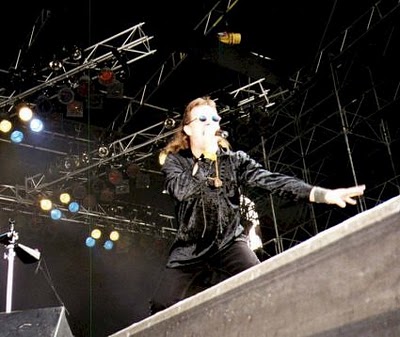
Sweden Rock Festival is an annual rock/metal festival held in Sweden since June 6, 1992. While having a clear rock/metal focus, the festival is noted for its diversity across these genres, having featured southern rock bands such as Molly Hatchet to death metal legends like Obituary. The first version of the festival was held in Olofström, with nine bands performing. The next five years, the festival was held in Karlshamn, but this was changed in 1998. Since then the festival has been held in Norje, outside Sölvesborg. When the festival first began in 1992, it featured nine relatively unknown bands and it only lasted one day. The next year the festival was expanded to two days and more bands were added to the line-up. From 1993 to 2002, the festival would last two days; over those years it would also begin to feature bigger name acts. In 2000 the festival was expanded to three days but it returned to two days the following year. From 2003 to 2006, the festival lasted three days and had by then featured some of the biggest acts in metal and rock. From 2007 the festival has been expanded to four days and will feature approximately 120 different bands/artists.

Captain Beyond played their first gig in 20 years at this festival. Their astonishing debut was released in 1972, with tracks like "Dancing Madly Backwards" and "Mesmerization Eclipse". Then with Rod Evans on vocals (Deep Purple's first singer). "Sufficiently Breathless" came 1973 and the third and last album, "Dawn Explosion" came 1977 and two years later the band split up. By the end of 1998 guitarist Rhino and drummer Caldwell decided to put Captain Beyond together again and hired Jimi Interval on vocals, Dan Frye on keyboards and Jeff Artabasy on bass. A new album was scheduled to be released by fall of 1999 (but didn't appear until 2000 when they released a 4 track EP) accompanied with a tour that is supposed to reach Sweden in September or October. The highlight was "Mesmerization Eclipse" that was heard for the second time of the day, after the cover by another band 'Lotus' who also played at the same concert.
.
Sweden Rock Festival 1999 - Line Up
Budgie, Canned Heat, Captain Beyond, Dave Hole, David Lee Roth, Dare, Deep Purple, Dio, Entombed, Freak Kitchen, Gamma Ray, Hammerfall, LA Doors, Lions Share, Lok, Lotus + special guest Brian Robertson, Manowar, Mercyful Fate feat. King Diamond, Motörhead, MSG, Scorpions, The Quill, U.D.O.
(For more details see this website)
.. .
The rip provided was taken from Flacs and converted to 320kps mp3's.
It includes full album artwork along with photo's of the concert (mostly taken by Patrick Wikström). The recording is very good although it does lack some bass at times.
It is also unique in that it contains the full set list from this Swedish concert, unlike other bootlegs which are missing the last 4 tracks.
.
Gig Details

Time: 5.34 p.m. - 6.46 p.m. (78 min)
Tracklist:
01. Voyages of Past Travellers - Distant Sun
02. Dancing Madly Backwards - Armworth - Myopic void
03. Breath of fire (part I) - Thousand days of yesterdays (intro)
04. Frozen Over

05. Sufficiently Breathless
06. Everything's A Circle
07. Raging River Of Fear
08. Fantasy (with some technical problems)
09. Starglow Energy - Thousand Days Of Yesterday
10. Mesmerization Eclipse
Encore: 6.48 p.m. - 6.54 p.m.

11. Oblivion


.
Members:
Larry "Rhino" Reinhardt - Lead Guitars
Bobby Caldwell - Drums
Jimi Interval - Lead Vocals
Jeff Artabasy - Bass Guitar
Dan Frye - Keyboards
.
Captain Beyond Live (171Mb) New Link 06/03/2016
.

Monday, October 25, 2010

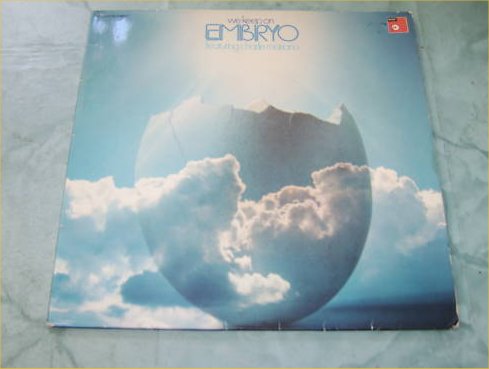
Embryo - We Keep On (1973) + 2 Bonus Tracks

(German 1969 - Present)
.
Embryo are a brilliant German band that began in the late 60’s, creatively flourished throughout the 70’s and are still making great music today. While contemporaries the Tangerine Dream and Kraftwerk pioneered electronic rock and Can were content exploring the avant garde fringe elements, Embryo favored a jazzy form of space rock with very strong elements of world music.
Embryo is centered around multi-instrumentalist Christian Burchard. Embryo was founded in 1969, after Burchard had played in several jazz combos and allegedly had spent a short time in Amon Düül II.
A multitude of musicians have played together with Burchard in Embryo and there are probably not two Embryo albums that have the same line-up. Nevertheless, several musicians stayed with Burchard for quite a long time. Roman Bunka and Edgar Hoffman were two excellent multi-instrumentalists who both stayed with the band for most of the 70s and the 80s and they have showed up every now and then in the 90s. The last decade, Jens Pollheide (bass, flute) and percussionist Lothar Stahl have been regular members of Embryo. From time to time members from other German bands showed up to play on one or a few albums: Chris Karrer (Amon Düül), Dieter Miekautsch (Missus Beastly), Robert Detrée and Peter Michael Hamel (Between), Sigi Schwab (Et Cetera/Wofgang Dauner) and jazz musician Charlie Mariano are a few examples. In addition, Embryo has played constantly with musicians from outside Europe, especially musicians from Asia and Africa.. Most of them are completely unknown to me, but most of them appear to be outstanding musicians on their ethnic instruments. The continuous changes in the band line up and the wide range of musical styles probably typify the musical restlessness of Burchard.
Although the band started as a Krautrock outfit, it was clear within a few albums that Burchard had a genuine interest in combining jazz (rock) and a large variety of ethnic music styles. Throughout the 70s, the jazz and ethnic influences were often embedded in a jazz rock/fusion format, while in the mid and late 80s the band often focused on purely ethnic music, especially from Africa. During the 90s, Embryo developed more or less into an "ethnic jazz" band, trying to combine and absorb all kinds of ethnic influences, but rarely restricting themselves to a strict compositional format and, as such, always allowing ample room for spontaneous musical interaction. Surprisingly, Embryo still exits after 30 years and the band still play many concerts and festivals, especially throughout Europe, the Middle East and Northern Africa.
.
In 1973, Embryo released an excellent album entitled 'We Keep On' which is a mixture of rock, ethnic music and jazz. 'We Keep On' is often regarded as Embryo’s masterpiece, an overwhelming LP mining West African rhythms that reach deep into unexplored regions of your mind. Burchard’s vocals are strange and unconventional in an almost proto new-wave way. The first song, "Abdul Malek", sounds like nothing I have ever heard before and should really appeal to psych fans (take note of the acoustic raga riffs) even though this is a 1973 release. "Don’t Come Tomorrow" is another good trancey song with understated mellotron, piano, vibes, and interesting bamboo flute courtesy of Charlie Mariano.
The LP is divided evenly between instrumentals and vocal tracks (there are 6 songs in total and 2 extra on the recent reissue by Disconforme). The 12 minute "No Place to Go" is one of Embryo's heaviest tracks: it is an odd concoction of heavy rock guitar riffing and more jazzy excursions with excellent solos on saxophone by Mariano. The guitar playing here recalls Dzyan and Mahavishnu Orchestra. An excellent 70s jazz rock piece. On "Hackbrett Dance" four musical cultures come together: the nagasuram (an Indian oboe) is supported by African percussion. The Bavarian hackbrett (a dulcimer like instrument) and Latin American stylings on the marimba are featured beside the usual rock instruments. Flute and Saz tap into something new and totally original.
The nine-minute "Ehna, Ehna, A Bu Lele" combines African ethnic music with typical 70s jazz rock. (Note that the CD release includes two great bonus tracks in the same style as the album, "Ticket to India" and "Flute, Saz and Marimba") and have been included in the post.
In 1975, Miles Davis had this to say about Embryo, “That German hippy group where Mal Waldron used to play; they are doing interesting things. You know, man? They are good musicians, just playing good shit!” This was the ultimate compliment coming from a jazz master and a good enough reason to check out this great, lost album.
.
In the same year as this albums release, Embryo played at the 'The Thirteenth National Jazz , Blues and Rock Festival in the UK (Reading, August 1973) and were the opening band at the three day festival. As reported by one concert goer Nick Black (see Reading Festival website):
.
'Weather was fine, the whole place fenced, regulated, homogenised, and I remember John Peel playing with breathless wonder the just released stones single "Angie". I went with a friend who was paranoid about being caught smoking substances in public. When I lit up, he scuttled like a crab about twenty feet forward. Oh, another thing. in a bizarre way I think the first band on (Embryo), a now forgotten German group were by far and away the best there! They announced in heavy Germanic tones "Ve haf just come bak from living in Morocco" and played what I guess would sound very much like world music nowadays. They were met by silence and me, noisily clapping'.
.
The rip was taken from CD at 192kps and includes full album artwork. If you like listening to Santana, Mahavishnu Orchestra, Nova or even Australia's very own MacKenzie Theory, then you are really going to enjoy this brilliant jazz rock masterpiece.
.
Track Listing
01 - Abdul Malek
02 - Don`t Come Tomorrow

03 - Ethna, Ethna, Abu Lele

04 - Hackbrett-Dance

05 - No Place To Go

06 - Flute and Saz

[Bonus Tracks]

07 - Ticket To India

08 - Flute, Saz and Marimba

.
Band Members:
Christian Burchard - drums, percussion, vocals, marimba, vibes, Hackbrett,mellotrone
Roman Bunka - guitar, saz, vocals, percussion, electric bass on "Don't Come Tomorrow"
Dieter Miekautsch - fender rhodes piano, piano, bass-piano on Hohner Clavinet
Charlie Mariano - soprano and alto sax, flute, nagasuram, bamboo flute

.
.
Embryo link (89Mb) New Link 8/10/2014
.